
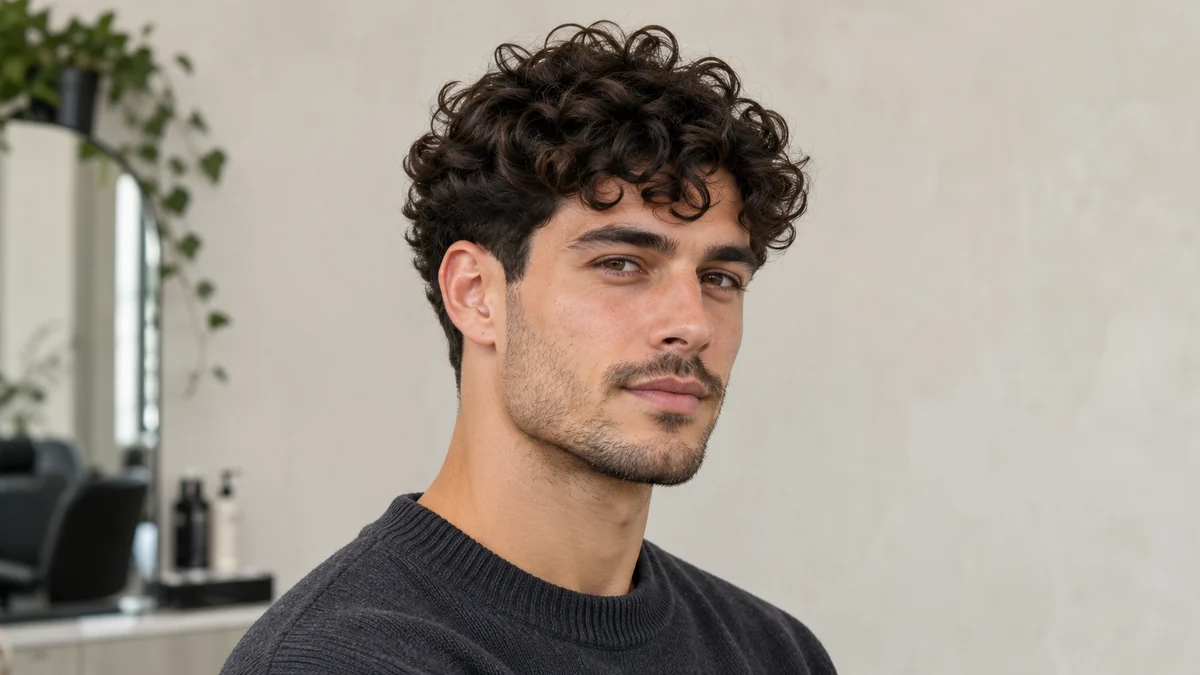
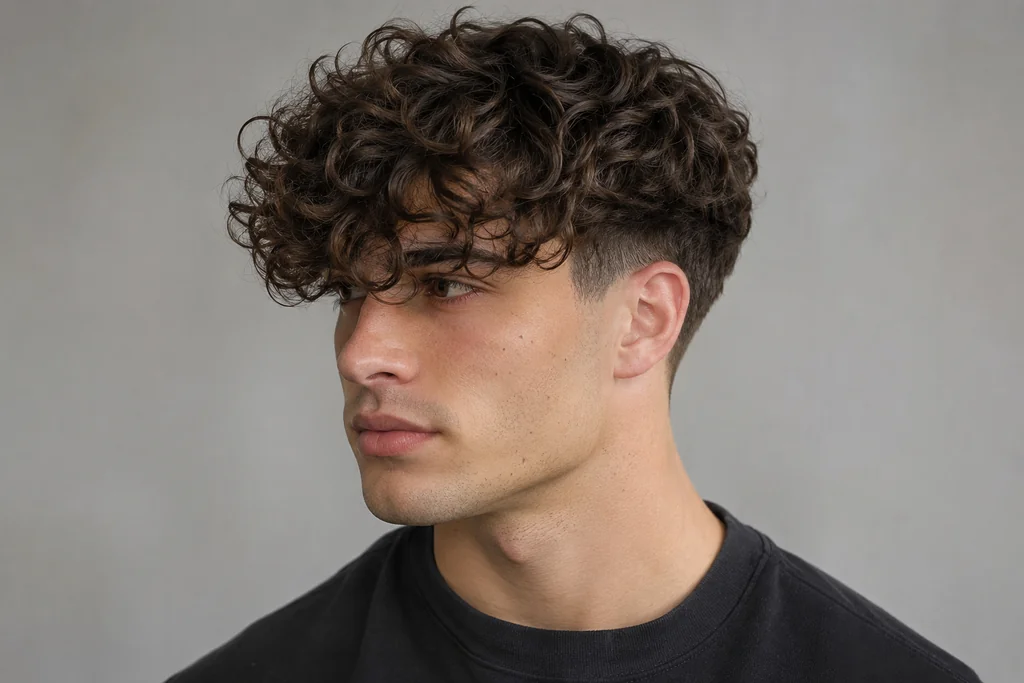
Low taper fade curly hair is a haircut with defined curls on top and a short blend at the sideburns and nape. The barber keeps most of the side and back length, so the curls still have a shape of their own. If you like your current curls but the edges look untidy a week after a haircut, this is the detail to change first.
Decide two things before the appointment: how short you want the edge and where you want it to stop. Those are separate choices. A skin-close taper can still stay low, and a taper finished with a guard can still look too high if the blend climbs past the area you wanted to keep.
Jump to: Taper placement · What to ask for · Curl routine · FAQs
Where a low taper fade sits on curly hair
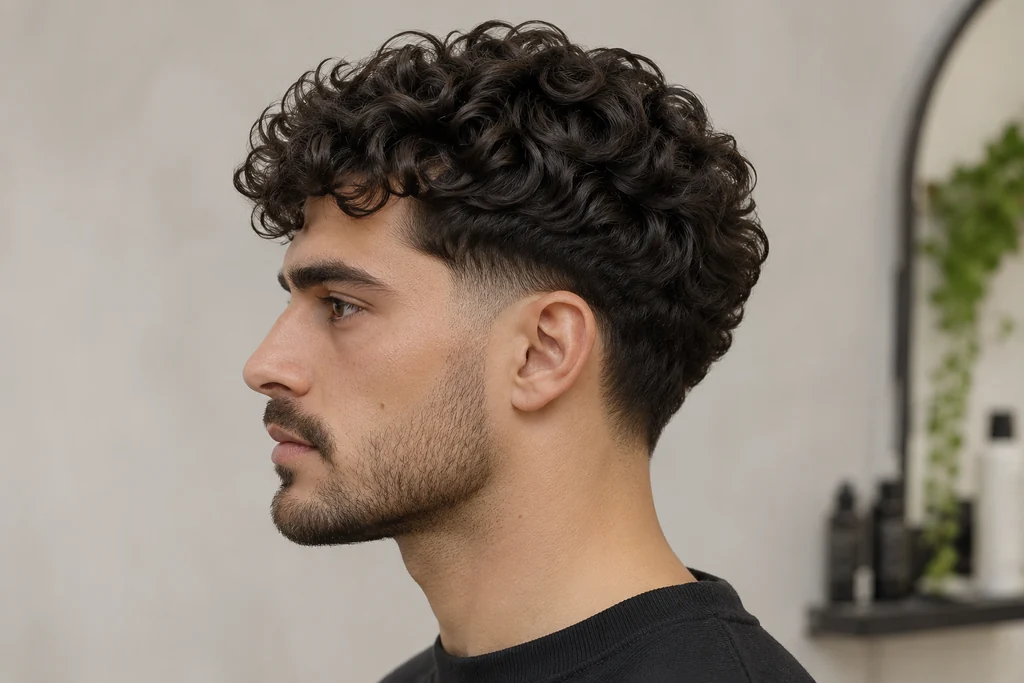
From the side, look for a small area of shorter hair where the sideburn meets the ear. From behind, look for the same graduation at the neckline. Between those areas, you should still see hair along the side and behind the ear. That retained length makes a low taper especially useful when the top is thick or the curls spring outward as they dry.
Placement is easier to see than a guard number. Point to where you want the shortest hair to finish in the mirror. If the barber uses the word fade for a larger blend that wraps around the head, explain that you want the taper localized. This curly low-taper reference also illustrates how the blend and the weight above it work together.
Low taper vs low fade vs temple fade
| Cut | Where the short blend sits | What it does for curly hair |
|---|---|---|
| Low taper | Sideburn and nape | Keeps the sides fuller and the edge tidy |
| Low fade | Low around more of the side and back | Shows more contrast around the head |
| Temple fade | Focused at the front corners and sideburns | Frames the face while leaving more of the back alone |
If your main concern is a bulky neckline, include the nape in your request. If it is just the hair in front of the ears that bothers you, a temple fade may already give you the change you want. Compare a mid fade if you prefer the blend higher, or a skin fade if you are deciding how short you want the bottom to go.
Pick a top shape you will actually wear
A short curly crop
A short crop works when you want the front to settle without having to part it. Ask for enough length that the curls still make a visible bend once dry. If the shortest pieces look like fuzz instead of curls, the top may have been cut shorter than you prefer. Show the barber the shortest naturally curled piece you would be happy to keep.
A rounded top for denser curls
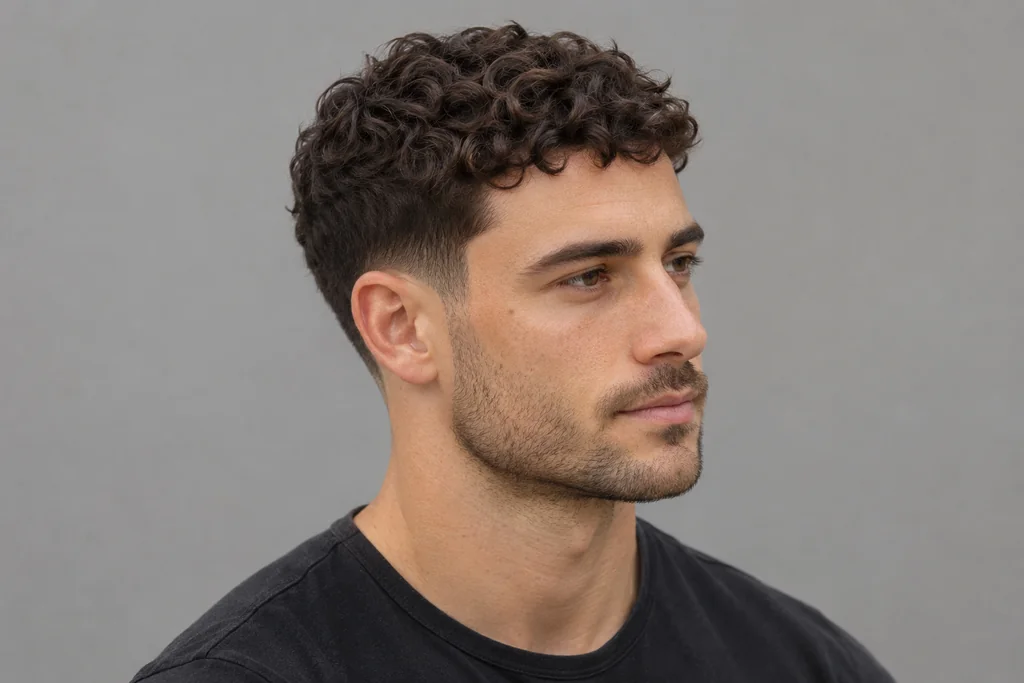
A rounded top can keep the profile balanced if the hair naturally grows wide. Ask the barber to inspect the corners above the temples before removing bulk. A little length there can join the top to the sides. If the corner sticks out past the rest of the silhouette, ask for a small adjustment and look at it again with the curls resting naturally.
A longer fringe for loose curls
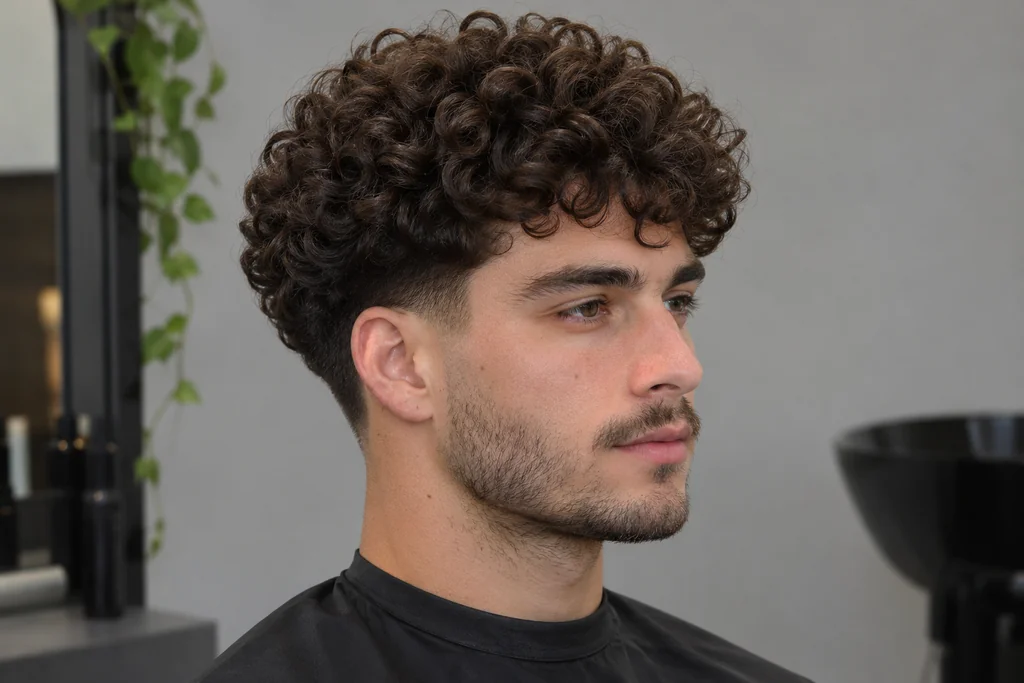
Leaving more length at the front gives loose curls room to fall toward the brow. Bring a reference with the fringe in its usual dry position. If you alternate between wearing it forward and pushing it back, show both shapes before the barber cuts the front. A fringe that works only after a blow-dry may be frustrating if you usually air-dry.
What to ask your barber for
Try this: “Keep a low taper at the sideburns and nape. Leave the sides full above the blend. Keep enough length for the curls to form on top, and show me where the front will sit when it’s dry.” Say whether you want bare skin at the very bottom or a little shadow. If you have a cowlick at the neck, show the barber how it lies before agreeing to a boxed or rounded finish.
Bring a front photo for the top, a side photo for the taper and a back photo if the neckline matters. Explain what you like in each one. You can want the curl length from one reference and a softer edge from another. Ask for a mirror check before the shortest pass so you can confirm placement while there is still length to work with.
Curl shrinkage changes how a haircut lands. Show up with your usual curl pattern visible if possible. If the cut starts damp, ask the barber to recheck the front and the shape around the crown after drying. Hair with tighter coils can need a very different amount of wet length to land at the same dry height. Our 4B hair guide explains how tightly coiled texture behaves, and the 2C hair guide covers looser waves.
How to keep the curls defined at home
1. Start damp
Press water out with a soft towel or T-shirt so the curls stay grouped.
2. Use a light styler
Work a small amount of lightweight curl cream or gel through the top, adding more only to sections that still look dry or frizzy. Loose curls may do better with mousse, while a denser top may need product distributed in smaller sections.
3. Scrunch the curls into shape
Scrunch upward, then let the curls settle.
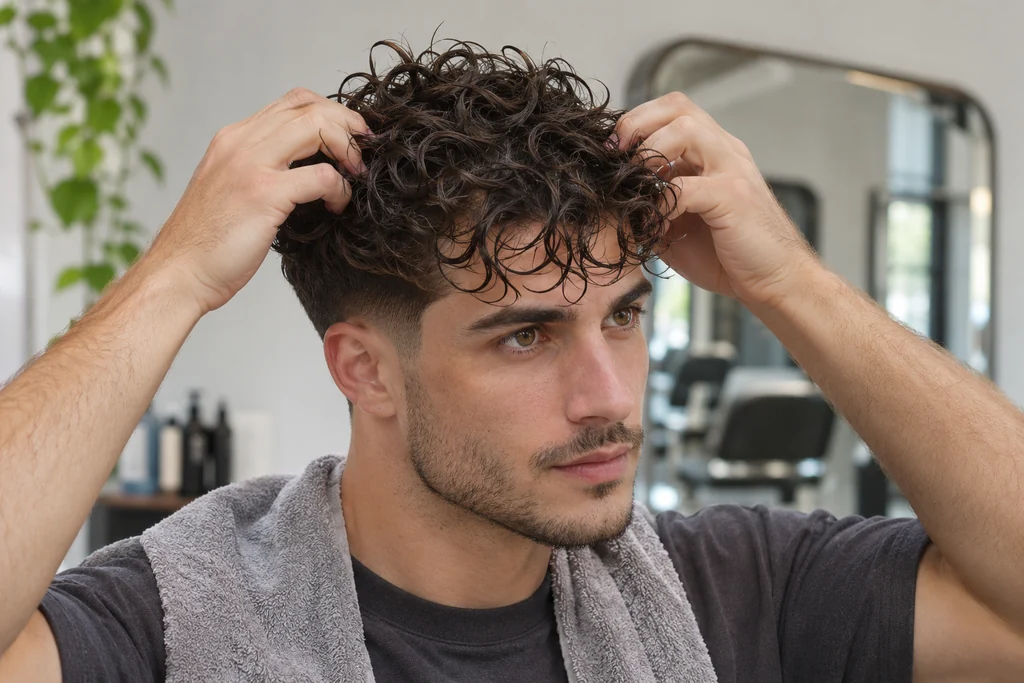
4. Dry with as little handling as possible
Air-dry if you have time or use a diffuser at low speed with gentle heat. Keep your hands out of the top while it dries. If a gel dries with a firm cast and you prefer a softer finish, lightly squeeze the curls after they are fully dry.
5. Refresh only the sections that need it
On the second morning, check where the shape has flattened before wetting the whole top. A few damp fingertips can revive a small section around the crown or fringe. If the curls look stretched and coated, washing out the buildup may work better than another layer of styling product.
How to tell when the taper needs a trim
Look at the sideburn and neckline in daylight. If they have lost the contrast you liked but the curls still sit well, ask for an edge touch-up. If the top is falling into your eyes or pushing wider at the corners, book a full shape-up. Ask the barber to preserve the last taper height instead of lifting the blend to chase fast-growing stubble.
The most common mismatch is a reference photo that shows a much shorter top than you normally wear. Another is picking the closest possible edge when you actually prefer a softer grow-out. Start with a lower contrast finish if you are unsure. A barber can take the edge shorter at the end of the appointment after you see the whole shape.
What to change if the cut feels off
The sides look wide above the ears
First check the haircut after the curls have dried. If only one side sticks out, the growth direction may be the reason. Ask the barber to soften that area with scissors before cutting the taper higher. If both sides look full and you like the top, taking a little length from the sides may give you the shape you want without exposing more scalp.
The top looks flat after styling
Check whether the change happens before or after you add product. If the shape is there when wet but drops as the hair dries, try a lighter product or use less near the roots. If it is flat both wet and dry, show the barber how the top sits from the side. You may need a different shape through the crown instead of more hold.
The neckline grows out unevenly
If a small patch at the neck grows sideways or upward, point it out at the next appointment. Ask for a softly blended edge that follows the natural growth. A crisp square outline can look sharper on day one, but the contrast makes new growth more visible. The mirror check from behind will tell you which finish you prefer.
Frequently asked questions
Does a low taper fade work with tight coils?
Yes. The cut can leave the bulk of the coils in place and tidy the sideburns and nape. Choose how much length you want above the taper based on the dry shape you wear most often.
Do you need to fade the hair down to skin?
No. Low describes placement. You can ask for a skin-close edge, a light shadow, or a soft finish that blends into your sideburn without a sharp contrast.
Can you get this haircut with a curly fringe?
Yes. Set the dry fringe length before the cut and ask the barber to keep the taper low enough that the front still connects to the rest of the shape.
Can you refresh the taper without cutting the curls?
Yes. Ask your barber to tidy the sideburn and neckline only. Point out that the top and the length above the blend already sit where you want them.