

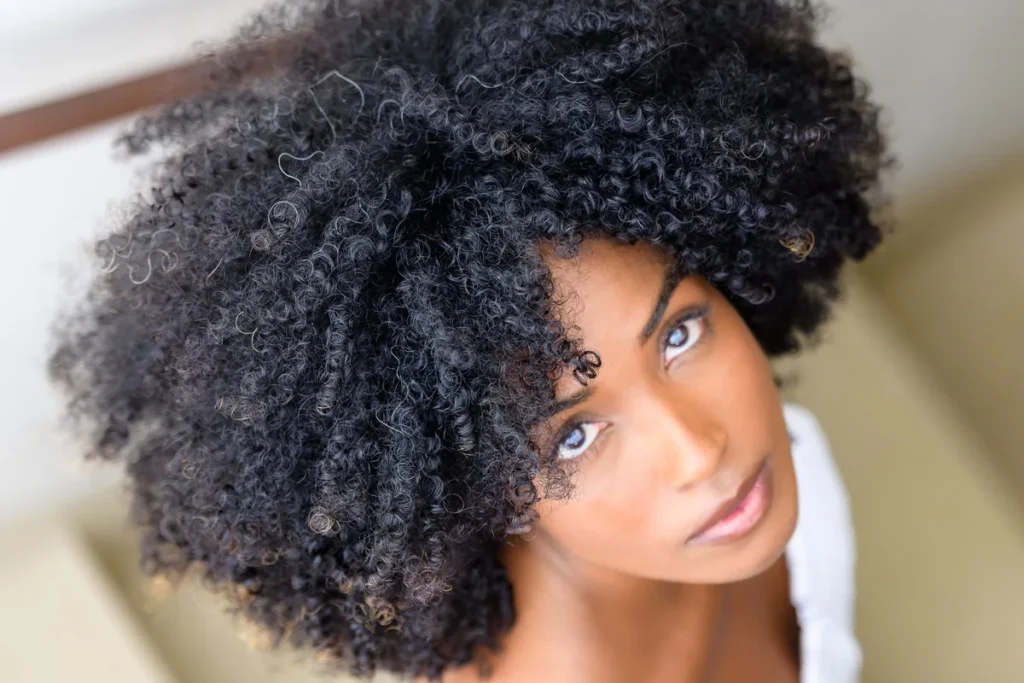
4b hair is a tightly coiled type 4 texture where the strands bend in sharp, zigzag angles instead of forming round spirals. It looks dense and soft, almost cottony, and it shrinks a lot. Pull a dry 4b coil straight and it can easily reach double the length it seemed to have a moment ago.
That shrinkage fools a lot of people into thinking their hair “doesn’t grow.” It does. The problem is usually that it breaks as fast as it grows, and nearly every habit that causes that breakage can be changed.
What 4b hair looks like
The labels come from a hair typing chart where type 4 is the coiliest group, and the letters run from loosest (a) to tightest (c). 4b sits in the middle of that group. If you’re curious where the chart came from and why it’s been criticized, our 2c hair guide covers the history.
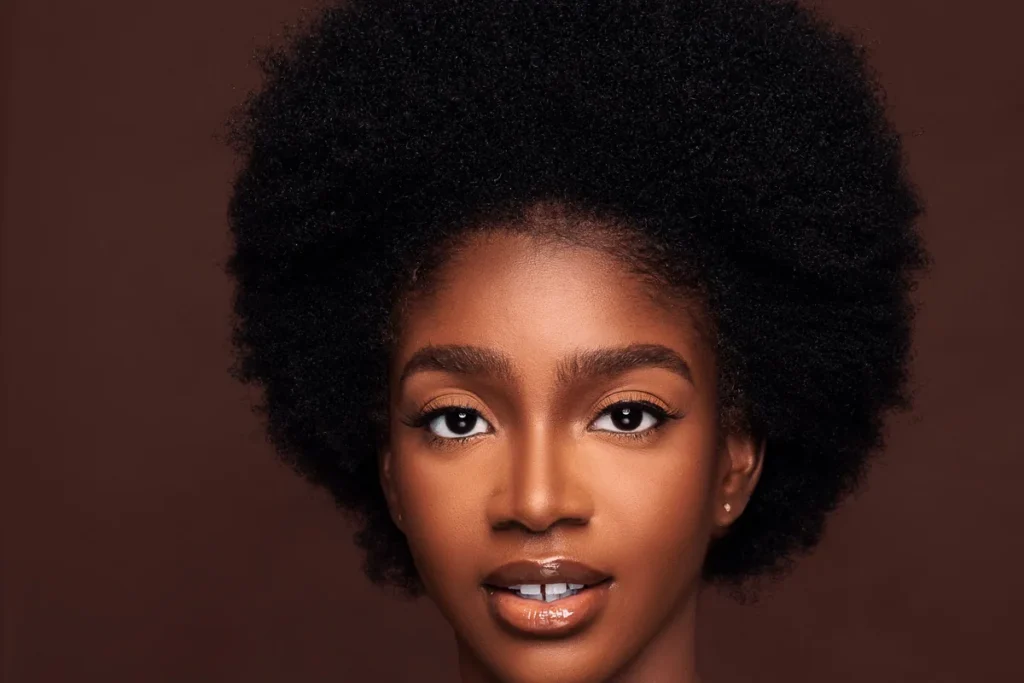
What a stylist sees with 4b hair: strands that fold back on themselves in a Z-shape rather than an S or an O, coils so small you often can’t see them clearly without product, a matte rather than shiny surface, and lots of volume. Wet, it might clump into small coils. Dry and left alone, it tends to sit as a soft, dense mass.

4a, 4b or 4c?
These are the three people most often mix up. Look at clean hair with no product, after it’s dried untouched.
| 4a | 4b | 4c | |
|---|---|---|---|
| Shape | Tight S-shaped coils, springy | Sharp Z-shaped zigzags | Very tight zigzags, often no visible pattern |
| Definition without product | Clearly visible | Little, mostly at the ends | Very little |
| Feel | Springy, coils clump | Soft, cottony, dense | Very dense, tightly packed |
| Shrinkage | High | Very high | Highest |
Most heads mix two or even all three. It’s really common to have 4a at the nape and around the edges with 4b through the crown. Treat each area on its own terms instead of forcing one routine on the whole head.
Why 4b hair gets dry and breaks
Every sharp bend in a 4b strand is a weak point. The oil from your scalp also struggles to travel down a zigzag, so the ends stay thirsty even when your roots feel greasy.

Then there’s tangling. A microscopy study of natural African hair found knots in 10% to 16% of hair shafts, compared with 0.15% in the other groups studied, along with signs of repeated breakage after combing. And that study’s lead author has since argued, as a 2026 dermatology review points out, that much of that fragility comes from mechanical trauma rather than the hair being weak by nature.
That’s genuinely good news. It means the fix is mostly in how you handle it. Less combing when dry, more slip when wet, fewer tight styles, and moisture sealed in.
Wash day for 4b hair
The American Academy of Dermatology recommends washing Black hair once a week or every other week, with conditioner every single time and particular attention to the ends. The review above also points to research showing weekly washing helps with buildup and scalp discomfort, which goes against the old habit of washing once a month. If your scalp still itches or flakes between washes, our guide on how to treat dry scalp explains why greasing the scalp isn’t always the fix.
Here’s a routine I’d suggest to most people with 4b hair.
- Pre-poo if your hair tangles easily. Coat dry hair in a cheap conditioner or oil for 15 to 30 minutes before shampooing. It cuts down on tangles when you rinse.
- Section it. Four to eight twisted or clipped sections keep everything under control. Wash and detangle one section at a time.
- Shampoo the scalp, not the lengths. A gentle, moisturizing shampoo massaged into the scalp is enough. Let the suds rinse through the hair.
- Detangle with conditioner in. Use your fingers first, then a wide-tooth comb if you need it. Always start at the ends and work up toward the roots. Never detangle 4b hair dry.
- Deep condition. Leave a deep conditioner on for the time it says on the tub, usually 15 to 30 minutes. A plastic cap or a warm towel helps it work. The AAD also suggests a hot oil treatment twice a month.
- Seal in the moisture while the hair is still damp. More on that next.
Moisture: the LOC and LCO methods
Most 4b routines are built around layering. The idea is to put water in first, then trap it with oil and a cream.

With LOC, you apply a Liquid or water-based leave-in, then an Oil, then a Cream. LCO swaps the last two: leave-in, cream, then oil on top to seal.
Which one? It depends on your hair. If LOC leaves your hair feeling greasy but still dry underneath, try LCO, and the other way round. Low-porosity hair often does better with lighter oils like grapeseed or argan. High-porosity, damaged or colored hair usually likes heavier butters.
Between wash days, a spritz of water or a water-based leave-in on the ends, followed by a little oil, keeps them from going brittle. You don’t need to do the whole routine every day. Doing it every two or three days is plenty for most people.
Styles that suit 4b hair
Styles fall into two camps. Some show off the texture. Others protect it.
A twist-out is the classic for 4b. Two-strand twist damp, moisturized hair, let it dry completely (overnight at least), then unravel and separate gently with oiled fingers. A braid-out gives a looser, wavier pattern, and Bantu knots give tighter, springier definition.

A wash-and-go is possible on 4b hair, but it takes more work than people expect. You’ll need a gel with real hold, applied to soaking wet hair in small sections. Expect more shrinkage than with a twist-out.
Finger coils are the slow-but-satisfying option. You wrap small sections of gel-coated wet hair around one finger, one at a time. On a full head it can take a couple of hours. But the definition can last a week if you sleep on it carefully.
Want length without heat? Stretching methods are underrated. Banding means putting a series of soft hair ties down the length of each damp section and letting it dry. African threading wraps sections in thread to the same effect, and it’s been used for generations. Both show off your length and make detangling on the next wash day much easier.
Protective styles, like braids, twists, wigs and buns, keep your ends tucked away. They can help you hold on to length. But tension is the risk. The AAD’s guide on hairstyles that pull explains that repeated tight styling can cause traction alopecia, which can become permanent. Its advice is to keep braids loose, especially around the hairline, choose thicker braids and locs, keep braids shorter because long ones are heavier, and wear them for no more than six to eight weeks. If it hurts while it’s being done, it’s too tight. Say so.
The same goes for high puffs. A puff that drags your edges back every day is doing more harm than you’d think. Loosen the band, or move the puff around.
Products that earn their place
You don’t need a shelf full of jars. Most 4b routines come down to five product types, and the ingredient list matters more than the brand.

| Product | What it does | What to look for |
|---|---|---|
| Leave-in conditioner | Adds water-based moisture and slip after washing | Water first on the label, light conditioning agents |
| Cream or butter | Softens and holds moisture in | Shea or mango butter, used sparingly on fine strands |
| Oil | Seals the layers and adds shine | Lighter oils for low porosity, heavier ones for high |
| Deep conditioner | Weekly repair and softness | A thick formula you can leave on 15 to 30 minutes |
| Gel | Hold and definition for wash-and-gos and twist-outs | Firm hold that doesn’t flake when you layer it |
One more: a clarifying shampoo once a month or so. Butters, oils and gels build up, and 4b hair coated in old product stops absorbing anything new. If your hair suddenly feels dry no matter what you put on it, buildup is my first suspect.
The mistakes that cost the most length
Detangling dry hair is the big one. If you only change one habit, make it this. Brushing or combing 4b hair dry snaps it at every bend.

Next is overloading on protein. Protein treatments help damaged hair, but used too often they leave 4b hair stiff and straw-like. If your hair feels hard and snaps easily after a treatment, back off and stick to moisturizing deep conditioners for a few weeks.
Edges get a rough deal too. Brushing them flat with a hard brush and strong gel every day, on top of tight ponytails, is a fast route to thinning at the hairline. Give them days off.
And skipping trims doesn’t save length. Split ends keep splitting upward and tangle with everything around them. A small trim every three to four months, done on stretched hair so you can see what you’re cutting, keeps the ends healthy. Ask for a “dusting” if you only want the bare minimum taken off.
Heat, relaxers and texturizers
You don’t have to avoid heat completely, but go easy. The AAD recommends a heat protectant on wet hair before styling, ceramic combs or irons, the lowest temperature that does the job, and pressing no more than once a week.

Relaxers and texturizers both use chemicals to permanently loosen the coil. A texturizer is basically a milder, shorter version of a relaxer. The AAD advises having relaxers applied by a professional, touching up only the new growth, and leaving two to three months between touch-ups. Never put relaxer on hair that’s already relaxed.
Thinking about color instead? 4b hair takes color well, but bleach adds dryness to a texture that’s already prone to it. A warm shade that doesn’t need much lifting is much kinder. Our copper hair guide covers shades that look rich on dark, coily hair.
Night care
This is the easiest win. Cotton pillowcases soak up moisture and create friction. Sleep in a satin or silk bonnet or scarf, or on a satin pillowcase. The AAD notes that a silk or satin head covering is gentler on hair than other materials.
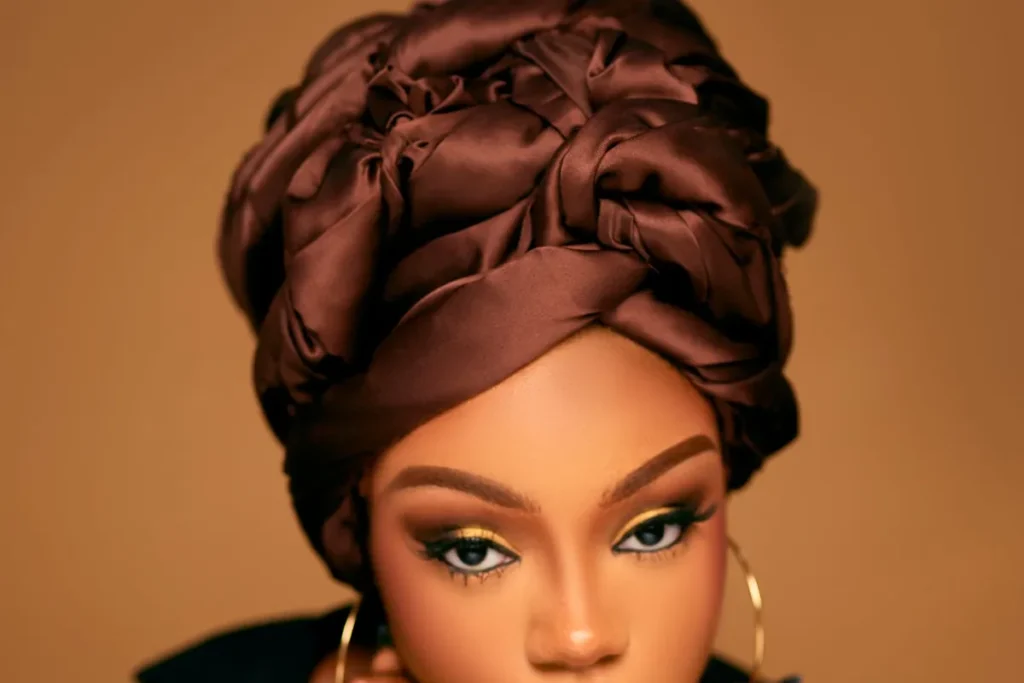
For longer hair, a loose “pineapple” on top of your head, or a few big twists, keeps the style from flattening overnight.
4b hair for men
Men’s 4b hair follows the same rules, just with less length to worry about. Wash once a week or so, use a leave-in or a light cream after every wash, and keep a satin durag or pillowcase for night.

At an inch or two, a curl sponge can twist 4b hair into small coils. Longer, you can grow two-strand twists, comb twists or locs. Fades and tapers suit 4b hair really well, and our skin fade guide covers how to get one without razor bumps. That’s a real issue with coily hair cut to the skin.
Questions people ask about 4b hair
Does 4b hair grow?
Yes. It may look like it isn’t growing because of shrinkage and breakage at the ends. Gentle handling, moisture and low-tension styles help you keep the length you grow.
How often should I wash 4b hair?
Once a week or every other week is the AAD’s recommendation. Always follow with conditioner.
What’s the difference between 4b and 4c hair?
4c is even tighter, with less visible pattern and more shrinkage. In practice the care is very similar, so don’t stress too much about which one you are.
Can 4b hair have defined curls?
It can look defined with styles like twist-outs, Bantu knots or a gel wash-and-go. Left alone, it naturally sits more like a soft, dense cloud, and that’s just as valid.
Is 4b hair low or high porosity?
It can be either. Type describes the coil shape, and porosity describes how the hair takes in water. Untreated 4b hair is often low to normal porosity, while colored, heat-styled or relaxed ends tend to be high porosity, so the same head can need different care at the root and the ends.
What is the best protective style for 4b hair?
The one you can keep loose at the hairline and wear for a few weeks without itching. Two-strand twists and medium box braids are good starting points. Very small, heavy or tight styles are the ones that most often cause trouble.
More routines and product breakdowns live in the HairBrave haircare section.