

A pageboy haircut is one smooth line of hair. It starts at the ears, runs to the chin in a single length, and turns under at the ends, so the whole head reads as one rounded shape, like a bell sitting on the shoulders. Add a fringe and the line runs unbroken from one side of the head to the other. There is no layering to hide behind. The cut is the line, and the line has to be right.
The catch is that the curve is a blow-dry, not a haircut. The stylist cuts the shape, but the turn-under at the ends only exists while you dry it in with a round brush. Air-dry a pageboy and you have a plain blunt bob with a fringe. It is still a tidy cut, but it is not a pageboy anymore. People blame the cut when the dryer was the missing half.
The other half is upkeep. A pageboy needs a trim every four to six weeks and about five minutes with a round brush most mornings. If that sounds fair for a cut that looks finished the moment you walk out the door, this one is hard to beat. If you want to wash and go, pick something with layers in it. I would rather you hear that here than learn it in the chair.

What Is a Pageboy Haircut?
A pageboy is a one-length cut where the hair falls to a single line, usually somewhere between the earlobes and just below the chin, and curves inward at the ends. Traditional pageboys have no layers at all, so the shape relies entirely on the precision of the blunt cut and the inward roll of the ends. The style almost always includes a fringe, from a heavy straight-across bang to a softer curtain-style fringe, and it joins the sides in one unbroken line.
The cut is named after what was believed to be the haircut of a late medieval page boy, and it has come back in every fashion era since. In the early 1950s, the New York hairdresser M. Lewis popularized it for women. In the 1960s it came back for men with straight hair, after British rock bands like the Beatles and the Rolling Stones wore it. In the 1970s and 1980s it was everywhere again. Diana, Princess of Wales wore one, and so did Joanna Lumley as Purdey in The New Avengers.
The 2020s revival trims the length a little and softens the ends, so it reads modern rather than costume.
Three things make a pageboy a pageboy, and if any one of them is missing, it is a different cut. The perimeter is one length all the way around. The ends turn under. And the fringe connects into the sides with no step at the temple. Take away the turn-under and you have a bob. Take away the fringe and you have a bowl cut with a gap at the front. Take away the one length and you have a layered bob.
Pageboy Haircut vs Bob vs Bowl Cut
Four cuts share the same chin-length territory. What sets them apart is the shape of the line and what the ends do.
| Cut | Shape | Length | Ends | Fringe | Best for |
|---|---|---|---|---|---|
| Pageboy haircut | Rounded dome, one length | Ear to chin | Turned under | Usually a full fringe | Oval, heart, square faces |
| Bob | Straighter, more angular | Chin to shoulder | Straight or flipped out | Optional | Most faces, most hair types |
| Bowl cut | Even all around, shorter | Above the ear to ear | Blunt, no turn-under | Heavy, joined to the sides | A bold, graphic look |
| Lob | Longer bob | Collarbone | Loose, straight | Optional | Low upkeep, easy grow-out |
A bob is the closest cousin. The difference is the curve: a bob has a straighter, more angular line and does not necessarily turn inward at the ends, while a pageboy has a more uniform, rounded shape with the ends curving in. Our guide to the different types of bangs shows what the fringe options look like on their own, because the fringe is half the pageboy.
A bowl cut is shorter and flatter on top, with the fringe and the perimeter cut in one continuous rounded line and no turn-under at all. It reads graphic and severe. A pageboy is softer because the ends roll under instead of sitting straight, and the length reaches the chin instead of stopping above the ear.
Who Does a Pageboy Haircut Suit?
A pageboy is a horizontal, rounded shape, so it changes how wide or long your face reads. Start with your face shape, then pick the version that balances it.
Oval Face
Almost any version works on you. Pick by your hair type and the time you can spend styling, not by your face. A classic chin-length pageboy with a full fringe is the safest first try.
Heart-Shaped Face
You need width at the chin to balance a wider forehead. A chin-length pageboy with a side-swept fringe does that well, and the ends-under shape softens the jaw. A heavy straight fringe can make the forehead look wider, so keep it wispy or swept to one side.
Square Face
Soften the jaw. Face-framing layers or a wispy fringe take the hard edge off a square jaw, and the rounded pageboy line does the rest. Avoid hard one-length edges with no softening at all — a blunt pageboy on a very square jaw can look like a block.
Round Face
Approach with care. The rounded shape can add width where a round face already has it, so ask for a slightly longer version that falls below the jaw, and a side-swept fringe instead of blunt bangs, to make some lengthening angles. Keep a little height on top too, so the eye travels up instead of sideways.
Long Face
Keep the shape wider than it is tall. Fuller sides and less height on top stop a long face from looking longer, and ear-to-chin layering helps. A pageboy with a full fringe shortens the forehead, which is exactly what a long face needs.

Your hair type matters as much as your face. Straight to slightly wavy hair holds the shape most naturally, and fine to medium-density hair is ideal because it gives you the smooth, sleek surface the cut depends on. Thick or coarse hair can work, but it usually needs internal layering or thinning shears, or the shape turns bulky.
Curly hair can wear a pageboy too, but it has to be cut dry on a defined curl — wet hair stretches, and you will lose about 20% of the shape when it dries. Our guide to 2c hair covers the wavy pattern that sits in the middle of that range.
8 Pageboy Haircuts Worth Asking For
Some guides list 16 or 50 versions of this cut. Most of them are the same shape with a different adjective in front of it. These eight are different enough to matter, because each one changes the length, the fringe, or the amount of work in the morning.
Classic pageboy haircut. The baseline: chin-length, one length, full fringe, ends turned under all the way around. It is the version most people picture when they say the word pageboy. Ask for it if your hair is straight to wavy and fine to medium.

Modern pageboy. The same shape with lighter layers underneath and a less rigid finish. The layers take weight out without breaking the outline, so it moves instead of sitting solid. Ask for it if the classic feels too strict, or if your hair is thick.
Curly pageboy. A chin-length cut with a fringe where the natural curl rounds the ends under instead of a blow-dry. The rounded shape balances a square jaw. It has to be cut dry, on a defined curl, or the length will surprise you when it dries.
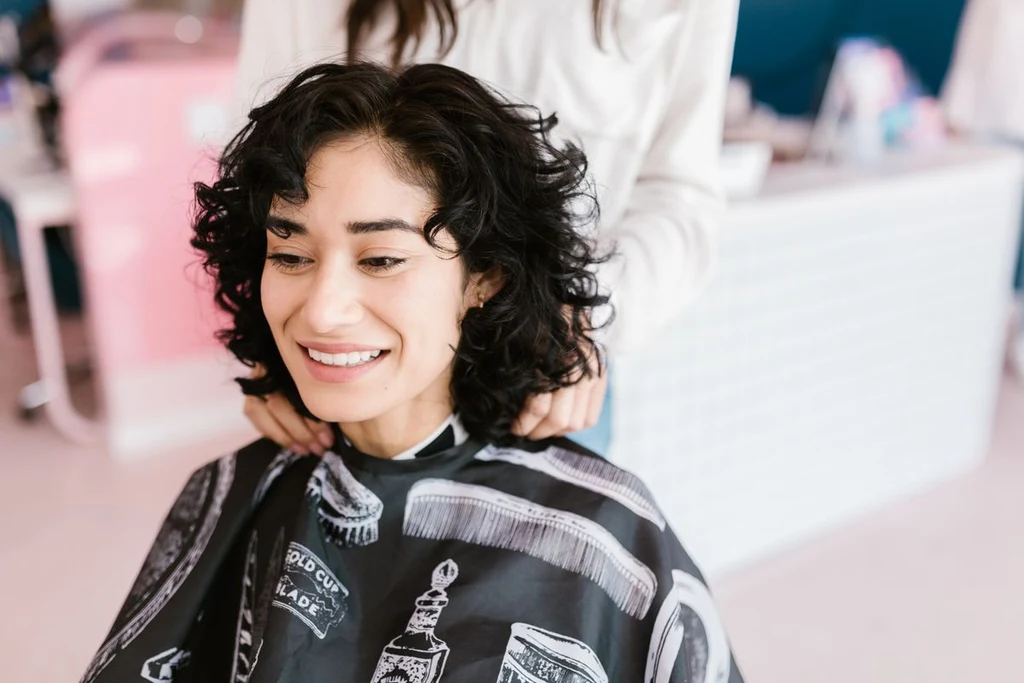
Pixie pageboy. A cropped version with a short, rounded fringe and the sides curved in close to the head. Thinner hair handles the shape, and it best suits heart-shaped faces. It needs a trim every four to five weeks.
Pageboy with an undercut. The nape or the sides clipped short beneath the rounded top. Thicker texture sits closer with the undercut, and the shape suits diamond, square and oval faces. Ask for a disconnected undercut with a number 1 or 2 guard, and expect a trim every three to four weeks.
Layered pageboy. A chin-length pageboy with soft layers through the sides so the under-turned ends move instead of sitting solid. Medium or fine hair wears it easily. It is the easiest of the eight to grow out, because the layers hide the awkward stage.

Shaggy pageboy. Heavy internal layering through the whole cut with a curtained or wispy fringe, built for movement rather than a set shape. It suits oval, square, heart and long faces, and it is the most forgiving of the eight if you skip a wash day.
Wavy pageboy. A pageboy that lets the natural wave do the work, with the ends turning under on their own instead of being forced there with a brush. It suits wavy hair from fine to thick, and it is the easiest version to air-dry.
How to Ask Your Stylist for a Pageboy Haircut
The word pageboy means a slightly different cut in every salon, so bring photos. Show your stylist the exact length, the fringe style, and how much inward curl you want. Then say whether you want a traditional one-length pageboy or a modern one with subtle internal layers for easier movement.

Say this to your stylist:
“Pageboy, please: one length, chin-length, no internal layers, perimeter cut with a slight forward graduation so the front sits 1 to 2 centimetres longer than the back. Bevel the ends under as you cut. Heavy blunt fringe at brow level, connecting round into the side lengths with no step at the temple. Dry the perimeter under with a large round brush. No thinning at the ends — the bend needs the weight.”
Bring a photo of the front and a photo of the side. The front shows the fringe and the width. The side shows where the hair ends at the jaw and how much it turns under. If you want the modern version, add one line: “subtle internal layers underneath to take out the bulk, but keep the smooth outline.”
The fringe is half the cut, so agree on it before the scissors come out. A heavy straight-across fringe is the classic choice. A side-swept or wispy fringe gives a softer, more modern feel, and it is the better pick for a round or square face. Our guide to the different types of bangs shows every fringe option next to the face it suits, if you are still deciding.
How to Style a Pageboy Haircut at Home
The dryer is not optional. A pageboy without the round brush is a blunt bob, and there is nothing wrong with a blunt bob, but it is not the cut you asked for. Five minutes is enough once you have done it twice. You need a dryer with a nozzle, a large round brush, a smoothing serum, and a flat iron for touch-ups.
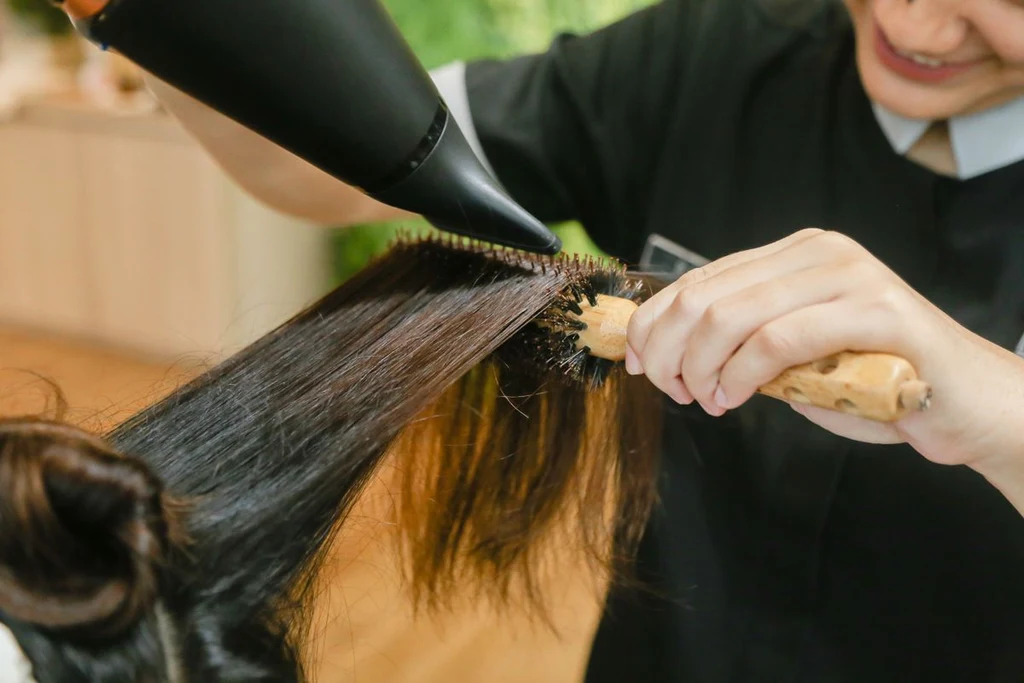
- Start damp, not wet. Towel-dry until the hair stops dripping, then work a smoothing serum or balm through the lengths. It controls frizz and adds the shine the polished pageboy needs.
- Section the hair. Work in sections, starting at the nape and moving up. Small sections dry faster and the curve sets more evenly.
- Roll the ends under. Blow-dry each section while rolling the ends inward with the round brush, keeping the nozzle pointing down the hair shaft.
- Cool shot. Hit each section with cold air for a few seconds once it is dry. Hair sets as it cools, and that keeps the turn-under in place past lunch.
- Touch up, do not redo. A flat iron can fix any section that will not cooperate, but do not overdo it — the look should feel effortless even when it is precise.
For a modern, less structured version, let the hair air-dry with a light texturizing spray. That works best on the layered and wavy versions, where the shape does not depend on a perfect curve. On the classic one-length pageboy, air-drying gives you a plain blunt bob, so save the air-dry days for the softer versions.
Heat is the one part of this routine to respect. The American Academy of Dermatology recommends limiting blow-drying, using low or medium heat, and using a product to protect your hair from the heat. I use medium heat and finish with the cool shot. You can read their tips for healthy hair.
How Long Does a Pageboy Haircut Last?
The perimeter and the fringe live on different schedules. The perimeter stays sharp for about four to six weeks. The fringe grows faster than the rest, so it may need a trim between full appointments, especially if your bangs grow fast. A pixie pageboy needs a trim every four to five weeks. An undercut pageboy needs one every three to four weeks. A longer, layered version forgives six to eight weeks between visits.
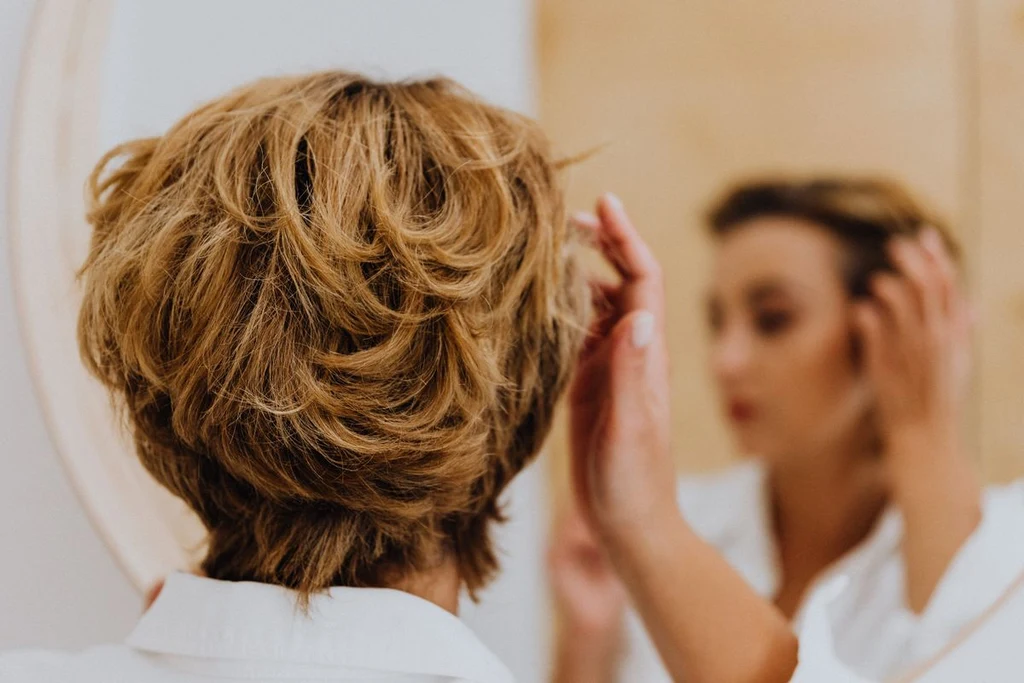
A fringe trim is a ten-minute visit, and it keeps the whole cut looking fresh without touching the perimeter. Book it when you book the cut, because the fringe is what goes first.
Growing it out is easy if you picked a longer or layered version. Let the perimeter grow and it turns into a lob, then a longer bob, with no awkward stage. The classic one-length pageboy is harder to grow out — ask your stylist to add a little layering at the grow-out appointment, and the line will blend instead of flipping out.
Between cuts, keep the hair healthy and the shape will cooperate. Use a sulfate-free shampoo for shine and smoothness, and a weekly deep-conditioning mask to keep the hair soft and controlled. Sleep with your hair loosely clipped up or in a silk scarf to hold the shape overnight.
6 Mistakes That Ruin a Pageboy Haircut
- Air-drying and expecting the curve. The turn-under is a blow-dry. Air-dry a classic pageboy and you get a plain blunt bob. If you will not use a round brush, pick a layered or wavy version.
- Thinning the ends. The bend needs weight. Thinning shears at the ends take the weight out, and the curve falls flat. Ask for no thinning at the ends, ever.
- Skipping the fringe trim. The fringe grows faster than the perimeter, and a grown-out fringe makes the whole cut look tired even when the line is fine. A ten-minute fringe trim between appointments fixes it.
- Picking the wrong version for your face. A hard one-length edge on a very square jaw looks like a block, and a short rounded pageboy on a round face adds width where you do not need it.
- Too much heat, every day. Blasting high heat daily dries the hair out, and dry hair will not hold a curve. Use medium heat, a heat protectant, and a cool shot. The American Academy of Dermatology lists heat as one of the 10 hair-care habits that can damage your hair, and the pageboy is the cut where that damage shows first.
- Cutting layers through the whole cut. A few internal layers underneath are fine and help thick hair. Layers through the whole cut are not a pageboy at all — they break the one-length line the shape depends on. If you want layers everywhere, ask for a layered bob instead.
Frequently Asked Questions
What is the difference between a pageboy haircut and a bob?
A pageboy has a more uniform, rounded shape with the ends curving inward, which gives it a helmet-like silhouette. A bob usually has a straighter, more angular line and does not necessarily curve inward at the ends. The fringe is the other difference: a pageboy almost always has one, and it joins the sides in one unbroken line.
Does a pageboy haircut need straight hair?
Straight to slightly wavy hair holds the shape best, but a skilled stylist can adapt it for other textures. Curly hair can wear a pageboy if it is cut dry, and wavy hair suits the softer versions. You may just need more blow-drying to get the smooth, curved finish on hair that is not naturally straight.
How often should I trim a pageboy haircut?
Every four to six weeks to keep the perimeter sharp and the fringe at the right length. A pixie pageboy needs a trim every four to five weeks, and an undercut pageboy every three to four weeks. The fringe may need trimming more often, especially if it grows fast.
Will a pageboy haircut make my face look rounder?
It can. The rounded shape adds width, so if your face is round, ask for a longer pageboy that falls below the jawline, and a side-swept fringe instead of blunt bangs, to make some lengthening angles. Keep a little height on top too.
Can I add layers to a pageboy haircut?
Yes. Modern pageboys often include subtle internal layers for movement and less bulk while keeping the smooth outline. That is a good option for thicker hair. But layers through the whole cut break the one-length line, so keep them underneath and light.
What bangs work best with a pageboy haircut?
Blunt, straight-across bangs are the traditional choice and they make the geometric shape read clearly. Side-swept or wispy bangs give a softer, more modern look, and they suit round and square faces better. A curtain fringe works on the layered and shaggy versions, where the shape is already softer.
Start with the classic if your hair is straight to wavy and fine to medium, and start with the modern layered version if your hair is thick or you want an easier morning. Either way, agree on the fringe before the scissors come out, learn the five-minute round-brush routine, and book the trim before you leave the salon. The cut is the line. The dryer is what keeps it.
Browse the rest of the Haircuts guides for the next cut to try, and start with our guide to the types of bangs if you want to see every fringe option next to the face it suits. The pageboy also sits well with color — our calico hair guide shows how a bold single color makes a geometric shape read even sharper.