
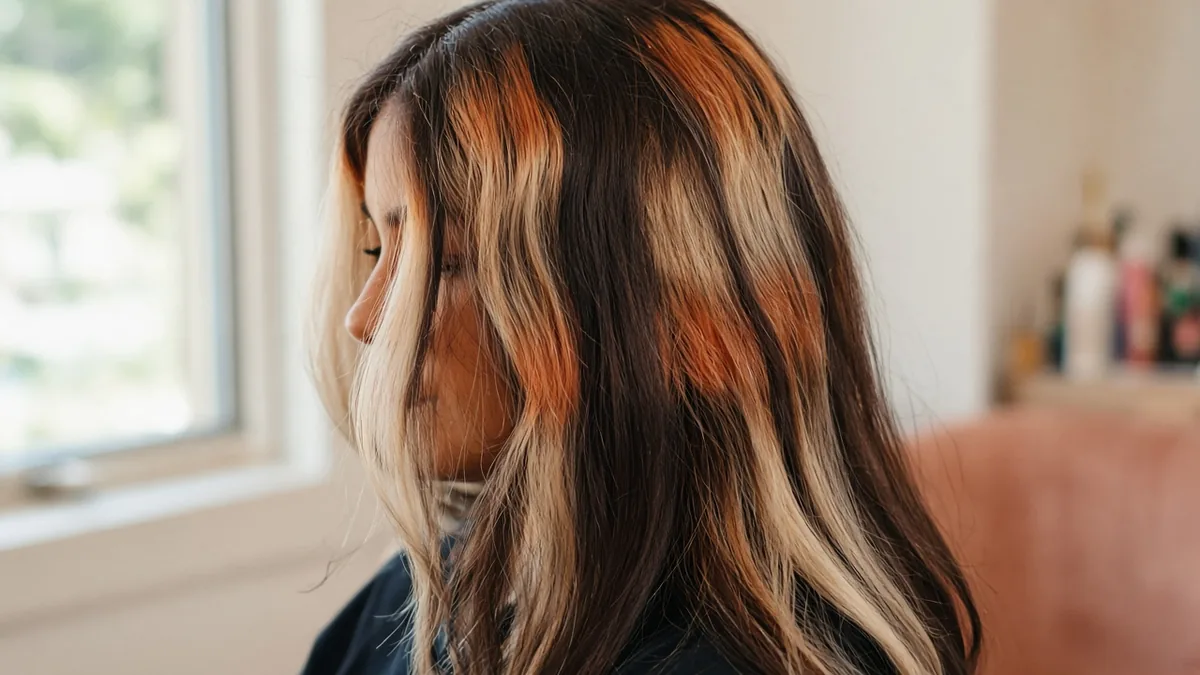
Calico hair takes its map from a calico cat: three colors, usually a dark base, a copper or red, and a pale blonde, laid down in distinct patches instead of blended streaks. Those patches are the whole point. They are also why the look is harder to get right than ordinary highlights. Each color fades at its own speed, each patch grows out on its own schedule, and a patch that looks perfect worn down can disappear the moment you tie your hair back.
The good news is that calico doesn’t mean bleaching your whole head. Only the copper and blonde patches get lightened, and on light brown or blonde hair, a soft version can be done with no bleach at all. What you pay for, in time and in hair health, depends on how dark you start and how pale you want the lightest patch.
What calico hair actually is
The name comes from the cat, and the cat’s genetics explain the look better than any mood board. A calico cat’s orange and black fur comes from a coat-color gene on the X chromosome. Females carry two X chromosomes, and in each patch of skin one of them is switched off, so some patches grow orange fur and others black. White comes from a separate gene. That is why, as the Merck Veterinary Manual explains, almost every calico cat is female. The National Human Genome Research Institute describes the same random X inactivation behind the patches.
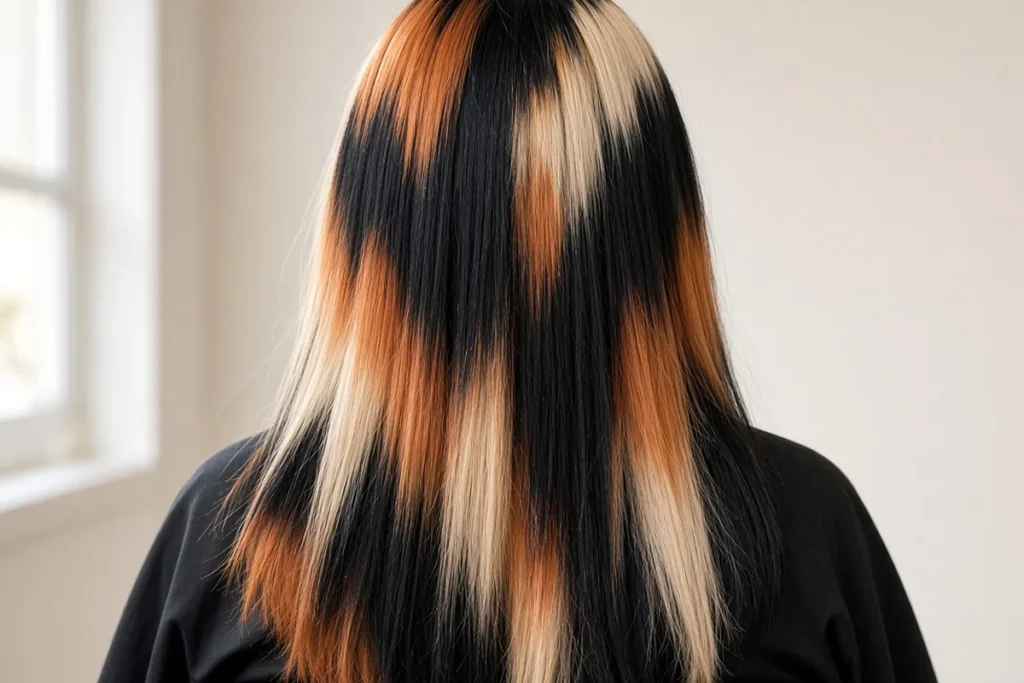
In hair terms, calico color is patchy by design: clear areas of one color sitting next to clear areas of another, not a gradient. A good calico looks random from across the room, but a colorist has mapped every patch.
Most calico looks share three traits:
- Three colors. Usually dark brown or black, a copper, ginger or red, and a blonde from butter to platinum. Your natural color often serves as the dark one.
- Chunky sections. Patches are often two or three fingers wide, much bigger than foil highlights.
- Visible edges. Edges can be crisp or slightly softened, but you should still see where one color stops and the next begins.
Calico hair vs. similar color trends
People mix up calico with several trends that use some of the same tools. These differences matter when you book, because a colorist who hears “chunky highlights” will plan a very different service.
| Look | Colors | Placement | How it grows out |
|---|---|---|---|
| Calico | Three: dark, copper or red, blonde | Irregular patches across the head | Patch by patch; regrowth shows under the light patches |
| Skunk stripe | Two: dark plus one light | One bold stripe or two panels at the part | Shows fast because it sits right at the part |
| Chunky highlights | One or two light tones | Many thick streaks, evenly spaced | Root line across the top |
| Peekaboo color | Usually one accent | Hidden under the top layer | Easy, the top layer covers it |
| Color blocking | Any two or more colors, often vivid | Large geometric sections | Depends on how many blocks touch the part |
In short, calico is a kind of color blocking with a natural cat-coat palette and a patchwork layout. Swap the copper for pink or the blonde for lilac and you have the vivid calico variations that show up as “pink calico hair” or “purple calico hair” searches. The structure stays the same; only the palette changes.
Ways to wear calico hair
The classic version is chunky patches all over the head, but most calico you see in salons now is one of a handful of variations. Which one you pick changes the cost, the grow-out and how loud the result looks.
- Calico ribbons. Long, vertical panels of each color running from root to end. They read clearly on straight and wavy hair and are the closest thing to the photos that made the trend popular.
- Calico balayage or ombré. The copper and blonde are painted from the mid-lengths down and the root stays your natural color. You lose some of the patchwork effect, but regrowth is barely visible for months.
- Calico money piece. A blonde panel at each side of the face with copper patches behind it. It puts the brightest color where people see it and keeps the back simple.
- Two-tone calico. Drop one of the three colors, for example copper patches on a blonde base, or black and copper with no blonde. It is cheaper and kinder to dark hair because nothing has to reach pale blonde.
- Peekaboo calico. The patches sit under the top layer and only show when you move or tie your hair up. More on placement below.
If you are unsure, start with ribbons or balayage. Both can be turned into full patchwork at the next appointment, while undoing an all-over patch map usually means a color correction.

Choosing your three shades
The safest way to build a calico palette is to start with the color you already have and pick two accents that suit your skin. The dark shade does most of the visual work, so if it fights your complexion, the copper and blonde won’t save it.

Read your undertone first
Look at the inside of your wrist in daylight and notice which jewelry looks better on you. Greenish veins and a preference for gold usually point to warm undertones. Bluish veins and a preference for silver point to cool. Can’t decide? You’re probably neutral, which gives you the most freedom.
| Undertone | Copper or red accent | Blonde accent | Dark base |
|---|---|---|---|
| Warm (golden, peach) | Ginger, copper, apricot | Butter, honey, golden beige | Chocolate, espresso with warmth |
| Cool (pink, rosy) | Deeper red, cherry-copper, auburn | Champagne, pale beige, icy cream | Cool espresso, soft black |
| Neutral or olive | Copper-gold, cinnamon | Beige blonde, cream | Rich medium-to-dark brown |
Two practical notes go with that table. Very pale platinum next to jet black has the highest contrast and the biggest grow-out line. A softer pairing, like chocolate with caramel and honey, gives a calico effect that reads closer to a brunette with personality.
Popular calico palettes
- Classic: black or espresso, bright ginger, platinum or cream. Maximum drama.
- Soft brunette calico: chocolate base, caramel, butter blonde and a muted copper. Easier on the eye and easier to grow out.
- Red-led calico: auburn or copper as the main color with dark brown and strawberry blonde accents. Good if you already have red hair.
- Dark or subtle calico: very dark brown with small copper and bronze patches, often placed underneath. Common in “subtle calico hair” searches and the easiest version to wear to a conservative workplace.
- Vivid calico: the same patchwork with fashion shades such as pink, blue or purple. These need the most lightening and fade the fastest.
Placement: where the patches go
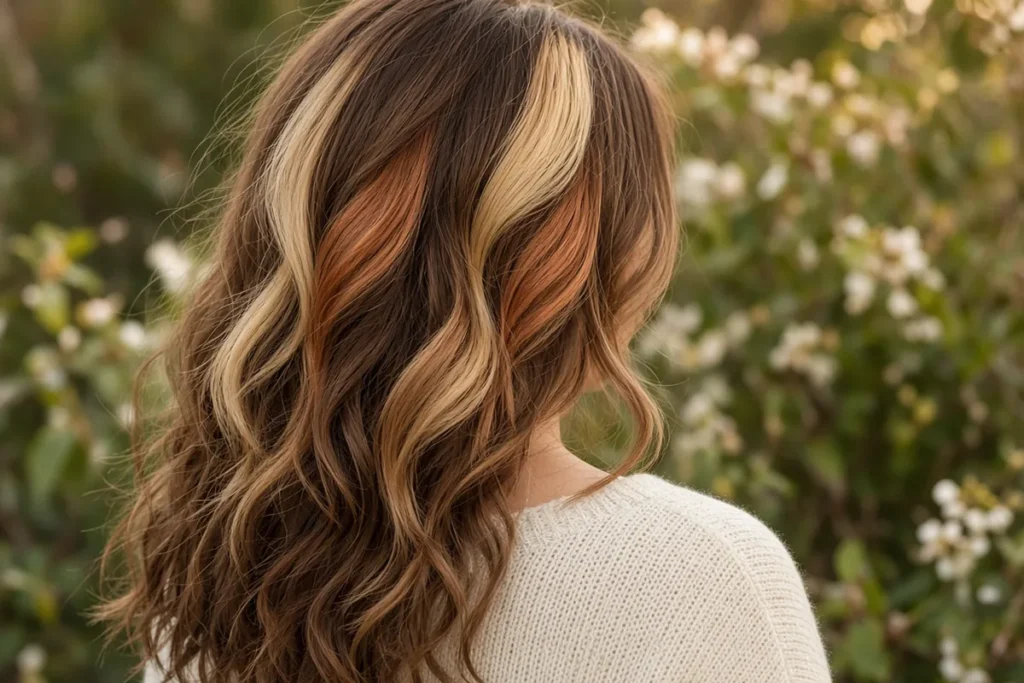
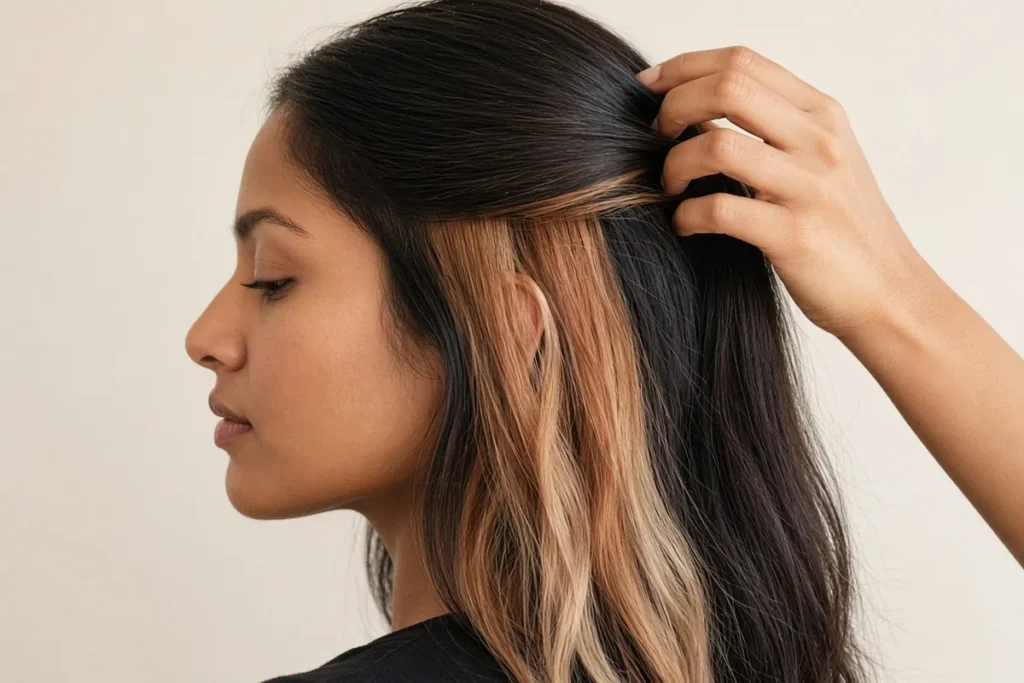
Placement decides whether calico looks deliberate or accidental. Put the boldest patch somewhere you’ll see it in your everyday style, such as the front hairline, the part line or the crown. A gorgeous patch at the nape vanishes every time you wear a ponytail.
Straight and wavy hair
On straight and wavy hair, long vertical panels or stripes show off the colors cleanly. Colorist Maelee Baxter told Allure that stripes give straight or wavy hair a more striking result.
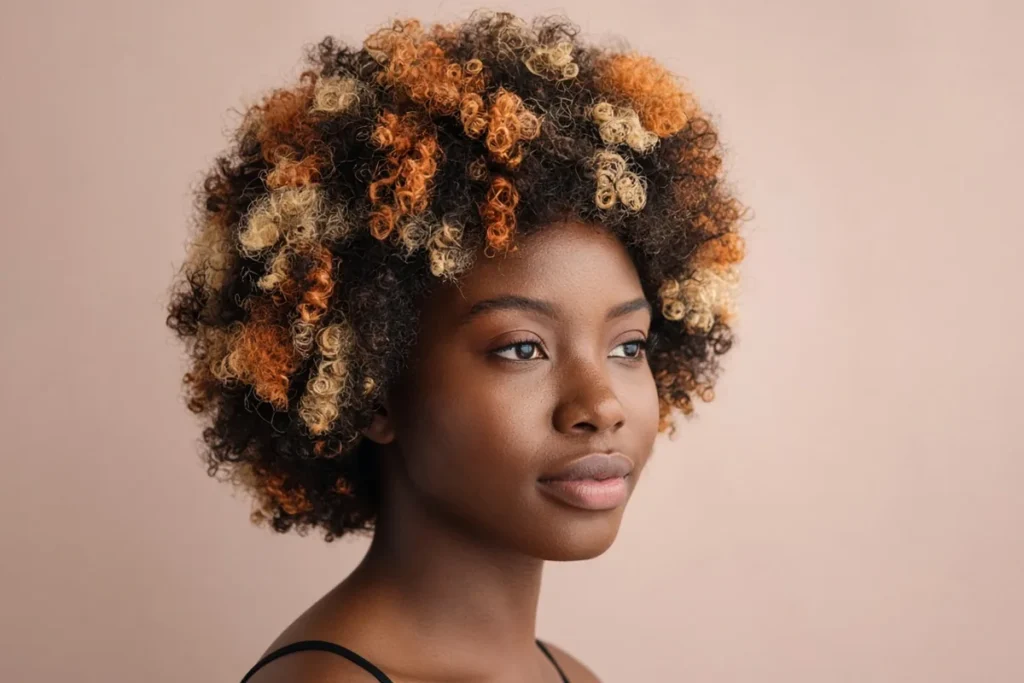
Curly and coily hair
For kinky and curly textures, Baxter suggests a grid pattern or abstract blocks rather than stripes, because curls show more of the interior layers. London stylist Lois Bonsu, who specializes in textured hair, says that on textured hair the result can look strikingly like a real calico cat. Color whole curl clumps, not thin strands, so each patch reads as a shape once the curls spring up.
Short hair and hidden placement
Bonsu calls medium-to-long hair the ideal canvas because it’s easier to section, though short hair can work with fewer, bolder patches. If you need a lower-key version, peekaboo calico puts the copper and blonde under the top layer. It stays hidden when your hair is down and smooth, then shows when you tuck it behind your ear or pull it up.
What happens at the appointment
Expect a consultation first. Stylists interviewed by Allure stress this because everyone pictures calico differently. Bring two or three photos that share the palette you want, and point to what you like in each one: patch size, colors, or placement.
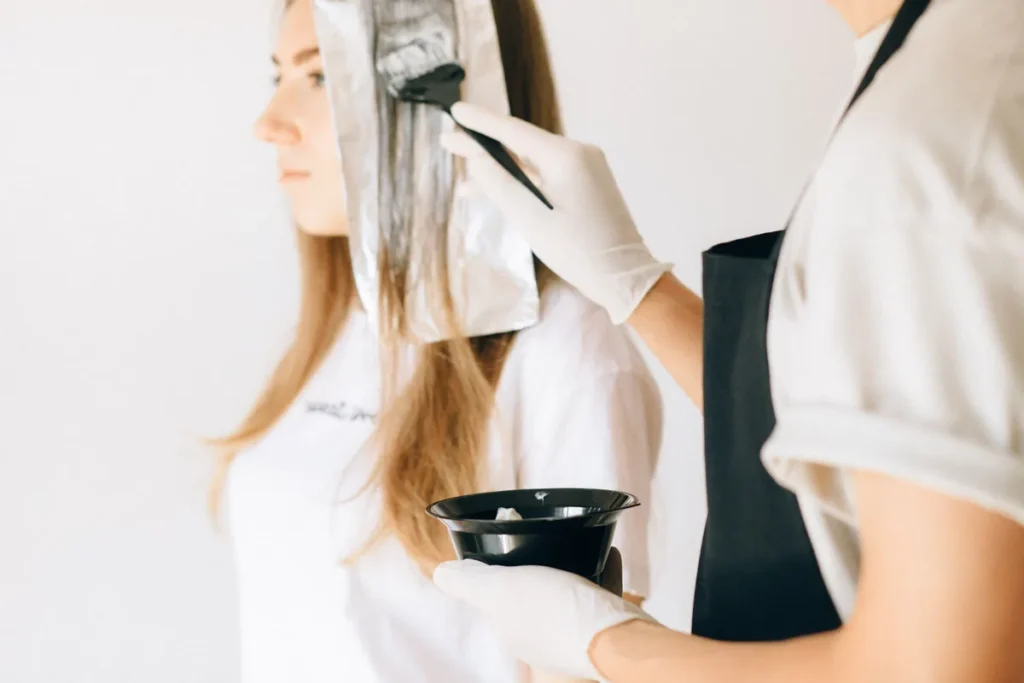
On the day, your colorist sections the hair and marks which areas get which color. Any area that needs to be blonde or copper on dark hair has to be lightened first, then toned or colored. Bonsu estimates three to six hours depending on length and texture, and adds reparative treatments for textured hair, which tends to be drier and more fragile.
How much lightening each patch needs
How far a patch has to lift drives both the time and the damage. The American Academy of Dermatology notes that going more than three shades lighter than your natural color needs higher-volume peroxide, which causes more damage. Calico limits that damage to the patches, but those patches still take the full hit.
| Starting color | Copper patches | Blonde patches | What to expect |
|---|---|---|---|
| Black or darkest brown | Big lift, then copper deposit | The biggest lift on the head, then toner | Often split across two visits |
| Dark to medium brown | Moderate lift | Large lift, then toner | Usually one long visit |
| Light brown | Little or no lift | Moderate lift | One visit |
| Already blonde | Deposit copper only | Tone only | Dark patches are deposited instead |
Treat this table as a planning guide, not a formula. Your colorist should confirm it with a strand test, especially if your hair has old box dye or henna, which can lift unevenly.
How much calico hair costs
Prices vary widely by city, hair length and how much lightening you need. Here are posted starting prices from salon menus we checked in November 2026:
- Jessabella Salon & Spa (Warwick, Rhode Island): calico full head with blowout from $215, or $245 with a cut.
- Lorena Colorist (Anchorage, Alaska): “Calico Cat” service from $220, listed at 150 minutes.
- Curl Up N Dye (Las Vegas): calico from $300, booked as a six-hour service.
- Assort Amsterdam (Netherlands): €280 for a double-process creative color or €360 for a triple process, plus a long-hair fee.
These are starting prices. Long or thick hair, a black base, and a color correction can all push the bill well past them. Ask for a written quote after the consultation, and ask whether toner and a bond-building treatment are included.
Can you do calico hair at home?
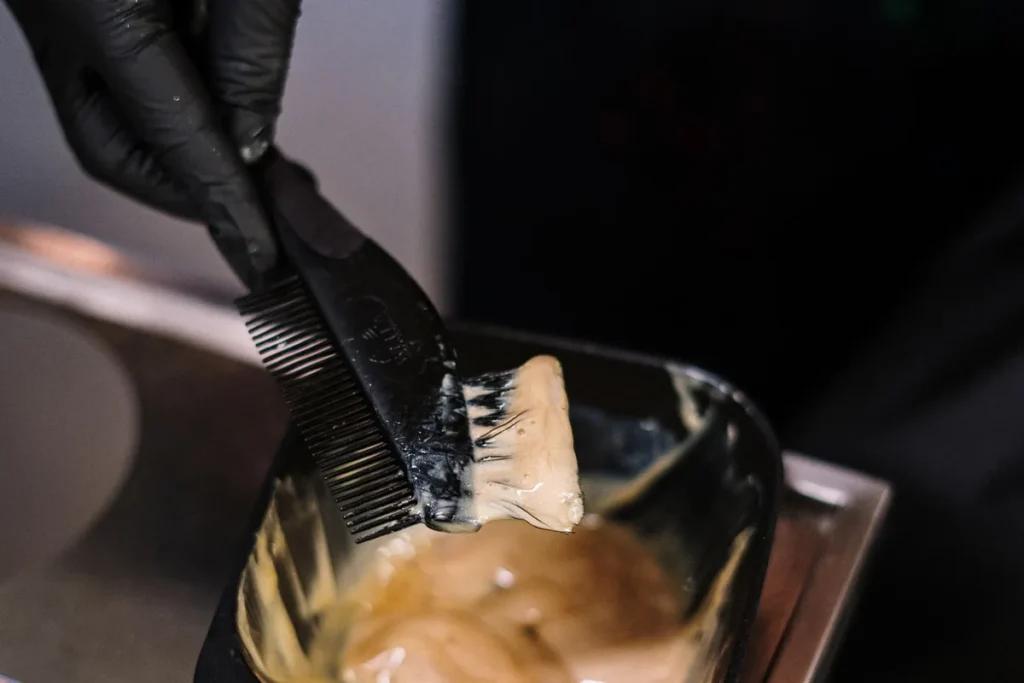
You can, but it is one of the harder color jobs to do on yourself. You have to lighten patches evenly on parts of your head you can’t see, then keep three colors from bleeding into each other while you rinse. Uneven lift on dark hair usually leaves orange or yellow patches that are hard to fix.
If you want to try, these routes carry less risk:
- Go deposit-only. On light brown or blonde hair, semi-permanent copper and brown can create a soft calico with no bleach at all.
- Do the dark and copper yourself, and leave the blonde to a salon. The blonde patches need the most lift, and that’s where DIY usually goes wrong.
- Try it temporarily. Clip-in panels or color-depositing products on pre-lightened pieces let you test the look before you commit.
Whatever you use, patch test it. The FDA advises putting a little dye on your skin and waiting 48 hours before using it on your hair. The NHS notes that reactions can take up to 72 hours to appear. It also points out that many permanent and some semi-permanent dyes contain PPD, and that a past black henna tattoo can raise your risk of reacting to it.
Keeping three colors alive
The three shades don’t age together. According to Wella Professionals, red and copper dye molecules are larger than those in browns and blondes, so they sit closer to the surface and wash out sooner. That’s why the copper softens toward peach first. Blonde patches turn yellow as their toner fades. The dark base barely changes. Plan your care around whichever accent fades fastest. Colorist Coley Scrittoale told Glamour that a gloss every four to eight weeks is what keeps multi-tone color like this looking fresh, and she builds extra protection for the red into the formula because it goes first.

- Wash less often. Bonsu suggests washing no more than once a week, or at least stretching to every three days if you have fine hair or an oily scalp.
- Finish with cool water. Stylist Raven Carnes recommends a cold final rinse to help the color last and to stop copper or dark sections from bleeding onto the blonde. Dermatologist Ellen Marmur explains that warm water makes the cuticle more pliable so color escapes, while cold water helps it lie flat.
- Target your toning products. Use purple shampoo only on the blonde patches. On copper it dulls the warmth you paid for.
- Refresh the copper. A copper color-depositing conditioner once a week keeps that patch from fading out ahead of the others.
- Protect from sun and heat. The AAD notes that sun leaves dyed and bleached hair weaker and more faded, and recommends a hat or a leave-in conditioner with zinc oxide. Use a heat protectant before hot tools, especially on lightened patches.
Bonsu suggests touch-ups about every six weeks. Baxter notes that curly and coily hair can often go longer because shrinkage hides regrowth. Wait too long, though, and the touch-up takes longer, because your colorist has to find and match each patch again. The AAD suggests spacing color services out, to every 8 to 10 weeks or longer in dry winter weather.
How to ask your colorist for calico hair
“Calico” is a young enough term that two colorists may picture different things, so describe it in parts:

- Name the three colors and which one leads. “My natural dark brown stays the main color, with copper and butter blonde as accents.”
- Give the patch size. “Chunky patches about two fingers wide, not fine highlights.”
- Pick crisp or soft edges. “I want clean edges between colors,” or “Soft edges that melt slightly.”
- Talk about grow-out. “Can we place the blonde so the regrowth isn’t right on my part?”
- Agree on the plan. “If the blonde needs two sessions, can we do the copper today and finish next time?”
Also ask for a gloss over the whole head at the end. It evens out shine between lightened and unlightened sections so the patches look like one finished color, not three separate jobs.
Calico hair for men
Calico works on short hair too. With less length to work with, it usually means two or three bold patches on the crown and fringe instead of a full map. On a textured crop or a messy fringe, a copper patch and a bleached patch on a natural dark base read as calico without looking like frosted tips. Short hair gets cut often, so you’ll trim the color away faster, but you’ll also see regrowth sooner on a short cut.

When to choose something else
Calico isn’t the right call for every head of hair:
- Hair that’s already over-bleached or breaking. Don’t lift it again. Deposit-only copper and brown can still give a soft calico effect.
- Old box black or henna in the lengths. Expect unpredictable lift and maybe a color correction first.
- You want low upkeep. Balayage grows out far more gently than separate patches.
- Fine, thin hair. Pale patches next to dark ones can make hair look sparser. Keep the blonde to a couple of small panels or choose a soft brunette palette.
- You’ve just had a relaxer or perm. The AAD recommends doing that first and waiting two weeks before coloring.
If you want the warmth of calico without the patchwork, our chestnut brown hair guide covers red-gold browns, and a crimped hair texture shows off patches beautifully on straight hair. There are more shade guides in the HairBrave hair color section.
Calico hair FAQ
Is calico hair high maintenance?
Moderately to highly. Expect a gloss or toner refresh between appointments and color touch-ups about every six weeks, with a little longer on curly hair. The copper patch usually needs the most attention.
Does calico hair damage your hair?
Only the lightened patches take bleach damage, which is less than an all-over blonde. Those patches still need gentle handling, conditioner after every wash, and a heat protectant.
Can you get calico hair on black hair?
Yes, and black hair gives the most dramatic contrast. It also needs the most lightening for the blonde patches, so plan for more time, a possible second session and extra aftercare.
What is a “calic” in hair?
“Calic” is a common misspelling of “cowlick,” a patch of hair that grows in a different direction from the hair around it. It has nothing to do with calico color.
How long does calico hair last?
The dark base lasts until it grows out. The copper usually looks noticeably softer within four to six weeks, and blonde patches turn yellow as their toner fades, often in a similar window. Most people book a gloss or toner between full touch-ups.
Can I get calico hair with box dye?
Only in a limited way. On light brown or blonde hair, semi-permanent copper and brown can give a soft calico with no bleach. On dark hair, the blonde patches need controlled lightening that is very hard to do evenly on yourself, so that part is a salon job.