
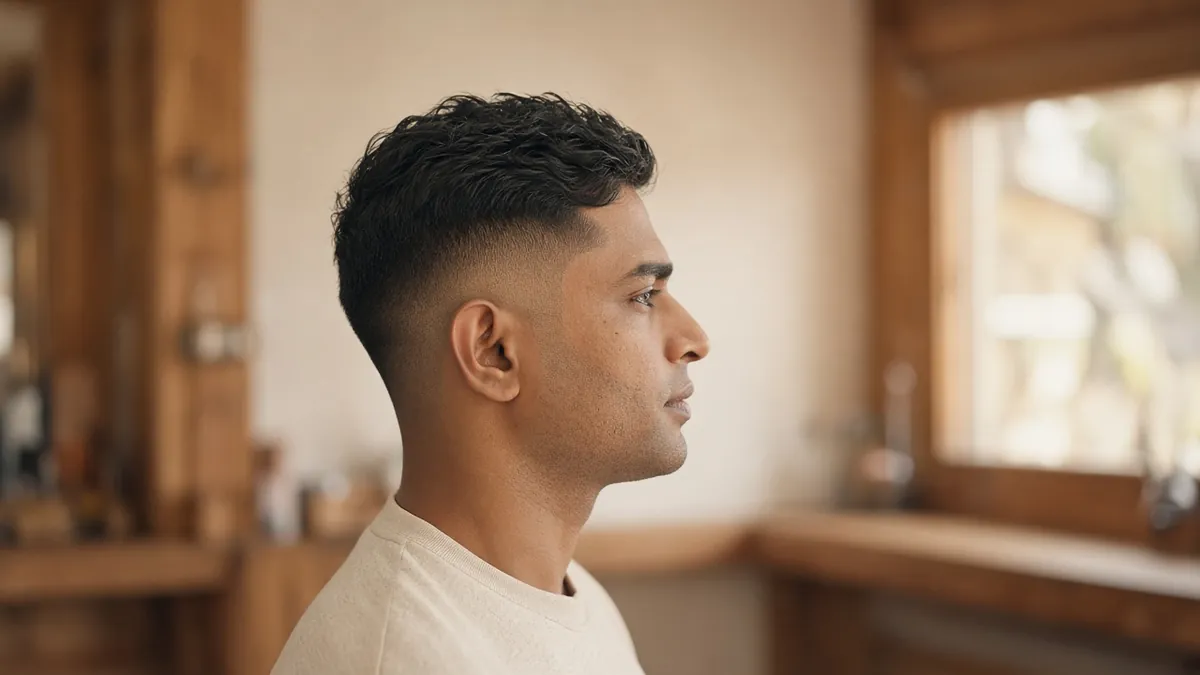
A shadow fade leaves a thin veil of hair at the shortest point of the sides and back. You still get a graduated, neat outline, but your barber doesn’t finish the base with a razor or foil shaver. It can sit low beside your ear, at mid-height, or higher near the temples.
The catch is that “shadow” tells your barber how short to finish, not where to put the fade. Without a height, top length, and neckline plan, two men asking for the same cut can leave with different results.
What a shadow fade actually means
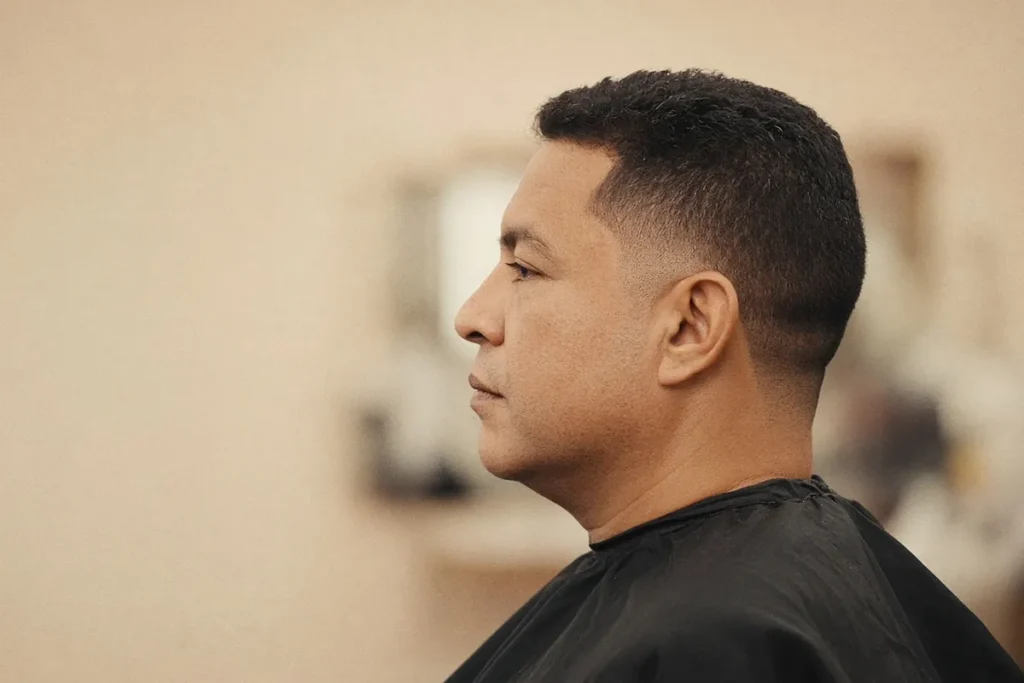
Look at the bottom edge beside the ear. If there’s short hair you can see or feel, rather than completely shaved skin, that’s the defining feature. Above it, the barber changes gradually to longer lengths, with no obvious horizontal step between guards. The darkness of the base depends on your hair color and density.
The Markcutit barbershop guide describes the finish as commonly starting around a half or number one guard. These are useful reference points, not a single universal prescription. Ask what your barber intends to leave at the bottom before they start.
A shadow fade haircut can look discreet on lighter hair, while the same short guard on dense black hair may show a darker band. Show a reference that resembles your own hair and check the result in normal lighting rather than only beneath a bright barbershop lamp.
Choosing low, mid, or high placement

A low placement keeps most of the side length intact and concentrates the gradient just above the ears and along the lower nape. It may suit you if you’re trying a fade for the first time or want to keep a familiar silhouette. Ask the barber to show where the upper edge will end.
A mid placement brings the graduation farther up the side, close to temple height. It makes the fade easier to see without necessarily removing all the weight beneath your crown. Our mid fade haircut guide explains how height and top length work together.
A high placement begins above the temple and removes more side bulk. You still keep a visible layer of hair at the bottom, but the side silhouette becomes more dramatic. Look carefully at the back of the reference to see how high the cut continues behind the head.
Eight shadow fade haircut styles to consider
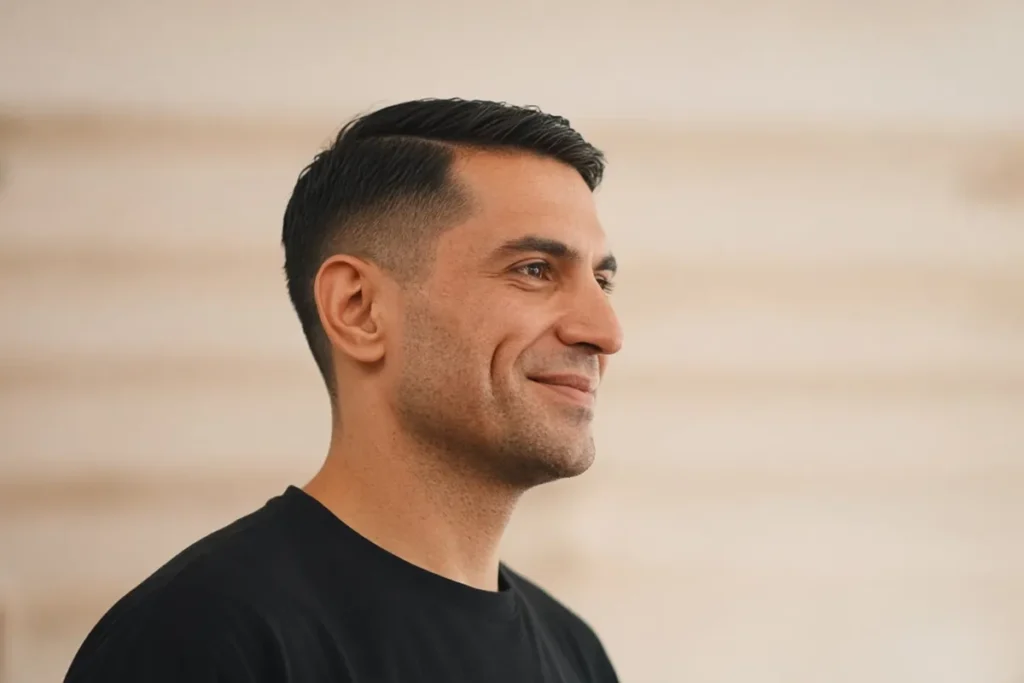
Start with the top you already enjoy wearing. A fade doesn’t decide whether you part your hair, wear curls, or leave a little length at the front. These eight versions have distinct shapes, and the side or rear photograph should show the visible short-hair base in every one.
Low shadow fade with a classic side part
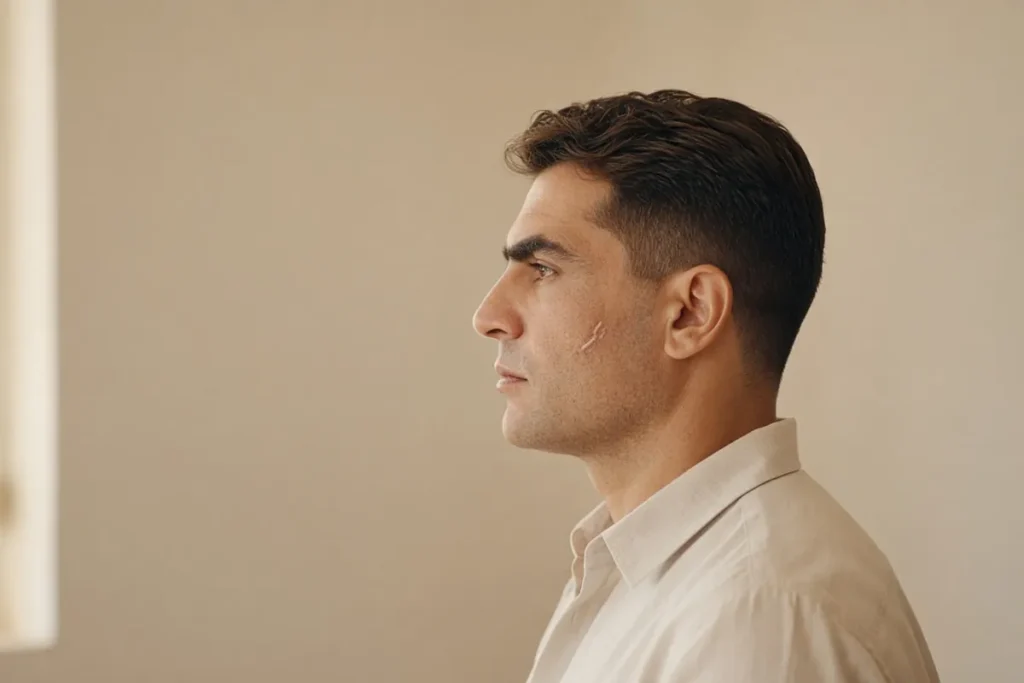
Leave about two to three inches on top so the hair can lie in its natural part. Keep the side graduation low, then connect it smoothly into the upper sides. The final shape should remain recognizably a side part, not a disconnected undercut hiding above a tiny fade.
If you wear glasses, ask the barber to check how the temples sit against the shorter hair. A little natural side weight can give you a tidier outline without requiring a hard shaved part or a highly polished finish every morning.
Mid-height shadow with a textured crop

Keep a short, broken-up fringe that sits forward over the forehead, with the fade climbing to mid-height on the sides. The top should have enough separation to show texture without being cut into thin, uneven pieces. A matte product can help if the hair naturally falls flat.
This is a good choice to photograph from the side. You want to see both the crop fringe and the gradual shadow beside the ear. If the fade rises too high, the top can start to resemble a strip rather than a connected crop.
High shadow with a short quiff

Keep extra length at the front for a modest upward sweep, then bring the side fade above the temples. Because the sides are short across a larger area, ask for a soft upper connection that doesn’t leave the quiff looking perched on top of the head.
Try styling the quiff with your ordinary dryer and a little product during the consultation. If it only holds with a long blow-dry routine, you may want a lower shape or a shorter front that needs less daily work.
Neat crew cut with a shadow blend
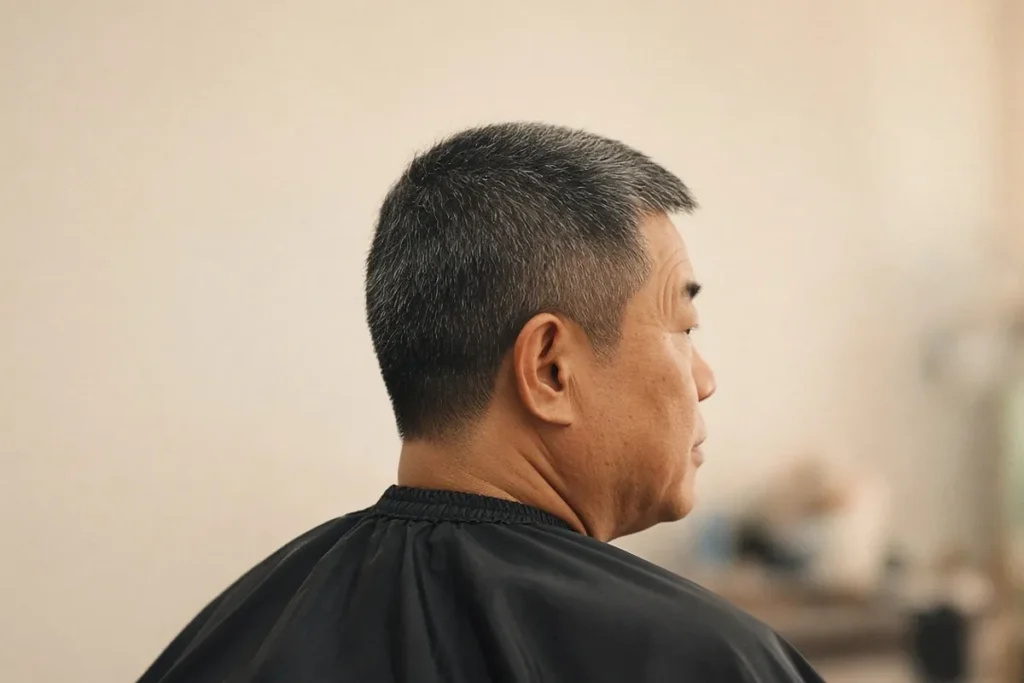
A crew cut keeps the top close, usually with a little extra length toward the front. The soft fade can make the outline appear less severe than a bare-skin version. Compare the crown and front before settling on the same guard across the whole top.
For a first short cut, ask your barber to demonstrate the proposed guard on a small section. Once the entire top is clipped very short, the options for changing the shape are limited until it grows. A careful start can save an unwanted surprise.
Curly crown with softly faded sides
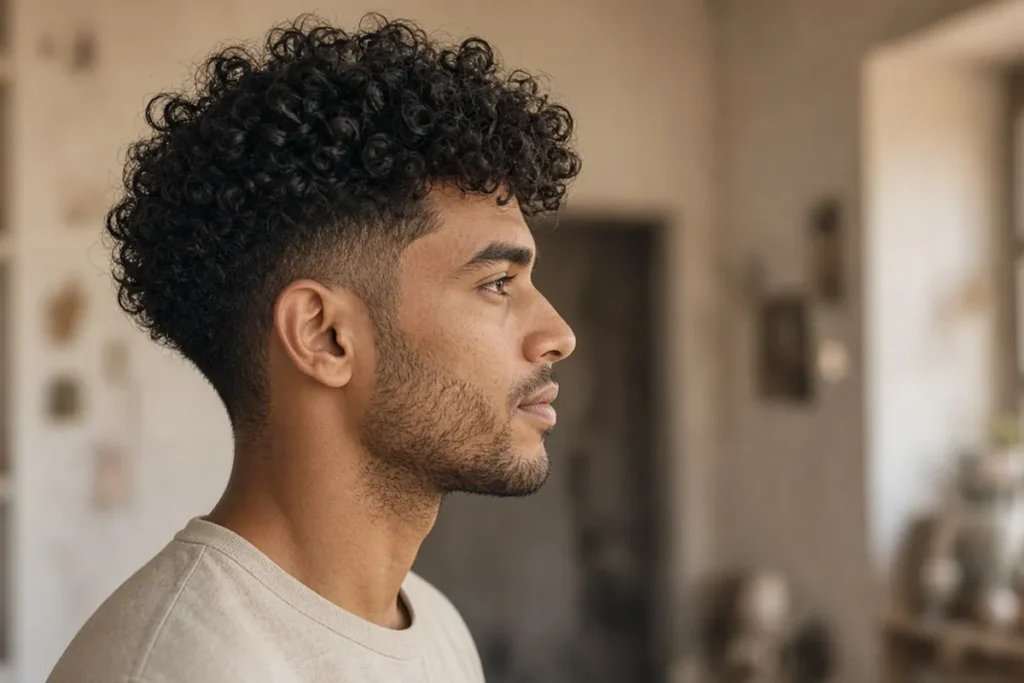
Leave enough length above the fade for the curls to form their normal loops. The sides should gradually darken toward the top without creating a shelf of heavy hair above the ear. Ask for the outline to be checked after the curls settle into their dry shape.
Our low taper with curly hair guide offers another way to keep more side length if a full fade seems too short. Choose based on how much of the sides you actually want graduated.
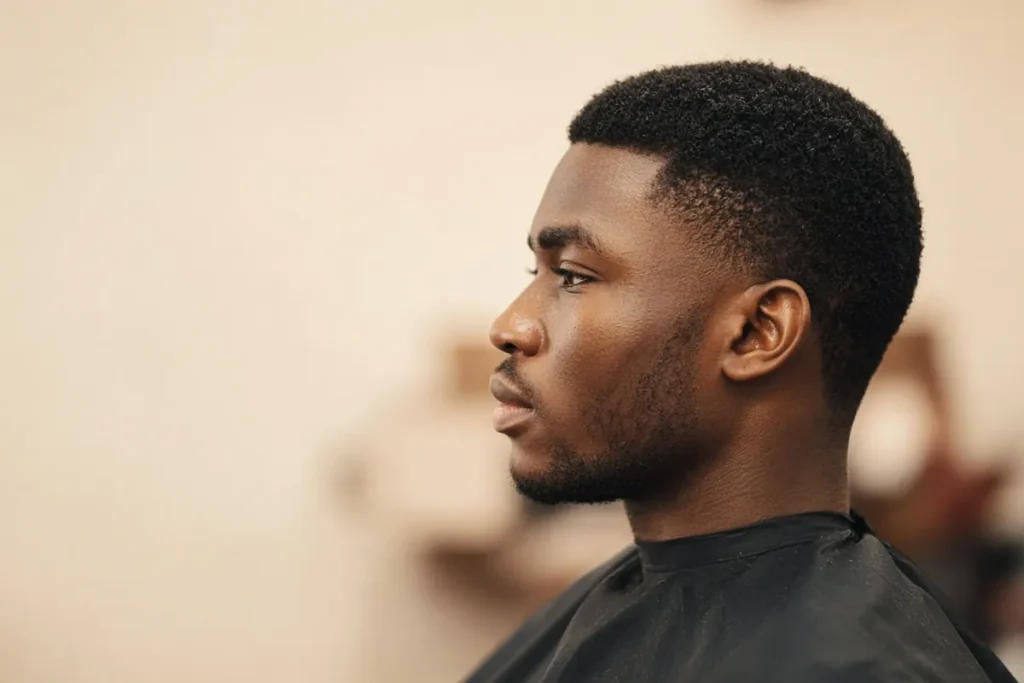
Rounded coily top with shadow sides

For tightly coiled hair, the short shadow beside the ear can support a full, rounded crown. Make sure the barber shapes the top according to its natural density rather than flattening every section. A slightly softer front edge can keep the result comfortable and easy to live with.
The short base may appear especially dark against a dense coil pattern. If that isn’t the contrast you want, ask about keeping the lowest guard a little longer. Don’t judge the result from an example photographed with a different hair texture.
Slicked-back top with shadow sides

Keep longer hair across the front and crown so it can be combed backward, while the sides remain graduated rather than abruptly disconnected. A soft shadow base can make the slicked-back shape feel less stark than a very high skin fade.
If your hair naturally separates at the crown, ask the barber to demonstrate the finished direction. Some hair needs a little dryer guidance, and a lighter styling cream may feel more comfortable than a heavy wet-look gel for everyday wear.
Drop shadow with a natural neckline
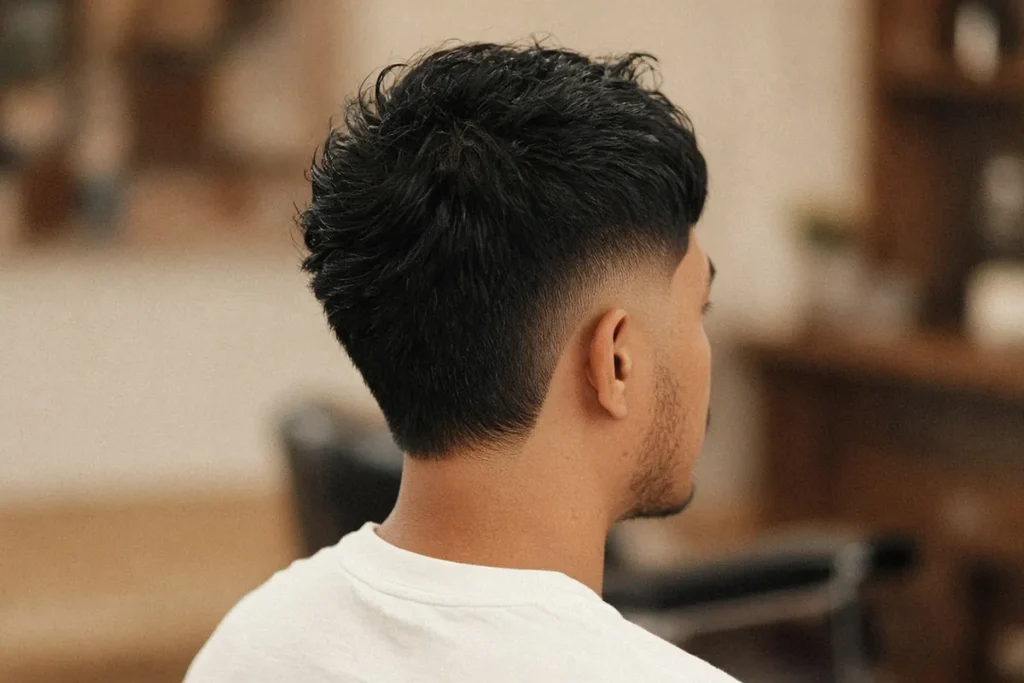
Let the fade travel downward behind the ear, following a curved path toward the nape. The base still leaves short visible hair, but the back has a descending outline instead of a level band. Keep the neckline natural and tidy if you don’t want a sharply boxed finish.
Bring a rear photo for this version. Two cuts may look identical near the ear while one has a much more pronounced drop behind it. If the barber asks where the curve should reach, point to the position on your own head.
Shadow fade versus skin fade and taper

The finish is the easiest difference to check. A skin fade ends at bare scalp, often with a foil shaver or razor. A shadow finish stops before that final step, leaving visible stubble. A taper usually concentrates shortening at the sideburns and neckline rather than blending most of the sides.
The Highgate Cuts comparison notes that barbers don’t use these terms identically. One shop may call a no-guard clipper finish a zero fade while another calls it a shadow. Explain what you want to see, not only what you want the cut called.
Our skin fade guide shows how a bare-scalp finish changes contrast. If you have a strong preference against exposed skin, make that part of your request. A barber shouldn’t have to infer it from a photograph taken in deep shadow.
A taper is another sensible option if you want to retain most of your sides. The temple fade guide covers a more localized fade around the temples. Choose the area you want shortened before getting distracted by the labels.
Guard numbers and what the blend should show
A standard number one guard is about one-eighth of an inch, while a half guard leaves approximately one-sixteenth. Barbers may combine guards and the clipper’s lever to create smaller steps. These are nominal lengths; the actual appearance depends on your hair and the tools used.
Your barber may start close to the ear with a half guard, then use progressively longer settings toward the upper side. Another client may prefer a number one at the base for more coverage. Neither option automatically sets the height or the curvature of the fade.
Ask to see the shortest section before the blend is taken higher. A pale stripe where the scalp shows can be a sign that the lowest setting is shorter than you imagined. It may still be a shadow finish, but your preferred contrast matters more than the label.
The finished blend should move from short to long without a sharp horizontal ridge. Check both sides in the mirror and ask for a rear view. A tidy neckline and a clean transition above the ear are easier to judge after the hair has been brushed into its usual direction.
Matching the fade to your hair texture and density

Straight hair can make a missed blending line obvious because the side sits close to the head. Ask the barber to check the transition in daylight, especially if your hair is dark and dense. Leaving a little weight above the fade may make a straight side-part shape easier to manage.
Wavy hair often creates movement near the crown, which can soften the outline above the short sides. The barber should see it dry before cutting too much bulk away. If you normally style without heat, ask for a finish that works when the waves air-dry.
Curly and coily hair can shrink and lift after drying. The visible shadow at the base may be clear, but the upper connection still needs care. Ask the barber to check for a shelf above the ear and preserve the shape of the curls you want to keep.
Gray or lighter hair may produce a less pronounced shadow than very dark hair. That’s not a flaw in the cut. If you want the fade more visible, discuss the height and the contrast between the base and top instead of insisting on the shortest possible clipper setting.
Neckline, sideburns, and scalp comfort

Don’t leave the neckline decision until the last minute. You can ask for a natural rounded edge, a subtly squared outline, or a tapered finish. With a drop pattern, the lower curve should connect cleanly to whatever edge you choose. The back photo is as important as the side.
If you wear a beard, decide where the sideburn should meet it. A fade can move gradually into beard length without an abrupt bare strip between the two. Ask to see the side connection with your facial hair combed in its usual direction rather than judging it only from the front.
A clipper-only finish avoids the extra razor or foil-shaving step at the base. The American Academy of Dermatology’s razor-bump guidance explains that close shaving can cause irritation and bumps. Keeping visible hair may help some men avoid that step, but it isn’t treatment for persistent skin symptoms.
If the back of your head is already inflamed or regularly develops painful bumps, tell the barber before the haircut. Avoid asking for an extremely close finish over irritated skin, and speak with a dermatologist if symptoms continue. A different haircut shouldn’t be used to conceal a problem that needs care.
What to tell your barber in the chair

Start with the finish: “I’d like a shadow fade with short hair still visible at the bottom, not shaved to skin.” Then add the height and top shape. For example, “Keep it low by the ear, about a number one at the base, with enough length for a natural side part.”
For a more visible fade, you could ask for a mid-height gradient and a short textured top. Point to the position above your ear and explain whether you want the fade to remain level or follow a curve behind the head. A picture is helpful, but the words resolve details a photo may hide.
Bring side and rear views if possible. A frontal portrait may show a sharp top and hairline without revealing how the sides were cut. Tell your barber if your hair sticks outward, your crown has a strong swirl, or your last cut became bulky in one area before the rest.
If you’re unsure between two bottom lengths, begin with the longer one. You can ask for a closer finish while you’re in the chair, but clipped hair cannot be put back. Have the barber check the result in natural light before finishing any front lineup.
Styling and maintaining a shadow finish

The sides need little daily styling if the blend has been cut correctly. Concentrate on the top: a small amount of matte paste for separated crops, a light cream for casual waves, or a comb and modest hold for a side part. Don’t use so much product that the top hides the fade.
How soon the shape seems grown out depends on your hair growth, the height, and how much contrast you like. The base already contains short hair, so new growth can appear less abrupt than after a bare-skin fade. That doesn’t mean a fixed three- or four-week appointment is necessary for every man.
Avoid trying to recreate the transition behind your ear with home clippers unless you’ve learned the technique. Cutting one guard higher by mistake can leave a line that requires the whole fade to be raised. A quick professional neckline trim may be enough if the top still feels right.
Common mistakes and how to avoid them

The first mistake is naming the finish but not the height. “Shadow” alone does not tell the barber whether to remove hair high up the sides or only near the ear. Decide the upper boundary and ask what happens behind the head before the first pass.
The second is bringing a bare-skin reference when you don’t actually want bare skin. A bright white area beneath the fade in a photograph may be shaved. Confirm the planned bottom guard, especially if your photo has harsh lighting or a different hair density from yours.
Finally, don’t treat a short faded side as a solution for painful scalp bumps or hair loss. Mention symptoms clearly, keep irritated skin away from unnecessarily close grooming, and seek medical assessment when needed. Your haircut should be comfortable and straightforward to maintain.
Shadow fade FAQs
Can a shadow fade be low or high?
Yes. The term describes how short the base gets, while low, mid, and high describe how far up the sides the blend begins. A low option keeps more side length; a high one removes more. Bring a side photo and point to the placement you want.
Is a shadow fade the same as a zero fade?
Sometimes the names overlap, but shops use zero differently. A clipper without a guard can leave very short stubble, while a foil shaver or razor takes hair to skin. Tell the barber you want visible short hair at the base and no shaved finish.
What guard should I ask for?
A half or number one is a common starting point, but the better request describes the amount of scalp you want to show through. Your hair color and density affect the result. Ask your barber to demonstrate the shortest setting before applying it across the sides.
Can I combine it with curls and a beard?
Yes. Keep the curls long enough to form their natural pattern and blend the sideburns toward the beard rather than leaving a bare strip. Ask the barber to inspect the curl shape dry and photograph the side connection so you can describe it at the next visit.
How often does this cut need a trim?
There isn’t one schedule for everybody. Book when the transition no longer looks the way you want or the neckline feels untidy. A darker shadow may disguise regrowth differently from a skin finish, but your hair growth and tolerance for extra length decide the timing.