
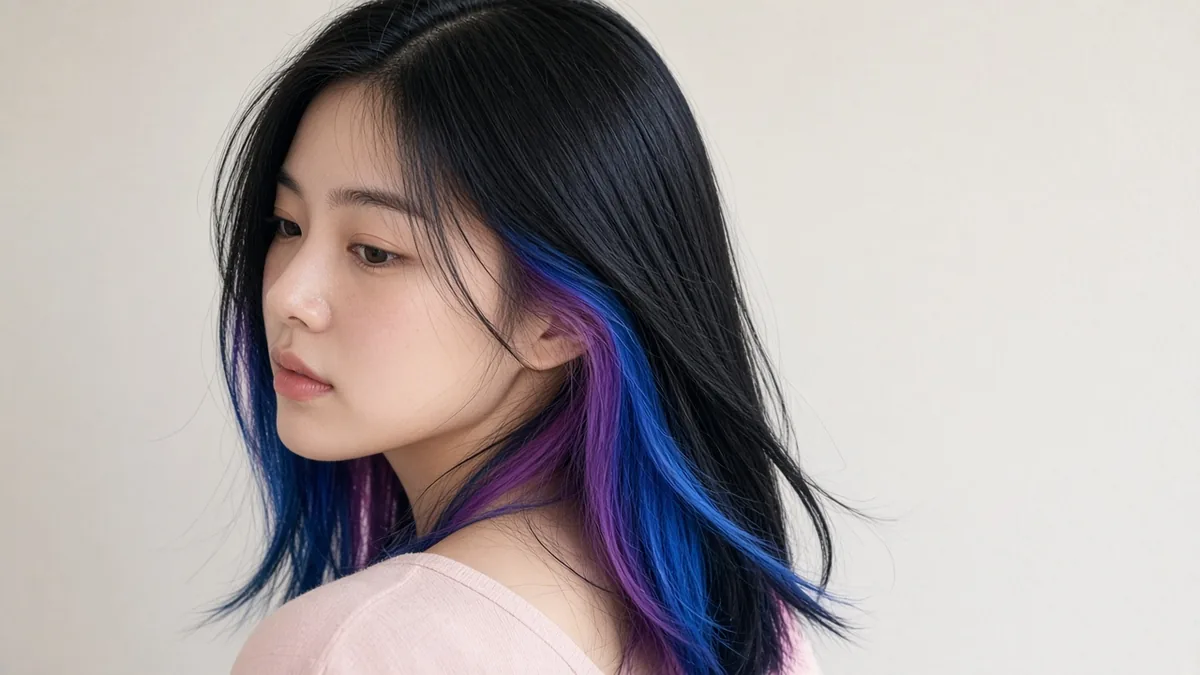
Peekaboo hair is color placed on the under layers of your hair, so it stays mostly hidden under your natural shade and flashes into view when you move, tuck your hair behind an ear or tie it up. Hair down at work, it looks like nothing happened. Ponytail on Saturday, and there’s a streak of pink, blue or copper underneath.
That on-off switch is the whole appeal. It’s also why peekaboo hair is the first bright color I’d point most people toward if they’re curious about vivids but nervous about a full head.
But “hidden” only works if the placement is right. Put the section too high and it shows all the time. Take it too close to the hairline and it pops out every time you wear a bun. Get that bit right and the shade almost takes care of itself.
So what is peekaboo hair?
Think of your hair as two layers. The top layer, from roughly your temples up over the crown, stays your base color. The color goes underneath it, usually in a band around the back and sides of the head, sometimes just a panel behind the ears or at the nape.

Pulp Riot’s educators describe it as color applied “to the middle or bottom layers of the hair,” hidden when worn down and revealed “through movement, parting shifts, or updos.” In their step-by-step peekaboo tutorial, the stylist separates the top with a zigzag horseshoe parting, then colors a 1-inch subsection starting an inch from the hairline. That gives you a feel for scale. It’s often a smaller section than people imagine.
You’ll also hear a few related names. Underlights and hidden rainbow are basically the same placement. Peekaboo highlights are fine foiled highlights tucked underneath, softer than a solid panel. A skunk stripe or money piece goes at the front where it shows all the time, which is the opposite idea. And calico hair uses three colors in bold patches; there’s a peekaboo version of that in our calico hair guide if you want more than one shade under there.
Picking a peekaboo color that suits your base
Contrast is the point, but some pairings work harder than others.
On blonde hair, pastels and bright pinks show up with no lightening at all, which is why blonde with pink peekaboos is one of the most searched combinations. Lilac, peach and soft teal work too. The trade-off is that pastels fade fast, sometimes in a few washes.
On dark brown and black hair, the color has to be lightened first or it’ll barely show. Jewel tones are the classic choice here: blue, purple, emerald, deep red. Honey or platinum blonde underneath black hair also looks sharp, and it’s the lower-maintenance option because blonde fades into blonde instead of into murky green.

On brunettes who want something quieter, caramel, copper or a warm golden brown a couple of shades lighter than the base is the subtle version. It looks like the sun got to your underneath. If you love that warm family, our chestnut brown hair guide explains how red and gold tones read on brown hair.
On red hair, try pale pink, rose gold or even a deep burgundy.
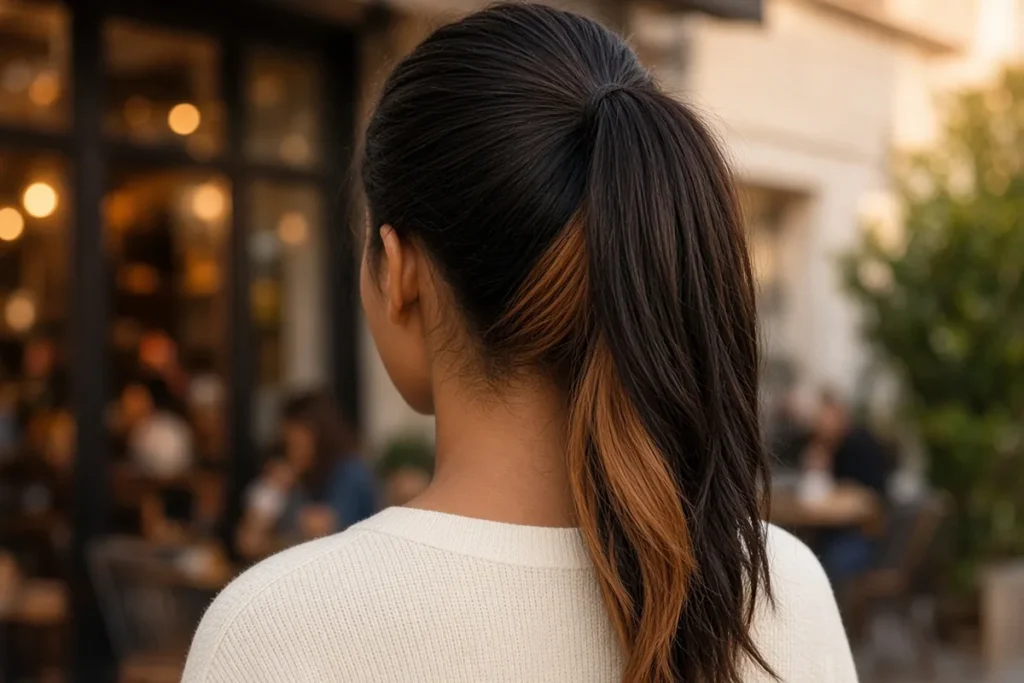
A quick word on skin tone. People overthink it with peekaboo hair, because the shade sits behind your face rather than framing it. If a color feels wrong against your skin, just keep it further back, under the crown and at the nape, and away from the sides.
If you want a quick shortlist, this is where I would start for each base.
| Your natural base | Bold peekaboo | Subtle peekaboo | Needs bleach? |
|---|---|---|---|
| Platinum or light blonde | Hot pink, lilac, teal | Peach, rose gold | No |
| Dark blonde or light brown | Copper, violet, bright red | Honey, caramel | Sometimes, for pastels |
| Medium to dark brown | Blue, purple, emerald | Caramel, copper, golden brown | Yes, for anything bright |
| Black | Electric blue, red, platinum | Honey blonde, chestnut | Yes |
| Red or auburn | Burgundy, deep pink | Strawberry blonde, rose gold | For pastels only |
How a salon does it
A colorist will usually work in two stages: lighten, then color.
Stage one is the lift. On dark hair, the section is isolated and lightened with bleach, usually in foils so it doesn’t touch the hair above. Most colorists stick with 20-volume developer for on-scalp work and take it slow, sometimes a second session for very dark hair, because vivid shades need a pale, even base around level 8 to 10. On lighter hair, Pulp Riot’s tutorial uses a high-lift permanent color instead of bleach to lift and tone in one step.
Stage two is the color. Semi-permanent vivids go onto the clean, dry, lightened section and process for the time on the product. The Pulp Riot tutorial processes for 25 to 40 minutes, then rinses with cold water, which they say keeps the cuticle closed and the color brighter.
Two placement details separate good peekaboo hair from a messy job. A zigzag parting rather than a straight line, so the edge of the color doesn’t show as a hard shelf. And a small uncolored margin around the hairline and nape, about half an inch in that tutorial, so you can wear a ponytail without the color peeking out where you don’t want it.
When you book, bring two photos: one of the color you want, and one showing how much of it you want to see with your hair down. That second photo is the one that matters. “Peekaboo” covers everything from a thin hidden band to a panel that shows every time you move, and a quick look at the reference saves both of you a lot of guessing. Tell your colorist how you usually wear your hair, too. Someone who lives in a high ponytail needs a different panel from someone who always wears it down with a side part.

What peekaboo hair costs
It varies a lot by city, how dark your base is, and how many shades you want. As a reference, here are a few salons that publish prices:

| Salon (US) | Listed service | Price | Time |
|---|---|---|---|
| Xclusive Hair Salon, McAllen TX | Peekaboo color | From $150 | About 3 hours |
| The Girl House, Springfield MO | Peekaboo color | $170, product cost discussed at consultation | 210 minutes |
| The Vivid Salon, Tarzana CA | Peekaboo highlights | From $175 | Not listed |
Pulp Riot puts typical salon peekaboo pricing at $150 to $350 or more, depending on whether pre-lightening is needed and how many shades go in. Prices were checked in November 2026 and will move. Expect to pay more if you’re starting from black or previously dyed hair.
Is it worth the salon price? For dark hair, I’d say yes. Bleaching underneath sections by yourself, where you can’t see, is where DIY goes wrong. For blonde hair getting a pastel or pink, doing it at home is much more realistic.
Doing peekaboo hair at home
If your hair is already light enough, peekaboo hair is one of the easier DIY color jobs. If it needs bleach, think hard. Box bleach on hair you can’t see is how people end up with patchy orange bands.
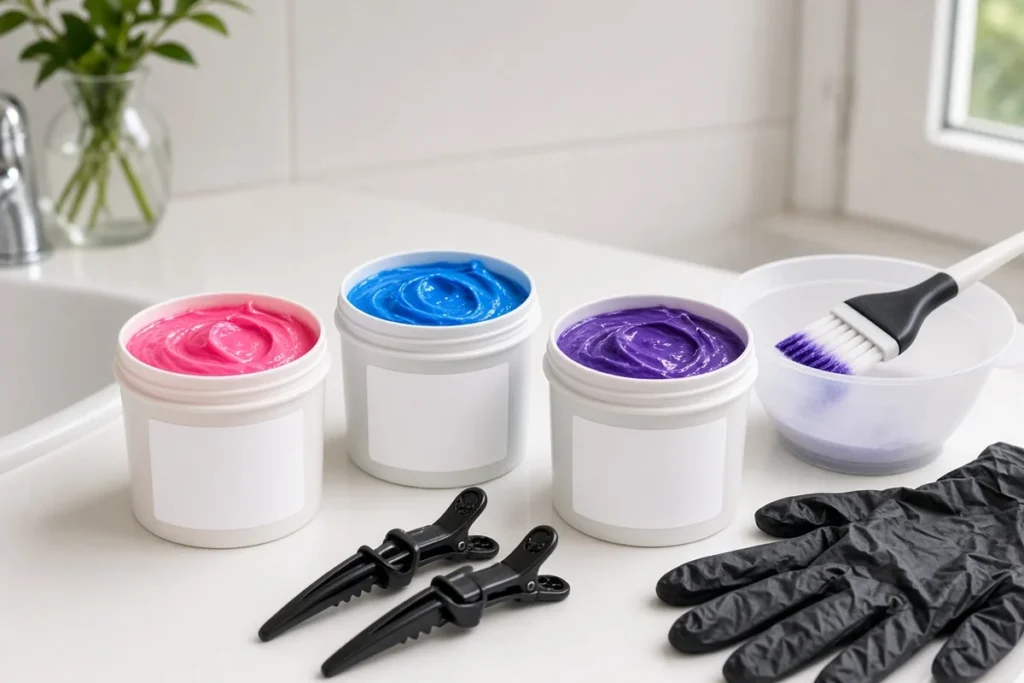
The usual order:
- Patch test first. The NHS advises testing the dye on a strand of your hair at least 48 hours before you use it, and never using a product again if you’ve had a reaction. Do the same with any bleach or lightener.
- Start on dry, unwashed or recently washed hair (check your dye’s instructions). Brush it out fully.
- Section off the top. Draw a horseshoe from temple to temple around the crown, ideally in a zigzag, and clip all of it up and out of the way. Everything below is your working area.
- Decide your panel. Leave a half-inch strip at the nape and along your hairline uncolored if you want to hide it in updos. Take smaller sections if you only want it behind the ears.
- Protect the rest. Put petroleum jelly along your hairline, ears and neck. Slide a strip of foil or cling film between the top layer and your working section so dye doesn’t transfer.
- Lighten if you need to, following the bleach instructions exactly, then rinse, shampoo and dry fully before applying color.
- Apply the color thickly, small sections at a time, with a tint brush and gloves. Saturation matters more than speed with semi-permanents.
- Process, then rinse cold until the water runs mostly clear. Condition, and let the hair dry before you let the top layer down.
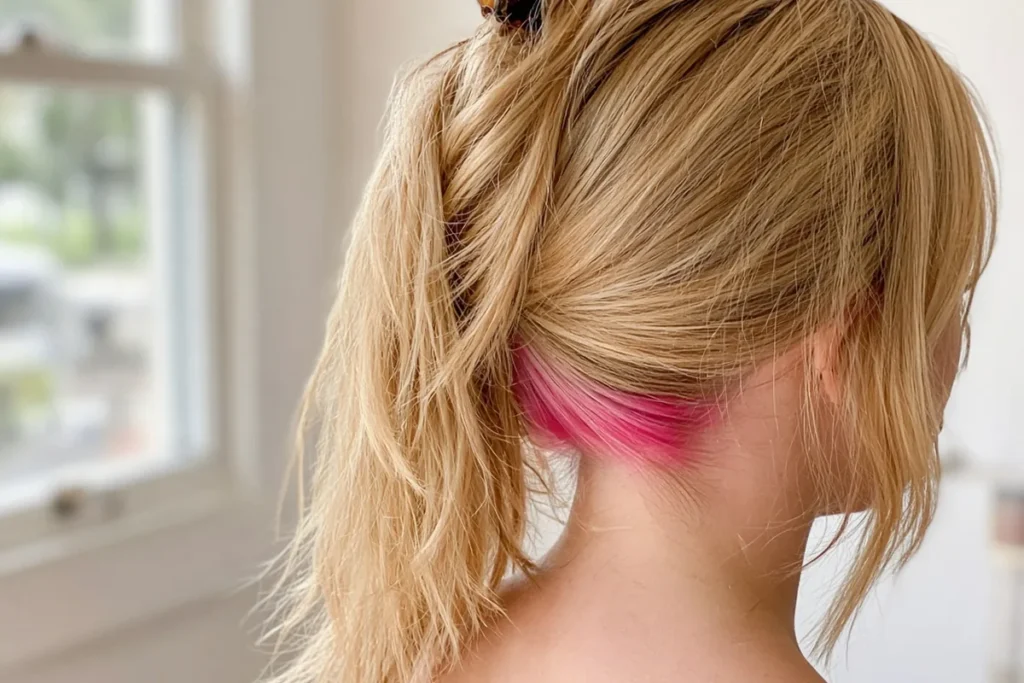
How much dye do you need?
Manic Panic’s FAQ says one 4 oz jar covers pixie and short hair, two jars cover medium-length hair of thin to average thickness, and very long or thick, curly hair may need three or more. Those are full-head amounts. Since peekaboo hair only covers part of the head, one 4 oz jar is usually enough for short to shoulder-length hair, and I’d buy two for long or very thick hair. Running out halfway through is worse than having half a jar left, and the jars can be sealed and saved for touch-ups.
Keeping it bright
Vivid color fades. That’s not a defect, it’s how semi-permanent dye works. Pulp Riot says its semi-permanent color lasts up to 50 washes, but in real life fading starts much sooner, and pastels and reds go fastest.

A few habits stretch it out. Wash less often and in cool water. Use a sulfate-free shampoo and a color-depositing conditioner in your shade once a week. Turn the heat tools down and use a heat protectant. And keep a jar of the same color for a quick refresh every four to six weeks.
Stained pillowcases are the other thing nobody warns you about. Fresh vivids bleed for the first few washes, blues and purples especially. Sleep on a dark pillowcase for a week or two, use an old towel, and expect a little tint on white collars if your peekaboo sits at the nape.
What if you get bored of it? You’ve got three honest options. Let it fade, which works well with pinks and pastels on blonde. Ask your colorist to deposit a shade close to your base over the panel. Or switch to a new vivid on top of the faded one, as long as it’s darker or in a similar family. Blue and green fading on blonde can leave a slightly teal cast that takes a while to wash out, so I’d think twice before putting a cool vivid on very pale blonde if you might want to go back to plain blonde soon.
Because peekaboo hair sits underneath, regrowth barely shows. Most people go a lot longer between salon visits than they would with highlights.
If your peekaboo hair goes on curly or wavy hair, the color can look amazing as the texture moves. Bleached sections do get thirstier though, so a richer routine helps. Our 2c hair guide covers how to keep waves defined after color.
Peekaboo hair for men and short hair
You don’t need long hair. On a short, textured cut, peekaboo hair can sit as a small panel just above the ears, so it shows when you push your hair back or tuck it. On a fade, it’s best kept to the longer hair on top, near the parting, where the hair falls over it. The mid fade guide explains how long the top needs to be to cover something like this.
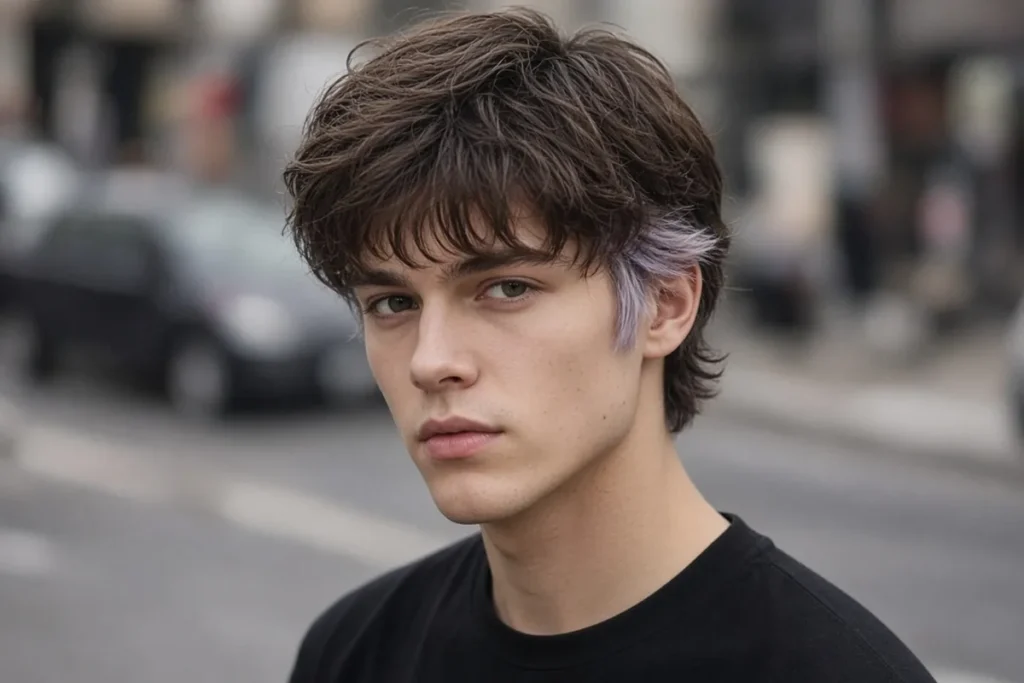
Silver, lilac, blue and green are popular choices for short men’s cuts. Just remember short hair is cut more often, so peekaboo hair here may only last until your next couple of haircuts.
A few things people ask
Does peekaboo hair damage your hair?
Lightening always causes some damage, but only the colored section is affected. Semi-permanent vivids on already-light hair are very gentle. Keep up the conditioning on that panel and it’ll hold up fine.
Can I get peekaboo hair without bleach?
On blonde or light brown hair, often yes. On dark hair, a vivid shade won’t show without lifting first. A high-lift permanent color can lift a few levels without bleach, but not enough for pastels on black hair.
Will peekaboo hair show at work?
Not if the placement’s right. Keep it under the horseshoe section, with a small margin at the hairline and nape, and it stays hidden when your hair is down or in a low ponytail.
Browse more shades and trends in the HairBrave hair color section.