

A mid burst fade removes weight in a curved area around your ear, then blends into longer hair above and behind it. From the side, you should see an arc rather than a straight horizontal strip. That curved shape can sit under a short crop, a fuller curly top, or a longer back.
The catch is the word mid. It isn’t a fixed measurement, and it doesn’t tell your barber how close to cut the shortest area. You need to choose the curve, the finish, and what happens behind the ear before the clippers start.
What makes a mid burst fade different?
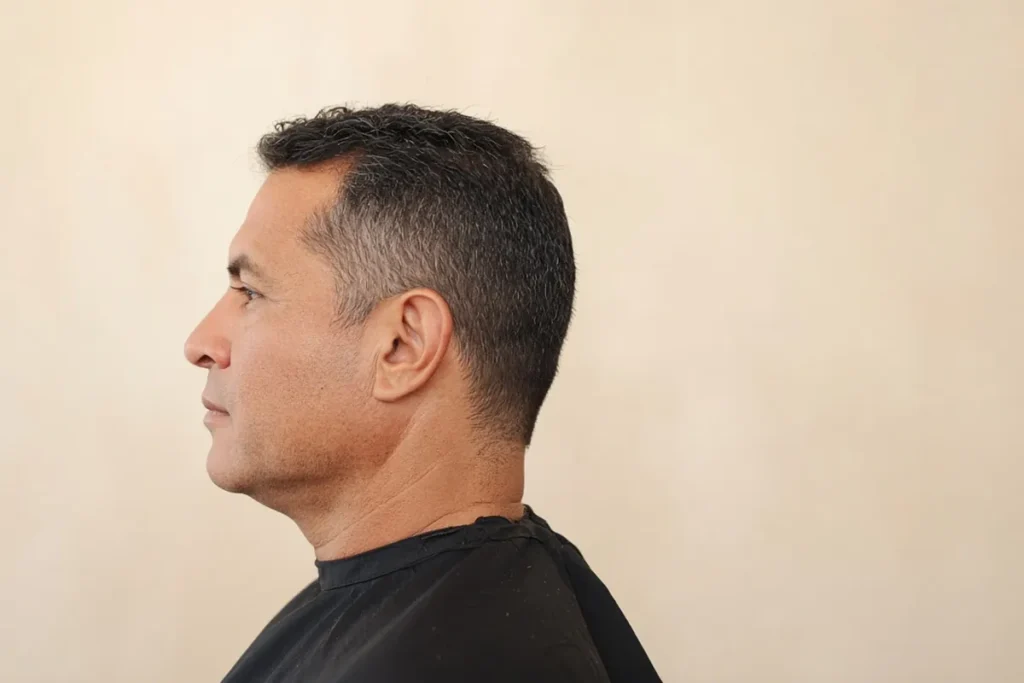
Think of the fade as a rounded pocket of short hair centered near the ear. It becomes longer as it moves outward toward the temple, crown, and back of the head. A regular mid fade usually continues around the head in a more even band; the burst concentrates the contrast at the ear.
The curved area doesn’t automatically mean bare skin. Your barber can leave a dark shadow of short hair or take the lowest part much closer. Both follow a burst shape. If you don’t want a hard contrast, say so before choosing the shortest guard.
The GQ guide to fade haircuts explains how barbers distinguish fade height from the overall haircut. For this cut, the side and the rear view are particularly useful. From the front alone, a straight mid fade and a curved burst may look similar.
A burst also doesn’t require a mullet. If you prefer a tidy neckline, you can have the arc blend into a shorter back. The longer nape is a separate design decision, not a rule built into the name.
Where the curved fade should sit

Ask your barber to show you the midpoint on your own head. The upper edge of a mid-level burst should climb around the middle of the side, with the closest work near the ear. On one man, that may look quite pronounced; on another, a different ear position and head shape can change the curve.
Look at how much hair will stay directly behind the ear. If the barber pushes the faded zone too far into the back, the cut loses its compact curved character. If the curve is kept too low, it may read more like a low burst or a tight sideburn taper.
The Byrdie barber-led fade overview recommends taking a reference and matching the cut to hair texture and lifestyle. That matters because the amount of weight left above the curve is as important as its height.
Eight mid burst fade styles to consider

The arc can stay in roughly the same place while the top changes the entire impression. Choose one of these versions by the natural texture and length you want to wear, not just the sharpest line in the photograph. Each example needs a side view that proves the curved blend.
Classic mid burst fade with a short top

Keep the top short enough to sit neatly with little styling, but not so short that the entire head reads as a buzz. The curved sides remain visible while the back connects smoothly to the crown. This is a good reference if you want the fade to be the main detail.
Skin burst with a textured crop
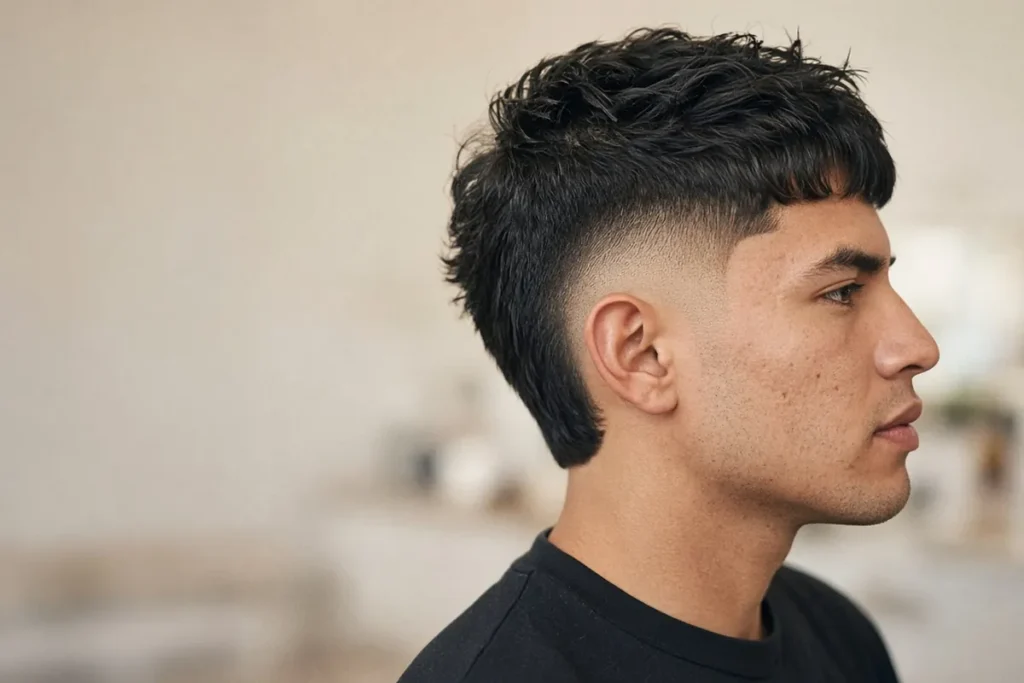
This version takes the closest section around the ear to bare skin and leaves a choppy, forward-directed top. The skin finish makes the curve easy to see. It also means new growth at the shortest point becomes visible quickly compared with a darker shadow finish.
Keep the crop fringe at a length that suits your usual part or forward direction. Ask the barber to cut texture into the top without making the fringe so thin that it loses its intended shape. The top should still look like a crop when you haven’t applied product.
Shadow burst with a side part

A shadow burst leaves a little visible hair in the closest section, producing a quieter transition. Pair it with a natural side part and enough top length to comb diagonally. You get a more restrained outline without losing the rounded burst around the ear.
Tell the barber where your part already falls. Forcing a straight, hard line where the hair doesn’t naturally separate may create extra styling work. If you prefer a professional finish, ask for softer sideburn edges rather than a sharply carved line.
Curly-top burst fade
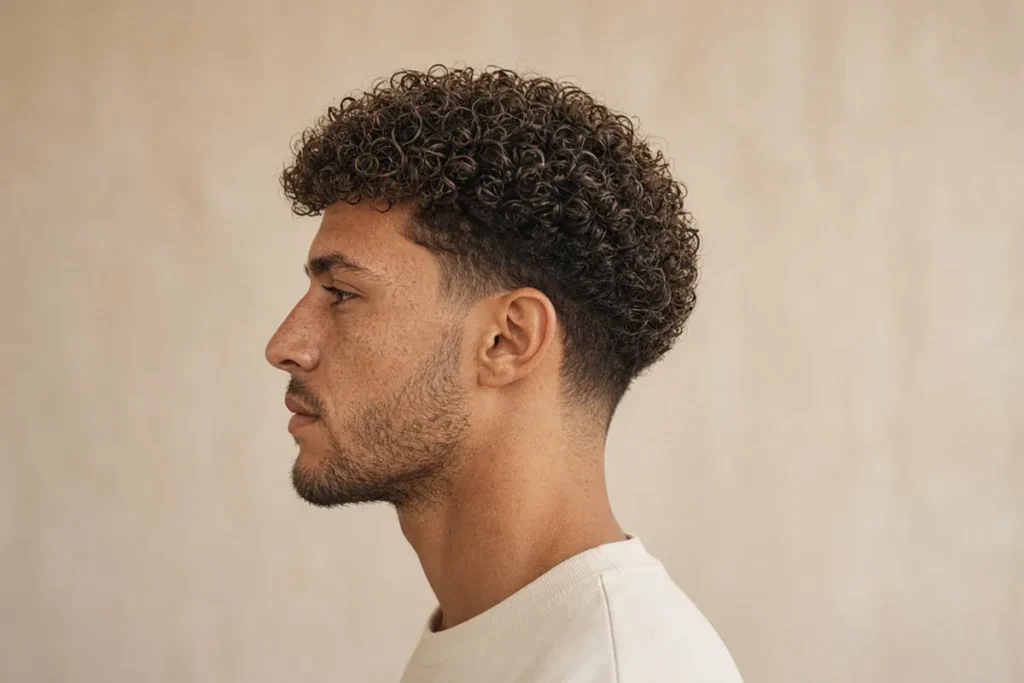
Keep enough length on top for the curls to form their usual loops. The burst tightens the area around the ear while the crown retains its natural fullness. The difference between a curled top and bare or shadow sides provides most of the shape.
Check the curls once dry. A length that looks generous when stretched can sit higher after it springs back. Tell the barber where you want the front curl to land in its normal state, not only when it is pulled straight.
Rounded coily-top burst

For tightly coiled hair, keep the upper silhouette rounded while carving the arc around each ear. The barber should check the shape with the coils resting naturally. A full top over a clean, curved side can look balanced without removing much length above the temples.
Avoid a sharp shelf where dense hair meets the faded area. Ask for the transition to soften gradually into the top. If you want a distinct front edge, discuss the hairline separately so the fade doesn’t encourage aggressive trimming at the forehead.
Short mullet with a burst fade
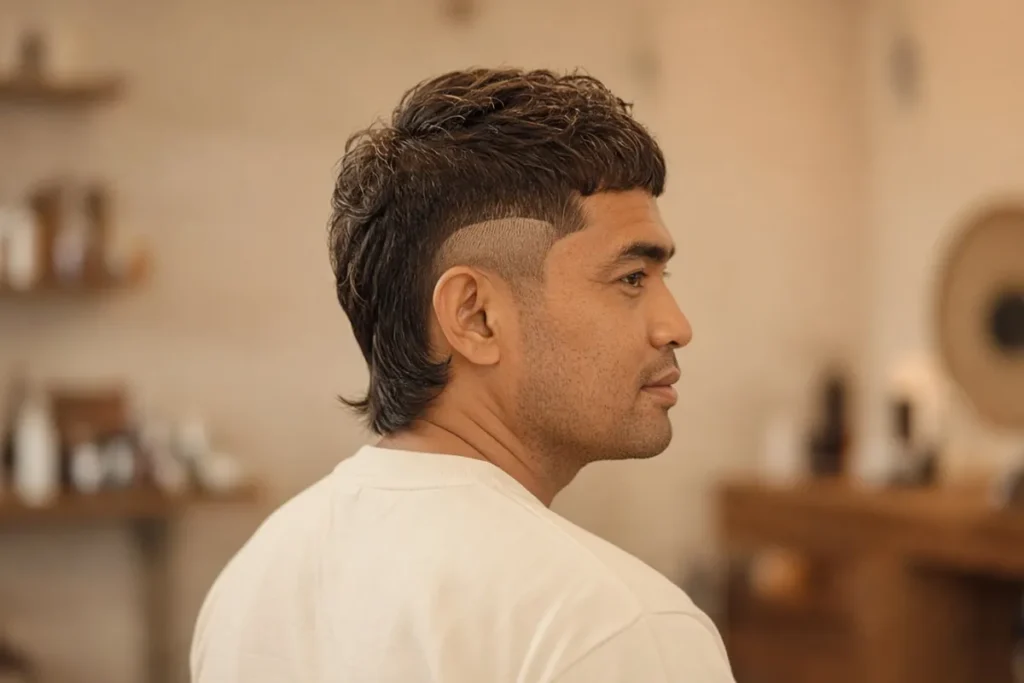
Leave a little more length at the back than on the sides, while keeping the nape controlled. The curved ear area should lead toward that back length rather than cutting a straight band through it. From behind, the hair should show a deliberate connection between crown and nape.
Bring both a side and a back photo. A short mullet can become much longer-looking if the barber leaves too much weight at the neck. Tell them whether you want the back to touch the collar or stop clearly above it.
Faux hawk with a burst fade

Keep the top slightly taller through the center and direct it upward with texture, without cutting a narrow strip all the way to the nape. The rounded burst clears the sides and helps the central shape stand out. It’s a different outline from the short crop even though the curved fade can begin in the same place.
Decide how firm you want the top. A little matte paste can hold separated pieces, but a cut that needs a heavy shell of product may not fit your everyday routine. Ask your barber to show it styled with a light hand first.
Short buzzed top with a burst

A short, even top makes the side detail clear and keeps morning styling minimal. Ask about a number 2 or number 3 guard if you want visible short length on top, then compare that with the barber’s recommendation for your density. The numbers describe clipper attachments, not a universal fade shape.
If you’re concerned about scalp exposure, choose a shadow finish instead of going straight to skin around the ear. The contrast can be adjusted without removing more from the top. Check the crown in the mirror to make sure the overall shape suits you.
How hair texture changes the result
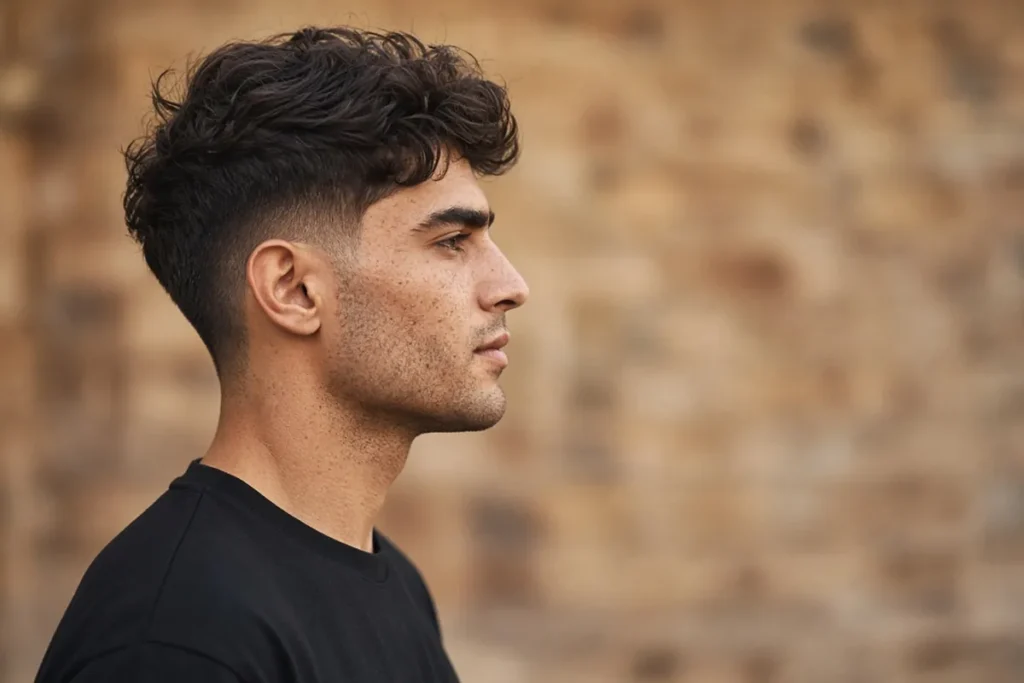
Straight hair shows the quality of the blend clearly. You may notice a dark line if the fade isn’t smoothly graduated, so ask the barber to check the curve under ordinary light. A short textured top can give the hair direction without demanding a dramatic quiff or an unfamiliar part.
Wavy hair can carry more casual movement above the burst. Explain how your hair falls when you let it air-dry. If the barber cuts the top to work only with a blow-dryer, you may find that the finished shape disappears on a regular morning.
Curls and coils have a different challenge: dry length and bulk above the ear. A barber familiar with your texture can keep the arc readable while preserving the curl or coil shape. If you want a comparison with a more conservative low finish, see our low taper fade with curly hair guide.
Fine or thinning hair may look less balanced with a very bare side and a tall, sparse top. A shadow finish and more weight left above the curve are options to discuss. Hair density is more useful in this decision than a rigid list of face shapes.
Decide what happens behind the ear and at the nape
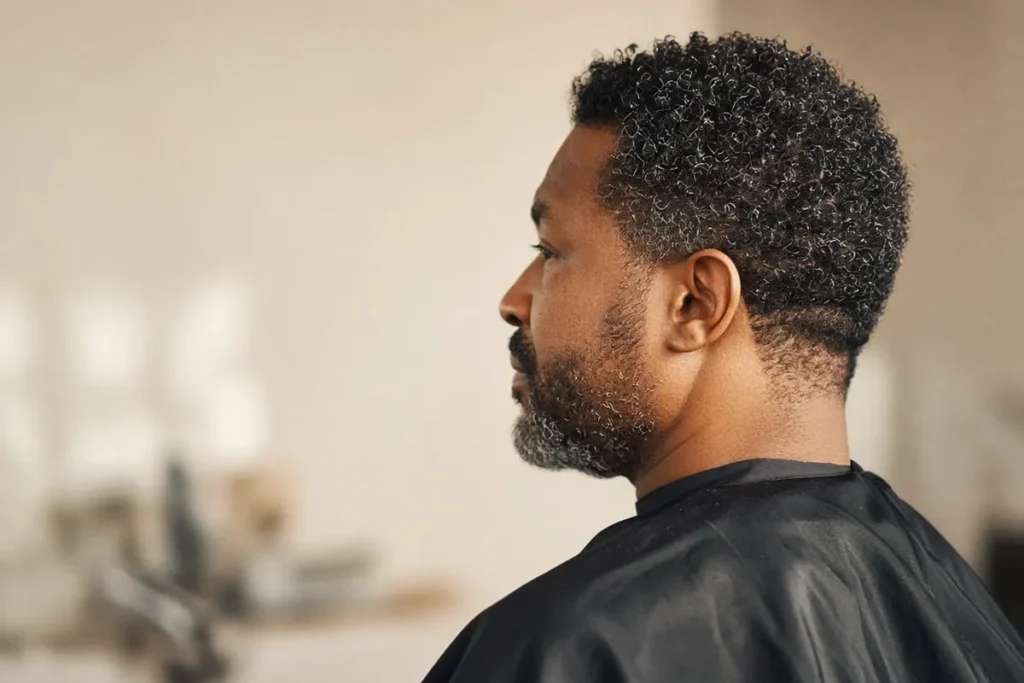
This is the part that gets skipped in many fade photographs. Two men can have similar curved sides and completely different back silhouettes. A tidy neckline makes a shorter, compact cut; length at the nape makes the haircut read closer to a mullet.
Ask the barber to show the line where the side arc meets the back. It shouldn’t create an accidental corner or a separated patch of heavy hair. If you want a rounded crown, explain where you expect the bulk to remain. If you want more length, mark how far down the neck it should reach.
A middle part mullet changes the back silhouette much more than a short crop. You don’t have to adopt that shape simply because a burst fade reference happens to include one. Save separate photos for the fade and the nape if necessary.
What to tell your barber in the chair

A useful request is: “I’d like a mid burst around the ear, not a straight mid fade. Keep the curve centered here, leave a shadow instead of skin, and keep the top about this long.” Show where you mean by pointing at your reference and your own hair.
Then talk about the back. You might want it short and blended, or you may want a small amount of mullet length preserved. Ask the barber to check the rear profile before finishing. A photo from the front won’t communicate the most important shape.
Our mid fade haircut guide can help you understand the difference between mid-height placement and a conventional band-shaped fade. For the burst, emphasize the semicircle rather than simply saying you want the sides taken down.
Mention any irritation you get from shaving or very close trimming. There is no reason to choose a bare-skin finish if you prefer a softer edge. Your barber can work with a short guard and still keep the curved silhouette easy to recognize.
Guards, skin finishes, and soft blending

The guard number sets the length left by a particular attachment, but the finished fade is made by graduating between lengths. A number 1 or number 2 at the shortest area creates a different look from an electric shaver at bare skin. Ask what your barber intends to leave directly beside the ear.
For reference, Wahl lists a standard number 2 clipper attachment as a quarter inch and a number 3 as three-eighths of an inch. Those figures describe the attachment’s nominal cut length, not the top length every man should choose. Actual results also depend on technique and hair texture.
A shadow burst keeps a short visible layer at the base. A skin burst removes it. Neither one tells you how tall the top should be. If your hair grows quickly or you dislike obvious scalp exposure, a shadow finish can be a useful choice.
Styling the top without hiding the arc
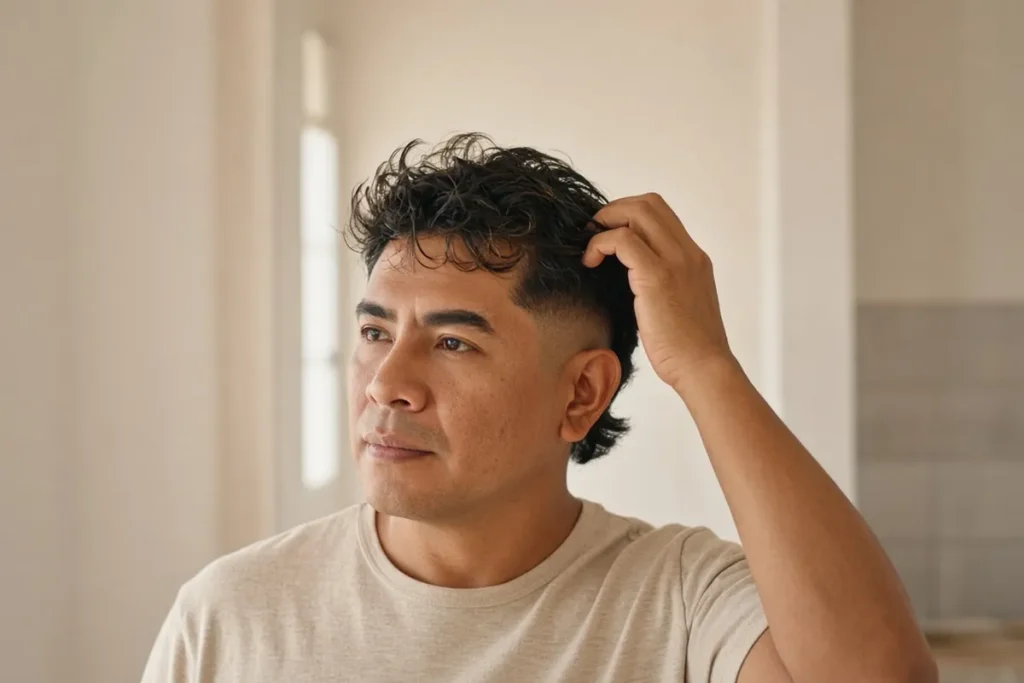
Start with the hair slightly damp and choose a product for the texture you actually have. A small amount of matte paste can separate a short crop, while a lighter cream may help curls stay defined. For a neat side part, comb the hair along its natural direction rather than pushing against every growth pattern.
The side arc should be visible after styling. If product makes the top hang over the ear, change the amount or the direction before assuming the fade is wrong. On a longer top, dry the hair away from the side so the graduated section remains apparent.
If you prefer a curl-focused top, our 2C hair guide has more detail about wavy definition and daily handling. Your exact styling routine will still depend on the cut and how much movement you want.
Keeping the curved fade sharp as it grows

The arc will soften as the shortest hair grows, especially if it began at skin. How soon you want another visit is a personal choice about contrast, hair growth, and budget. Ask the barber to show where the curved shape is likely to lose definition first.
The Byrdie expert discussion of fade upkeep includes a barber recommendation for touch-ups around two and a half weeks, but that isn’t a mandatory schedule for every cut. A shadow finish and a less severe contrast may remain acceptable to you for longer.
At home, focus on keeping the top and scalp clean and styling the hair you can reach. Don’t try to redraw the curved line freehand behind your own ear if you’re unfamiliar with clippers. A small error can force a much higher fade than you originally wanted.
When you return, tell the barber what worked. If the back became too heavy before the sides did, you may need a different crown connection next time. If the skin finish looked harsh after the first week, consider a shadow. Small adjustments are better than repeating the same problem.
Mistakes that make a mid burst fade look wrong
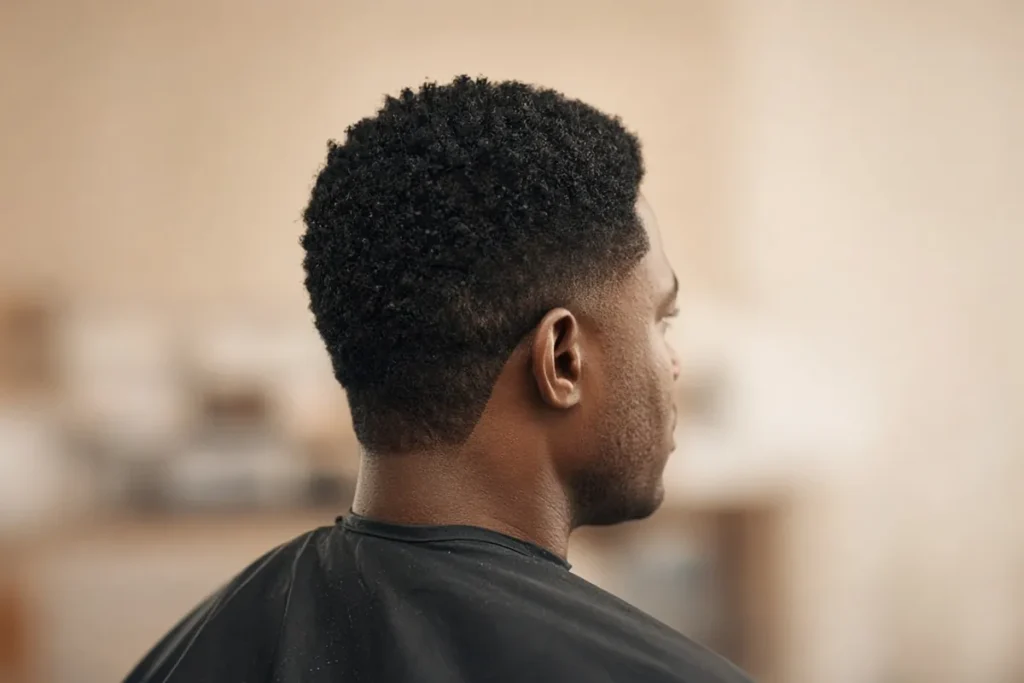
The most common mix-up is treating a burst as a straight mid fade. A horizontal band around the back changes the haircut entirely. Look at the side view before cutting starts and ask the barber to preserve a visible rounded arc around the ear.
An unrealistic reference can cause trouble too. Your natural texture, density, and head shape affect the result. Choose a photograph with hair as close to yours as possible, then explain what you admire about it. A clear barber consultation helps make these distinctions before the cut.
Finally, don’t choose a high-contrast skin finish solely because the photograph is sharp. Ask how the same mid burst fade would look with a darker shortest guard. The quieter version may suit your routine better while keeping the defining curve.
Mid burst fade FAQs
Is a mid burst fade the same as a regular mid fade?
No. Both refer to a middle-height placement, but the burst wraps in an arc around the ear. A regular mid fade generally continues in a more level band through the sides and back. Look at the side and rear views to judge the difference.
Can I get a mid burst fade without a mullet?
Yes. Keep the back short and connected if you don’t want visible nape length. The burst describes the curved side area, not a compulsory mullet. Show a rear reference photograph so your barber doesn’t assume you want the longer back in a trendy example.
What does a shadow finish mean?
It means the shortest area keeps some visible hair rather than reaching bare skin. Your barber can create the same curved mid-burst shape with a shadow or a skin finish. The shadow looks less stark and may make fresh regrowth less obvious.
How often will I need a trim?
That depends on your growth rate and how crisp you like the curve. A skin finish shows change sooner than a darker shadow. Ask your barber to suggest a follow-up based on your cut rather than assuming everyone needs the same two-week schedule.
Will this fade work with thick curls or coils?
It can. Keep the top long enough for the natural texture to show, and ask the barber to judge the silhouette after the hair returns to its normal dry shape. The curve should reduce bulk at the ear without carving an abrupt shelf under the crown.