
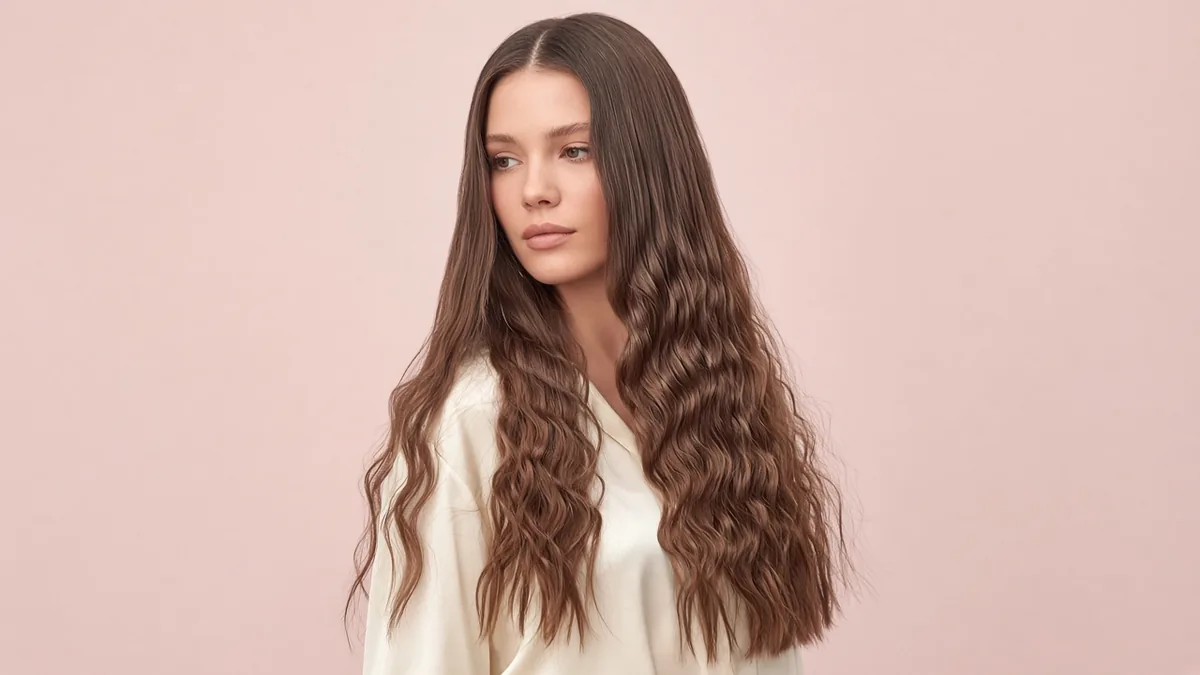
Crimped hair is a tight zigzag pattern pressed into the hair with heated, ridged plates, or set with small braids. It isn’t a curl. A curl wraps around a barrel, while a crimp is folded flat into sharp, even ridges. That’s why it adds so much volume and holds pins so well. It’s also why one rule matters more than any other: crimp only completely dry hair. Heated plates on damp hair can boil the water inside the strand and leave permanent bubbles in the hair shaft. Dermatologists have documented this in case reports of hot ironing on wet hair.
Today’s crimped hair is rarely the all-over 1980s version. More often it’s a crimped ponytail under a sleek top, hidden root crimping for lift, or a few crimped sections in an updo.
What crimped hair is and how it differs from waves
A crimping iron has two heated plates with a repeating S-shaped or zigzag groove. When you close it on a section of hair, the ridges press that pattern in. Wider-plate versions are often sold as “deep wavers” or mermaid wavers, and they give a rounder S-wave rather than a true zigzag.
| Texture | Shape | Tool | Volume |
|---|---|---|---|
| Crimped | Small, angular zigzags | Crimping iron or tight braids | Very high |
| Mermaid or deep waves | Larger, rounder S-waves | Wide crimper or three-barrel waver | Medium to high |
| Beach waves | Loose, uneven bends | Flat iron twist or wand | Low to medium |
| Curls | Spirals | Curling iron, wand or rollers | Varies |
A short history
Crimping has been around in some form for a long time, but the modern crimping iron is generally credited to Geri Cusenza, founder of the Sebastian brand, who reportedly created it for Barbra Streisand’s hair in 1972. The look peaked in the mid-1980s and returned after a crimped style appeared on a Chanel runway in 2007. The dates are widely repeated in beauty history pieces, but primary sources are thin, so treat them as approximate.
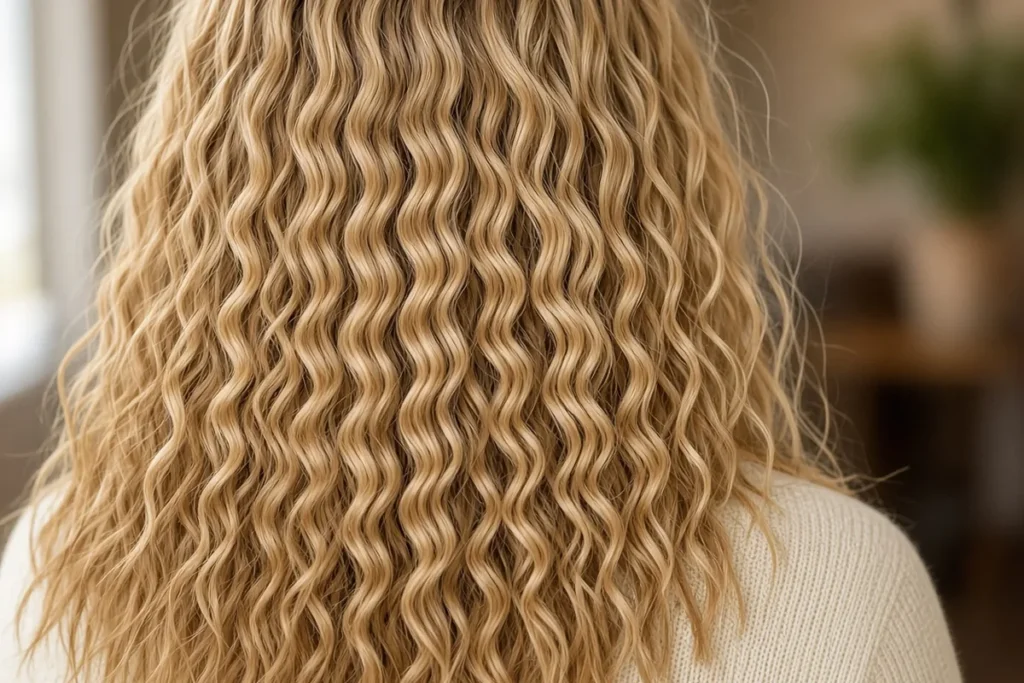
Choosing a crimper: plate size and material
Plate width is the biggest decision, because it sets the size of every zigzag.
| Plate type | Pattern | Best for |
|---|---|---|
| Mini or root crimper | Very fine ridges | Hidden root volume, short hair, small accent sections |
| Standard crimper (about 1 inch) | Classic zigzag | Full crimped looks, ponytails, retro styles |
| Wide crimper or waver | Larger, rounder waves | Mermaid-style texture on long or thick hair |
Plate coating, whether ceramic, tourmaline or titanium, matters less than one feature: an adjustable temperature dial. A crimper with one fixed high setting is a poor buy for fine or color-treated hair.
If you only buy one, a mini crimper is the most versatile. Crimping just the roots under the top layer gives fine hair lift that lasts all day, and nobody sees the texture doing the work.
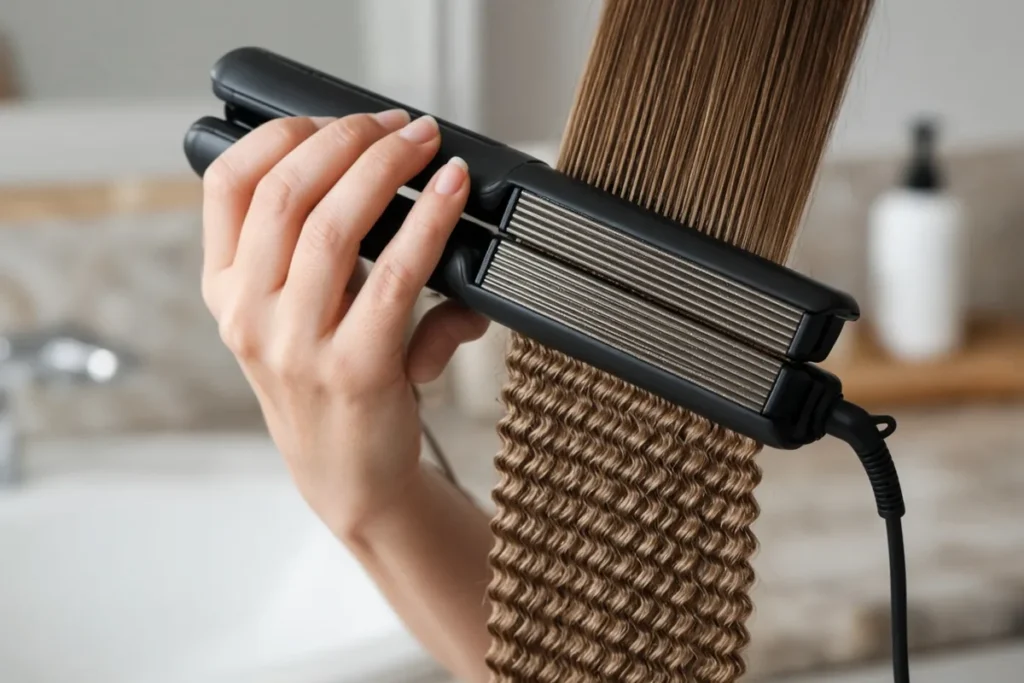
How to crimp hair with a crimper
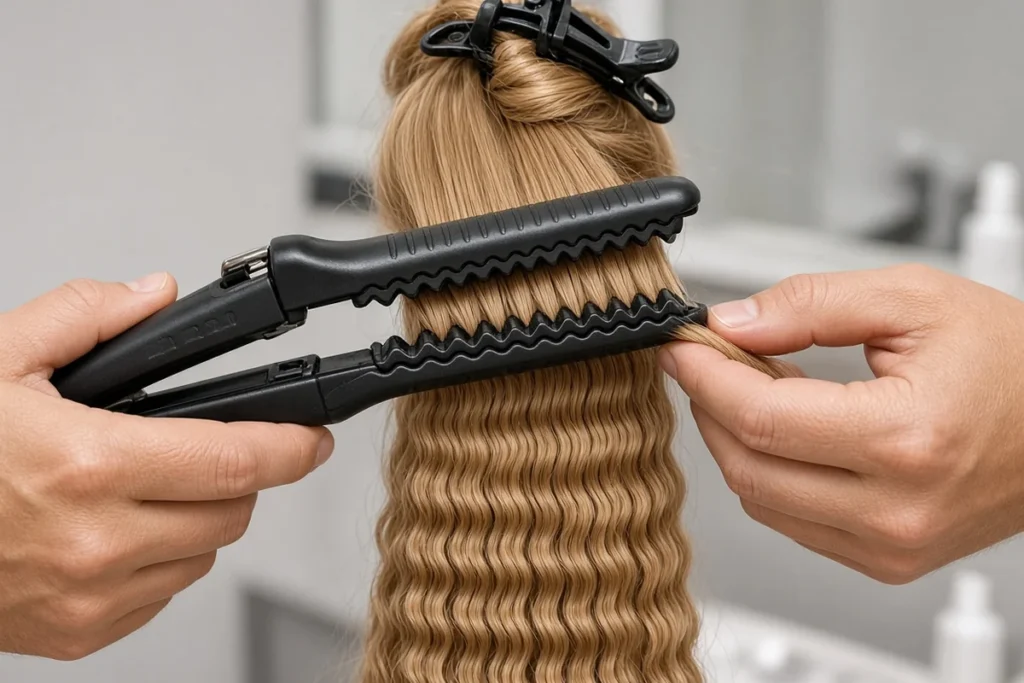
- Start with fully dry hair. Day-old hair holds the pattern better than freshly washed, silky hair.
- Apply heat protectant to every section and let it dry for a minute.
- Section in layers. Clip the top away and work from the nape up, in sections no wider than your plates.
- Clamp near the root, hold for a few seconds, then release. Move down so the top ridge of the plates lands in the last ridge you made. That keeps the pattern continuous instead of leaving gaps.
- Let each section cool before you touch it. Hair sets as it cools.
- Finish your way. Leave it crisp for definition, or brush it out gently for a fluffier, cloud-like texture.
How hot should a crimper be?
Use the lowest setting that holds the pattern. The American Academy of Dermatology recommends the lowest heat setting, limiting how long a hot tool touches your hair, and using hot tools about once a week or less. In a 2011 study in the Annals of Dermatology, cuticle damage grew as heat rose. That study tested hair dryers, not crimpers, but the direction holds for any hot tool.
A quick check before the first clamp: the plates should glide off the hair without sticking, and the section should feel warm, not hot, when it comes out. Any smell of scorching means the dial is too high or there is still moisture in the hair.
For reference, one manufacturer’s guide, the BaBylissPRO Nano Titanium straightener manual, recommends 300°F (150°C) for fragile, very fine hair, 375°F (190°C) for normal hair, and up to 450°F (230°C) for coarse, very thick hair. Crimpers clamp the same section repeatedly, so starting toward the lower end of the range for your hair type and going up only if the pattern drops is the safer approach. If you hear sizzling or smell burning, stop. Either the heat is too high or your hair isn’t fully dry.
How to crimp hair without a crimper
You can get crimp-like texture with braids, a flat iron, or both. The result is softer and less uniform than a crimper’s, which many people like for everyday wear.
Small braids overnight (no heat)
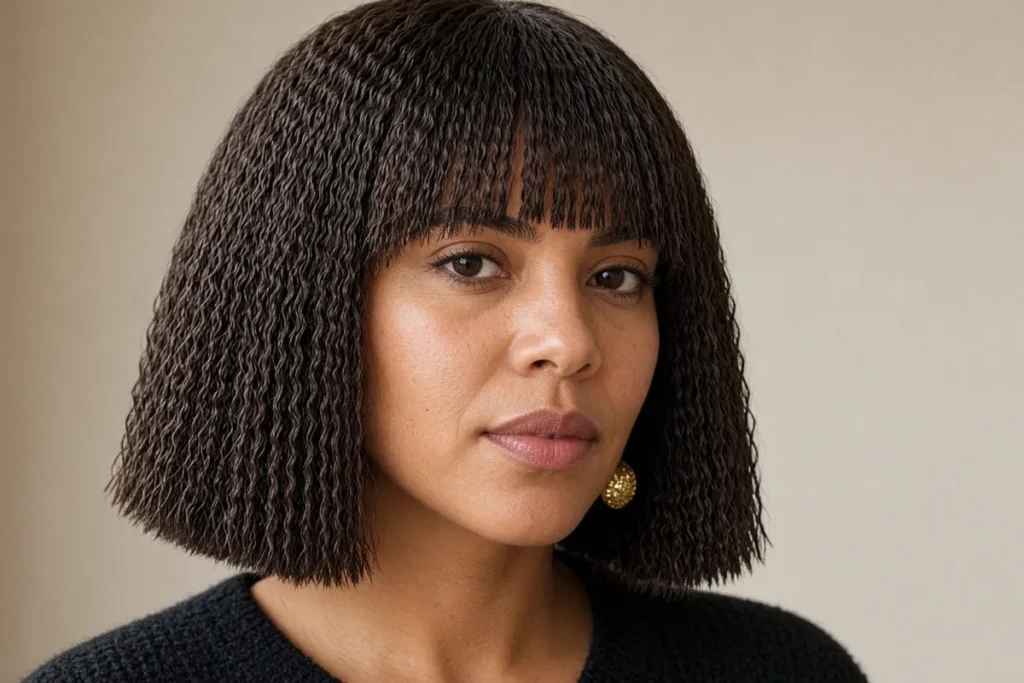
Braid slightly damp hair into 8 to 12 small, tight braids, all the way to the ends. Sleep on them, and take them out only once your hair is completely dry. The smaller the braids, the tighter the crimp. A little mousse or setting lotion before braiding helps fine hair hold the pattern. This is the gentlest method and the right choice for bleached or fragile hair.
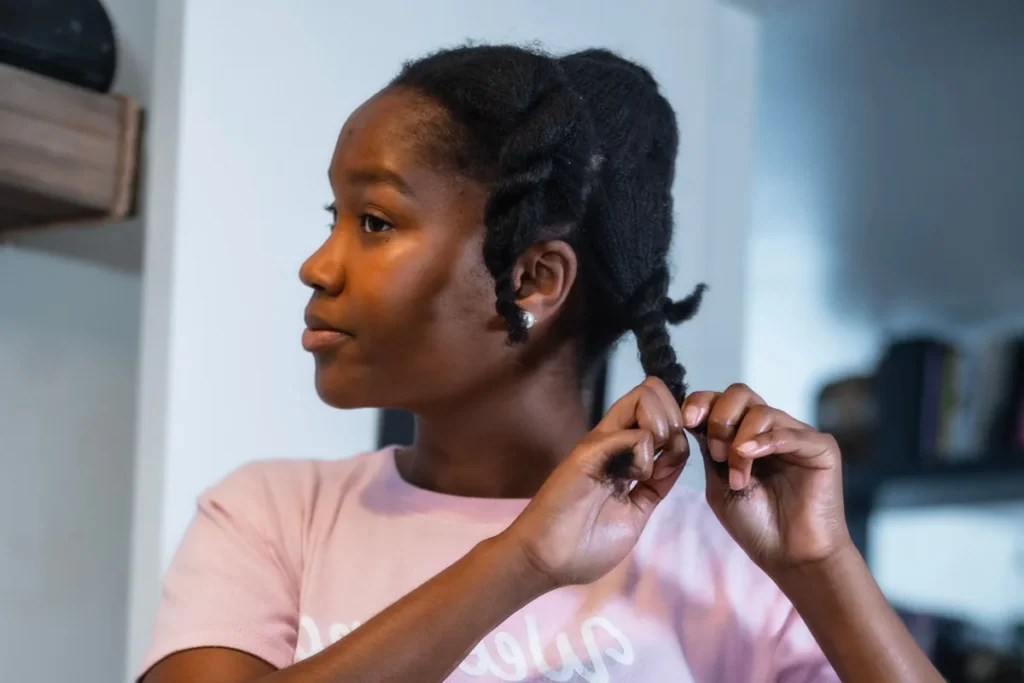
Flat iron over braids (fast version)
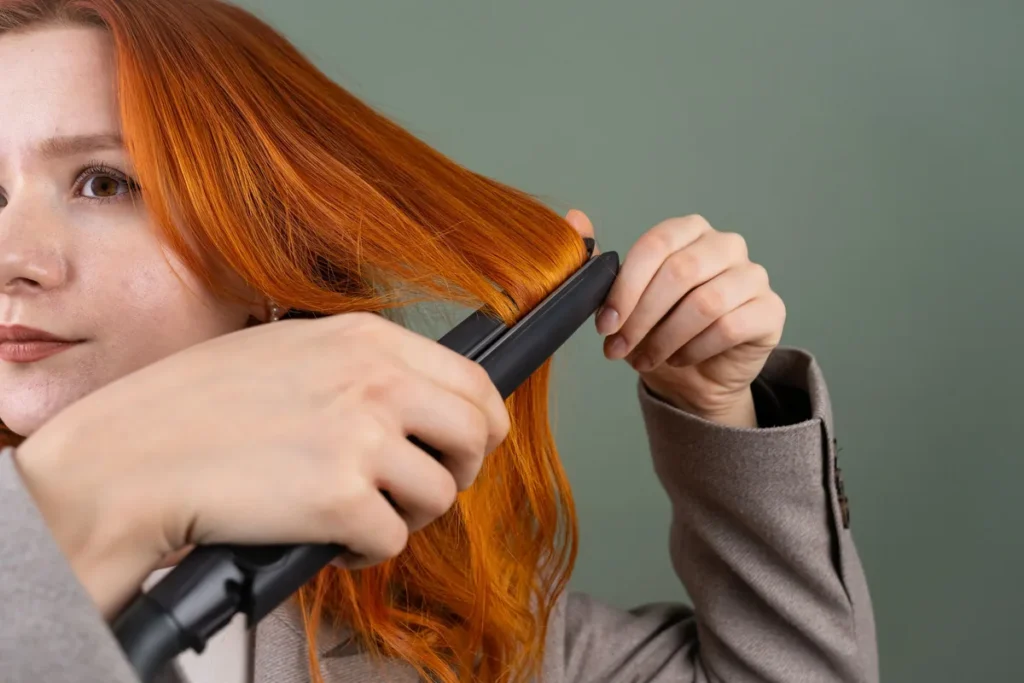
Braid dry hair into small braids, then press each braid with a flat iron for a few seconds along its length. Let the braids cool completely before undoing them. You’ll get a crimp in about 20 minutes. Use heat protectant first, and keep the iron moving so you don’t scorch the outer surface of the braid.
The foil zigzag
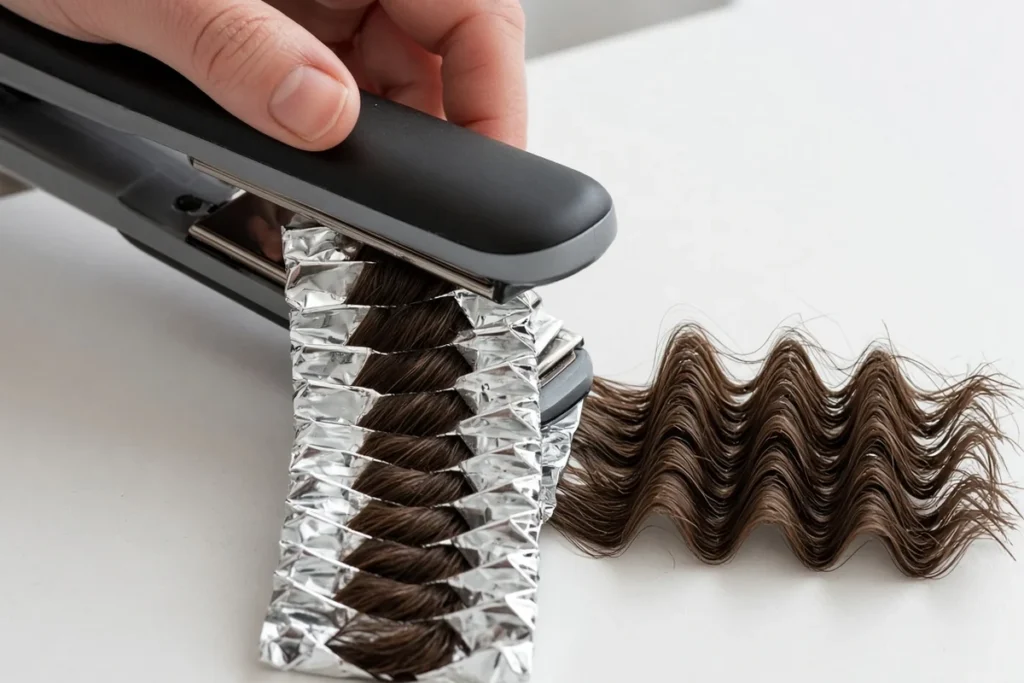
Lay a strip of foil under a section of dry hair, fold the foil and hair together into a tight accordion, then press the folded packet with a flat iron for a few seconds. Let it cool before unfolding. You’ll get sharp, angular crimps that are the closest match to a real crimper.
Twists for softer texture
Two-strand twists, set on damp hair and left to dry fully, give a looser, rounder pattern. The result sits between crimp and waves.
Crimping curly, coily and textured hair
Crimpers are built for straight and wavy hair. On curly and coily textures, the plates can’t press a clean pattern into hair that’s still in its natural curl, so the hair is usually blown out and stretched first. That adds a second round of heat, so weigh it carefully. Twist-outs and braid-outs on stretched hair often give a crimp-like result with far less heat.
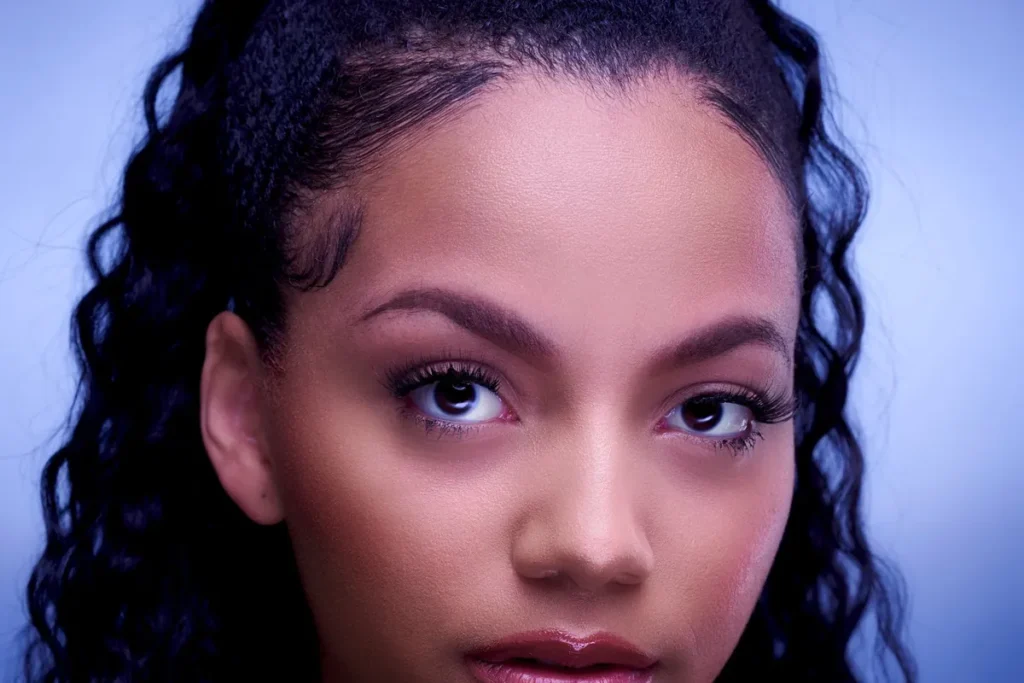
For extensions and wigs, human hair crimps like your own hair. Synthetic hair crimps only if it’s labeled heat-friendly, and only at the temperature on the label. Test a hidden piece first.
Modern crimped hairstyles
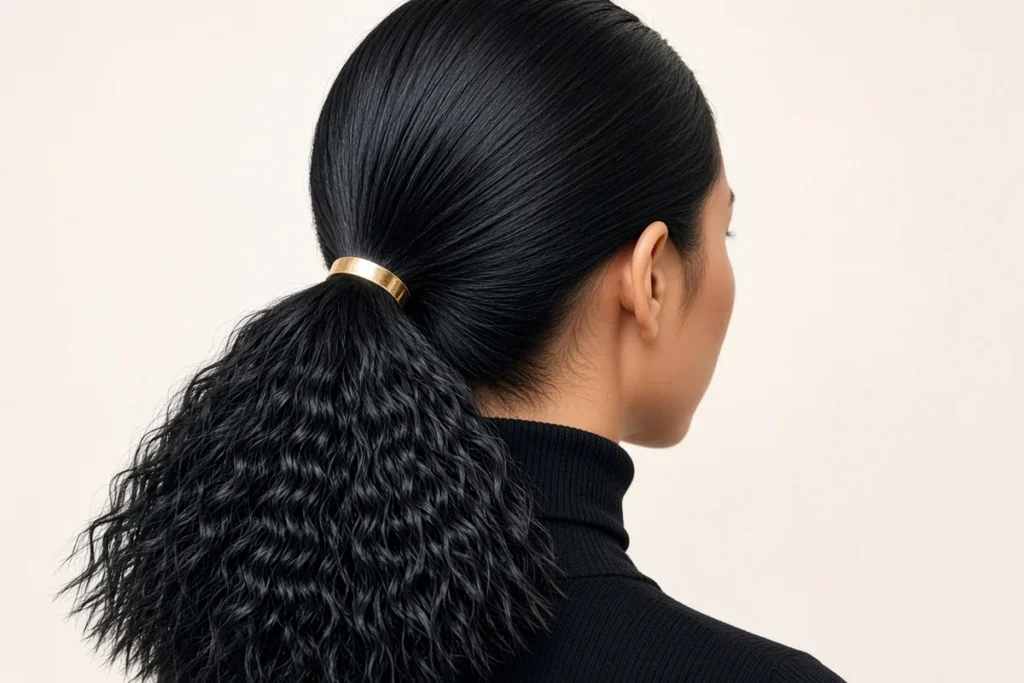
Sleek top, crimped ponytail
Smooth the top into a high or low ponytail, then crimp only the ponytail. The contrast between glossy and textured is what makes it look current, and a crimped ponytail looks twice as full.
Root-crimped blowout
Lift the top layer and crimp only the inch or two nearest the scalp underneath. Lay the smooth top back down. You get lasting volume with no visible crimp, which makes this the most useful version for fine hair.
Crimped half-up
Crimp the lengths, then pull the top section back into a half-up knot or clip. Crimping first makes the half-up look fuller and helps it hold all day.
Crimped braids and updos
Crimped hair grips pins and elastics far better than smooth hair. A crimped base under a braid, bubble braid or messy bun looks thicker and slips less, which is why stylists often crimp before an updo even when the texture won’t show. It’s a handy trick for Christmas hairstyles too, when an updo has to last all night.
Short crimped hair and bangs
Crimping works on a bob or lob, but use a mini crimper or narrow plates so the pattern stays proportional to the length. On bangs, crimp lightly and finish with a soft brush. If you haven’t picked a fringe yet, see our types of bangs guide. Fully crimped bangs can dominate the face. Hair shorter than about 3 inches is hard to fit between the plates, so a root crimp is usually the most realistic option there.
Products that help a crimp hold
You don’t need much. The type of product matters more than the brand:
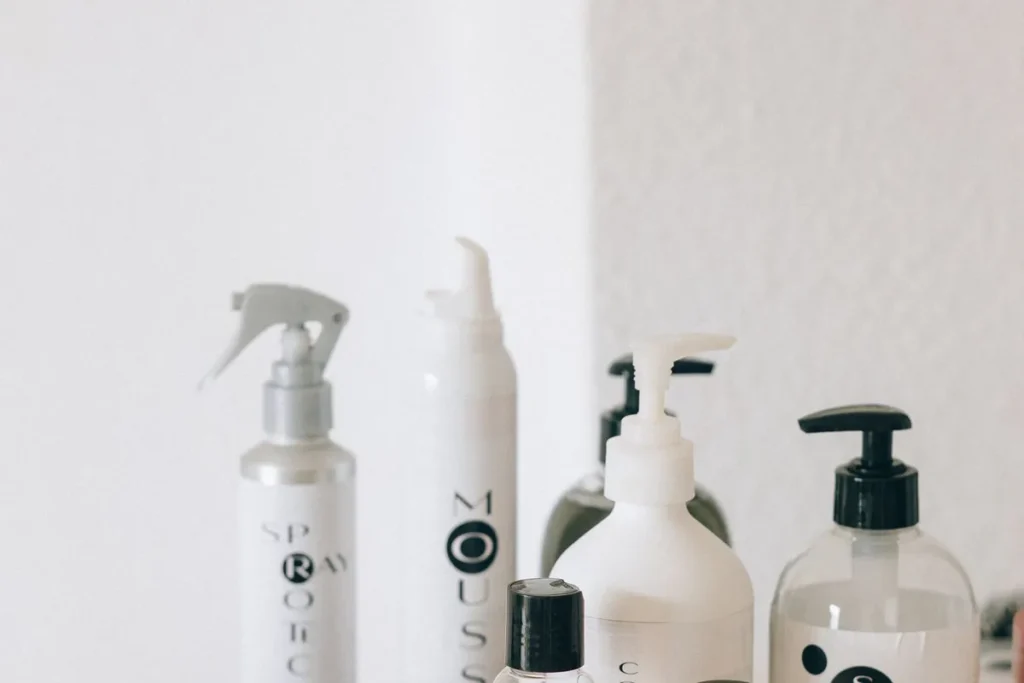
- Heat protectant: non-negotiable before any crimper or flat iron. Apply it to dry hair and let it dry before clamping.
- Mousse or setting lotion: for the braid methods, applied to damp hair before braiding. It helps fine or slippery hair keep the pattern.
- Texturizing or dry texture spray: after crimping, to add grip and separate the ridges if you plan to brush the crimp out.
- Flexible-hold hairspray: a light mist once sections have cooled. Strong, crunchy holds flatten the fluffy finish most people want.
- Dry shampoo: on day two, at the roots, to bring back volume without washing out the pattern.
On very fine hair, use less of everything. Heavy product can weigh crimps down.
How long crimped hair lasts
A crimp usually lasts until your next wash, but it changes day by day:
| Day | What it looks like | How to refresh |
|---|---|---|
| Day 1 | Sharp, defined crimps | Nothing needed; a light flexible hairspray if you want hold |
| Day 2 | Softer and fluffier | Dry shampoo at the roots; re-crimp a few top sections |
| Day 3 | Loose waves and some frizz | Wear it in a braid, half-up or bun |
To protect the pattern overnight, loosely gather your hair on top of your head and sleep on a smooth pillowcase. To remove the crimp, simply wash and condition. If you want it gone without washing, blow-dry or flat-iron it straight, though that means another round of heat.
Who should skip heat crimping
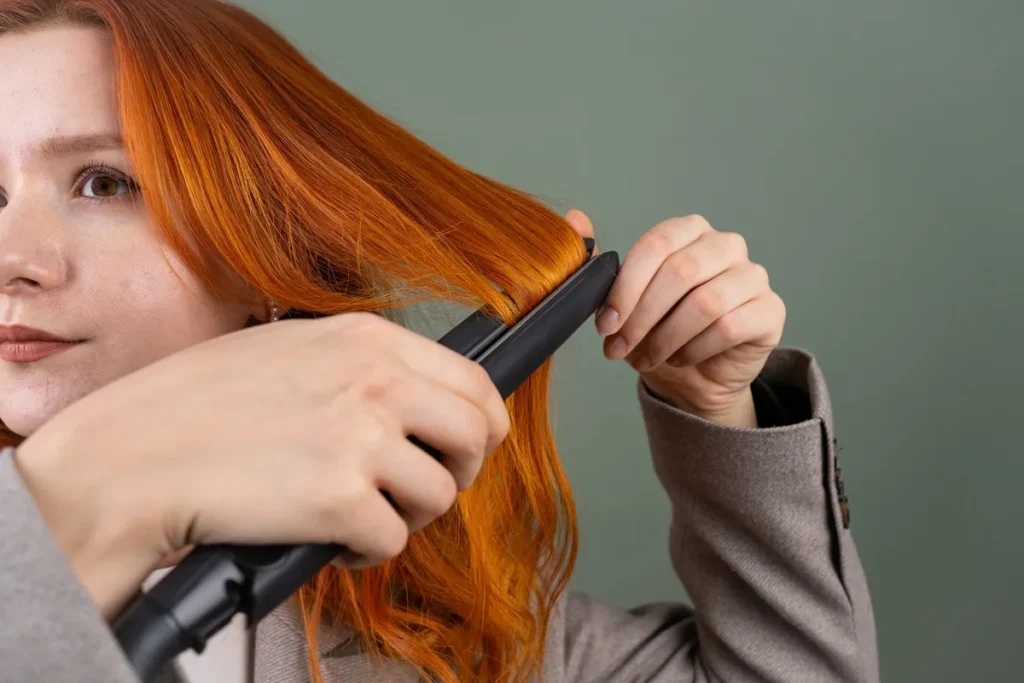
- Freshly bleached or breaking hair. Repeated clamping adds stress to already fragile strands. Use the overnight braid method.
- You already use hot tools every day. The AAD suggests limiting hot tools to about once a week, so save crimping for occasions.
- You want texture that survives washing. Crimping is temporary. A perm is the long-lasting option, but it’s a chemical service with its own trade-offs.
Crimping pairs well with bold color: patchwork calico hair and glossy chestnut brown hair both show the texture off. You will find more styling guides in our hairstyles section.
Crimped hair FAQ
Should you crimp hair wet or dry?
Always dry. Heated plates on wet hair can cause “bubble hair,” a heat injury to the hair shaft that makes the hair brittle. The overnight braid method is the only one that starts on damp hair, and it uses no heat.
Does crimping damage hair more than straightening?
Both press hair between hot plates, so damage depends mainly on temperature, how long the plates touch the hair, and how often you do it. Crimping on a low setting with heat protectant is gentler than straightening at the highest setting. The reverse is also true.
When was crimped hair popular?
Crimping peaked in the mid-1980s and has resurfaced several times since, including after a 2007 Chanel runway show. Modern versions tend to be partial: roots, ponytails and accent sections.
How do you crimp hair with a straightener?
Braid dry hair into small braids or fold it into a foil accordion, press with the flat iron for a few seconds, and let it cool fully before releasing. Both give a crimp-like texture without a dedicated crimper.
Can men crimp their hair?
Yes, though it works best on hair at least three inches long. A mini crimper on the top section of a textured crop or on longer hair tied into a man bun adds grip and volume without an obvious zigzag.
Will crimping work on synthetic extensions?
Only if the hair is labeled heat-friendly, and only at the temperature on the label. Test a hidden weft first. Human hair extensions crimp like your own hair.