

A mustache is the smallest change you can make to your face and the one people notice first. It sits right in the middle of your face, under your nose, and it changes the shape of your mouth, your jaw, and even how wide your face looks. Get the shape right and it looks like it was always there. Get it wrong and it looks like a costume you forgot to take off.
The catch is that a mustache is not one style. There are eight mustache styles worth knowing, and they ask for very different things from you. A chevron needs six weeks and a comb. A handlebar needs six months and wax every morning. A pencil needs a razor every other day or it stops being a pencil. Pick the style that fits the hair you actually grow and the mornings you actually have, and you will keep it. Pick the one from the photo and you will shave it off in a month.
I will be honest about the other half too. The first month is the hard part. The hair grows unevenly, the corners stay thin, and it itches. Most men quit in week three, right before it starts to look like something. If you can get through six weeks, you will know what your upper lip can actually grow, and then choosing between mustache styles gets easy.
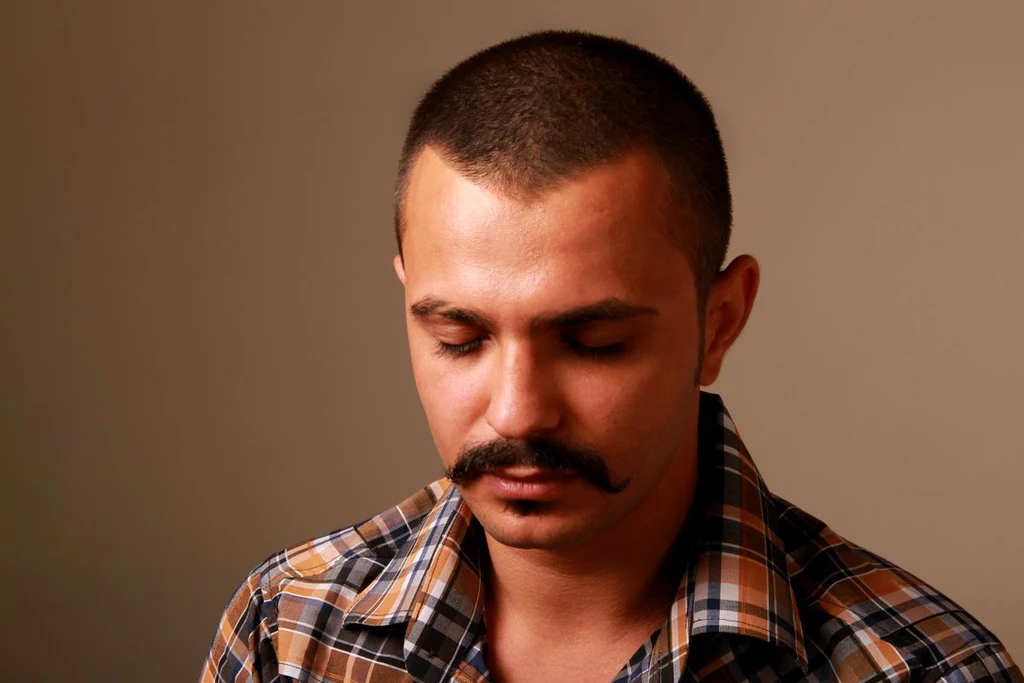
What Is a Mustache Style?
A mustache style is the shape of the hair above your top lip. That is all it is: the same patch of hair, cut and trained into different outlines. What changes is how wide it runs, how far it reaches past the corners of your mouth, and whether the ends are left alone, combed out, or waxed into points.
Most mustache styles fall into four groups. The natural ones — chevron, walrus — follow the shape of your lip and need little more than a weekly trim. The thin ones — the pencil — are shaved into a line and need a razor every day or two. The waxed ones — handlebar, English, Dali — need length and wax, and they take months to grow. And the ones that join the mustache to the rest of the face — horseshoe, beardstache — where the mustache is only half the shape.
Think of a mustache as a line drawn across the middle of your lower face. Width shortens the face. Narrowness stretches it. Once you see that, picking between mustache styles stops being guesswork.
Mustache Styles at a Glance
Eight mustache styles, lined up so you can see what each one asks of you before you commit to growing it.
| Style | Shape | Grow time | Upkeep | Best for |
|---|---|---|---|---|
| Chevron | Thick and wide, following the top lip | 4 to 6 weeks | Low: comb, trim the lip line weekly | Square, oval |
| Pencil | A thin line a few millimetres tall | 2 to 3 weeks | High: shave the band above every day or two | Small features, long face |
| Handlebar | Full in the middle, ends curled up | 3 to 6 months | High: wax and train the ends daily | Oval, square, round |
| English | Narrow and long, with pointed ends | 3 months or more | Medium: wax the points daily | Long, oval |
| Walrus | Very full, hanging over the mouth | 3 to 4 months | Medium: comb it, eat around it | Long, square, oval |
| Horseshoe | Full, with bars running to the jaw | 2 to 3 months | High: shave the chin around it | Round, oval |
| Beardstache | Full mustache over short, even stubble | 4 to 6 weeks | Low: trim the stubble, comb the mustache | Most faces |
| Dali | Thin, with narrow tips waxed upright | 3 months or more | High: wax the tips into points daily | Oval, long |
Which Mustache Style Suits Your Face?
A mustache is a horizontal line, so it changes how wide or long your face reads. Start with your face shape, then pick from the mustache styles that balance it.
Long or Narrow Face
Go wide. A chevron or a walrus breaks up the length and adds width where your face has none. A pencil is the worst choice here: a thin line down the middle of a long face only makes it look longer.
Round Face
You need height, not width. A handlebar or a horseshoe pulls the eye up and down instead of sideways, which is what a round face needs. Skip the wide, flat styles. A heavy chevron on a round face just adds more width at the corners of the mouth.
Square or Oval Face
Most shapes work. A square jaw can carry a chevron, a handlebar, or a horseshoe without looking heavy. An oval face is the easiest of all. Nearly every style sits well on it, so pick by how much upkeep you want, not by your face. If your jaw is very square, soften the corners of a chevron so the whole thing does not look like a block.

8 Mustache Styles Worth Growing
Some guides list 20 or more mustache styles. Most of them are the same shape with a different name on it. These eight are different enough to matter, because each one changes the shape, the grow time, or the daily work.
Chevron mustache. The baseline, and the one to start with. Thick and wide, it follows the shape of your top lip and angles down a little at the corners. It takes 4 to 6 weeks to look like a chevron, and 2 to 3 months to reach full length. It needs the least training of any style here, and it is the most forgiving when the growth comes in uneven. If you only try one of these mustache styles in your life, grow this one.

Pencil mustache. A thin, sharp line a few millimetres tall, sitting just above the lip with a small shaved gap between the hair and the lip. It takes 2 to 3 weeks to grow, but it is the highest-maintenance style on this list: the shaved band above it needs a razor every day or two, or the line goes soft and stops looking deliberate. It suits smaller faces and finer features, and it is the one to pick if your upper lip is thin or your features are small. On a big face it gets lost.
Handlebar mustache. Full in the center, with the ends grown long and curled upward. It takes 3 to 6 months to grow, and longer if you want full-length ends. It needs wax and training every day: warm a little wax between your fingers, work it into the ends, and twist them up. The payoff is the most recognisable of all mustache styles. The cost is the routine. Skip the wax for a day and the ends fall flat.

English mustache. Narrow and long, with the ends combed out to straight points instead of curled up. It takes 3 months or more, and the points need wax every day. It reads neater and quieter than a handlebar, and it suits a long or oval face better than a round one. If a handlebar feels like too much theatre, the English is the same idea at half the volume.
Walrus mustache. Very full and bushy, drooping over the top lip and sometimes over the mouth. It takes 3 to 4 months, and the daily work is mostly combing and eating around it. It suits broader faces and thicker, coarser hair. It is the hardest style to eat and drink with, so if you take your coffee seriously, think twice. On the right face it looks commanding. On the wrong one it looks like you gave up.
Horseshoe mustache. A full mustache with two bars running down past the corners of the mouth to the jaw, forming an upside-down U. It takes 2 to 3 months, and the chin around it has to be shaved clean, which is where the work is. It suits a round or oval face, because the vertical bars pull the eye down. Skip it on a long face: the bars stretch it further.
Beardstache. A fuller, groomed mustache worn over short, even stubble. The mustache does the talking and the stubble frames it. It takes 4 to 6 weeks, and it is the easiest way into a mustache: keep the rest of the face at even stubble while the mustache grows, and you never go through a clean-shaven awkward stage. It suits most faces, and of all the mustache styles it is the one I point first-timers at after the chevron.
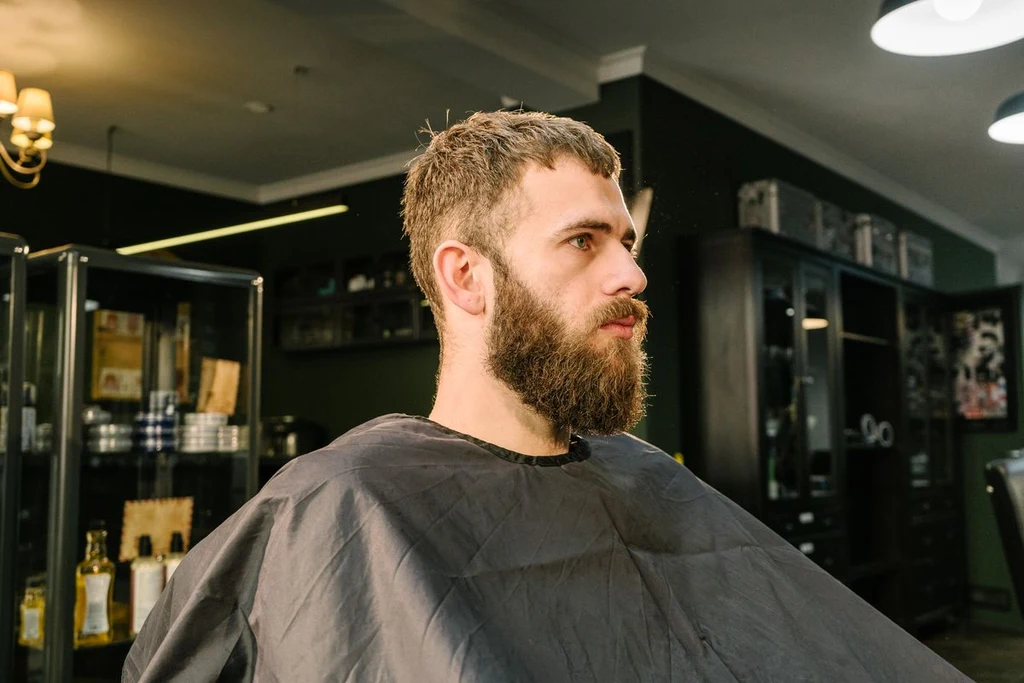
Dali mustache. Thin like a pencil, but the narrow tips are waxed into dramatic points that stand almost upright. It takes 3 months or more, and the tips need wax every day. It is the most theatrical of these mustache styles, named after Salvador Dali, and it only works if you commit to the points. Without the wax it is just a thin mustache. With it, it is a statement.
How to Grow a Mustache
Grow before you shape. That is the rule for every one of these mustache styles, and it is the one most men break. They start trimming in week two, take too much off the corners, and decide the style does not suit them. It does not suit them yet because there is nothing there to judge.
Six weeks. That is the wait before you judge anything. The corners fill in last, and they stay thin the longest. If the corners are still patchy after six weeks, that tells you something real about your growth. Before that, it tells you nothing.
Keep the rest of your face shaved or at even stubble while you decide. Stubble underneath and length on top is a look in its own right, and a useful halfway point. What you do not want is a half-grown mustache next to a half-grown beard, because then nothing looks deliberate.
The itch is real, and it passes. Wash the mustache when you wash your face, comb it down while it is dry, and leave it alone otherwise. Scratching and pulling at it makes it look worse, not better.
How to Ask Your Barber for a Mustache Style
Show a photo, then say the mustache style by name and say what you do not want. “Chevron, please — thick, following the lip, corners angled down, and leave the length. Do not thin it out.” That is a better brief than “a mustache”, which means a different shape in every shop.
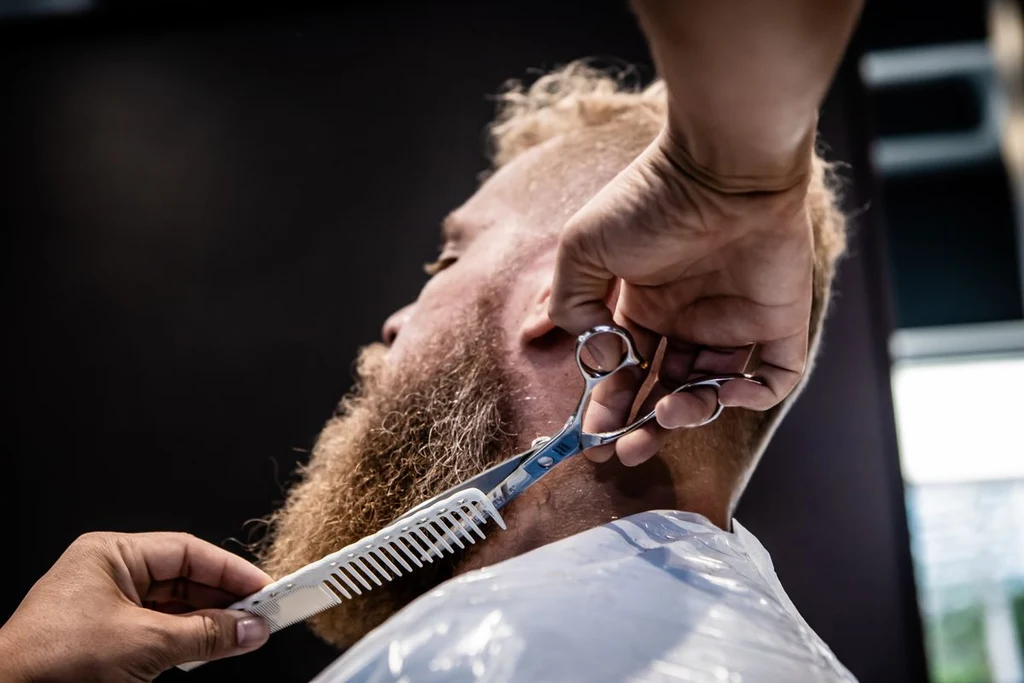
Say this to your barber:
“Chevron to start, please: thick across the lip, corners angled down, and set the lip line so the hair stops at the top edge of my lip. I will grow the ends out from there.”
Bring a photo of the front and a photo of the side. The front shows the width. The side shows where the hair ends at the corners, and that is where most mustaches go wrong.
The mustache styles that depend on symmetry — the English, the handlebar, the horseshoe — are hard to judge in your own bathroom mirror, because you are always looking at them reversed and slightly from above. A millimetre off on one side becomes two by the next trim. For those three, let the barber set the shape first, then maintain it at home. A mid fade or a skin fade keeps the sides tidy while the mustache does the talking, and our blowout taper fade guide shows how a fuller top balances a full mustache.
The Lip Line: How to Trim It Yourself
Apart from a walrus, which is meant to droop, the hair belongs above the lip line once you comb it down. Get that line right and the mustache looks kept. Get it wrong and it drinks your coffee for you.
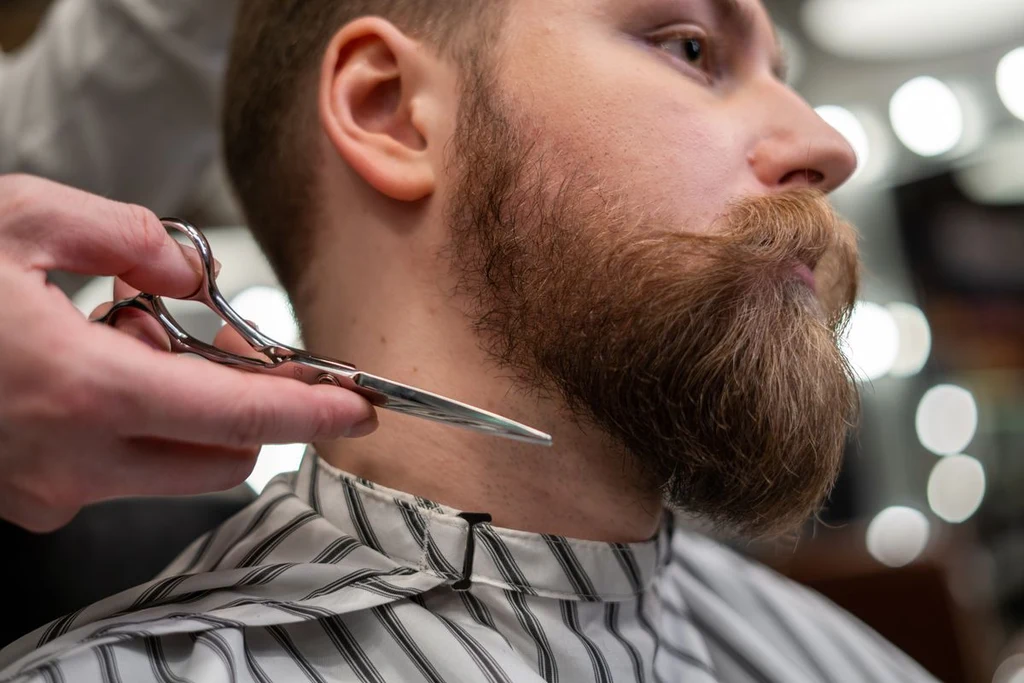
- Comb it down dry with a fine-tooth comb. Wet hair hangs longer than it really is, so you would take off too much.
- Keep your mouth closed and relaxed. A stretched smile moves the lip and bends the line.
- Cut with small straight scissors along the top of the lip, middle first, then out to each side.
- Comb out toward the corners and take off only the hairs that pass the edge of your mouth.
Leave the clipper in the drawer for this job. It leaves a straight shelf and chews the corners short. Scissors, a snip at a time, then look again. Hair cut off does not go back on.
How to Keep a Mustache Looking Good
Any of these mustache styles needs about five minutes a day, and most of that is combing. Wash it when you wash your face, with the same cleanser or a drop of beard wash. Comb it down while it is dry, every morning. A drop of beard oil keeps the hair soft and the skin underneath from itching. Save the wax for the ends that need shaping — handlebar, English, Dali. A chevron or a walrus stays in shape with a comb and a drop of oil.

Trim the lip line once a week, and shave the skin around the shape as often as the style needs. A pencil needs the band above it shaved every day or two. A horseshoe needs the chin shaved clean. A chevron needs the cheeks tidied once a week. The mustache itself only needs scissors, never a clipper, and only along the lip.
Shaving the skin around a mustache is where ingrown hairs start, and they are more likely if your hair is coarse or curly. The NHS advises shaving in the direction the hair grows, wetting the skin with warm water and using shaving gel, using as few strokes as possible, and leaving at least 1mm of stubble rather than shaving too close. Do not pick or squeeze an ingrown hair — that damages the skin and can lead to infection. You can read their advice on ingrown hairs. The American Academy of Dermatology’s guide to how to shave covers the same ground for the skin around the mustache.
6 Mistakes That Ruin a Mustache
- Trimming too early. Cutting the shape in week two, before the corners have filled in. Wait six weeks, then shape it.
- Letting it hang over the lip. Hair in your mouth is not a style, it is a mustache you stopped looking after. Comb it down dry and cut along the lip line.
- Using a clipper on the lip line. It leaves a straight shelf and chews the corners short. Scissors only.
- Waxing a chevron. Wax is for shaped ends. On a chevron it just makes the hair stiff and shiny, and it pulls the shape flat.
- Shaving the shape every day. A pencil needs it, but a chevron does not. Shaving the cheeks daily when the style does not need it is how ingrown hairs start.
- Picking mustache styles from a photo alone. The photo shows the style on someone else’s face, with someone else’s growth. Match it to your face shape and your mornings first.
Frequently Asked Questions
What is the most popular mustache style?
The chevron. Ask any barber what men request most and the answer is usually the chevron, with the beardstache close behind, because they suit the most faces and need the least work. Thin pencil lines come and go, and they suit smaller faces.
How long does it take to grow a mustache?
Four to six weeks for a chevron to look like a chevron. Two to three months for it to reach full length. A handlebar takes 3 to 6 months, and a horseshoe takes 2 to 3 months. A pencil is the fastest at 2 to 3 weeks, but it needs the most upkeep once it is there.
Do I need mustache wax?
Only for the mustache styles with shaped ends: handlebar, English, and Dali. For a chevron or a walrus, a comb and a drop of beard oil are enough. Wax on a natural style just makes it stiff.
Why is my mustache patchy at the corners?
The corners are the last part to fill in, so wait six weeks before you decide what they can do. If the corners are still thin after that, pick a style that does not need them — a pencil, or a neat, short chevron.
Should my mustache connect to my beard?
There is no rule here — it is your call. Connected looks fuller and more classic. A small shaved gap at the corners reads more deliberate, and it suits lighter growth. Either way, keep the join tidy.
How do I keep my mustache out of my mouth?
Comb it straight down while it is dry, then cut along the top edge of your lip with small scissors, working from the center out. Do it once a week. If the hair still falls in, the mustache is too long for the style — take a little more off the length, not the corners.
If you have never grown one, begin with the chevron. It asks the least of you, it forgives uneven growth at the lip, and every other style here can be cut out of it later. Grow it for six weeks, let your barber set the lip line, and then decide whether to leave it, thin it, or grow the ends. The mustache is the smallest change you can make to your face. Give it six weeks and it will tell you what it wants to be.
Browse the rest of the Haircuts guides for the cut to pair it with, and start with our mid fade guide if you want the sides as tidy as the mustache. A mustache also sits well with longer hair — our guides to braids for men and dread styles for men show how facial hair balances those looks.