

The best dread styles for men depend on how long your locs are right now, not how long you want them to be. Short locs live or die by the cut around them. Once they’re long, the real question becomes how to tie them up without wrecking your hairline. Pick from the stage you’re in and you’ll be happy with the result far sooner.
That sounds obvious. Most galleries ignore it, though, and show forty finished looks that took years to grow.
The styles below are sorted by length. Each one notes what it asks of your hair, and the sections after them cover how locs get started and the maintenance mistakes that thin them out.
Loc styles at a glance
The upkeep times below are the usual ranges locticians and barbers work to. Your own hair, how fast it grows and how neat you like the roots will move them around.

| Style | Length stage | Best hair types | Typical upkeep |
|---|---|---|---|
| Short twisted locs | Starter, a few inches | Coily, tightly curly | Retwist every 4 to 6 weeks |
| High-top dreads | Short to medium on top | Coily | Line-up or fade every 2 to 3 weeks |
| Freeform locs | Any | Coily works best | Very little, just separate and wash |
| Microlocs | Any | Most textures | Retighten every 6 to 8 weeks, done by a pro |
| Shoulder-length locs | Medium | Most textures | Retwist or interlock every 4 to 8 weeks |
| Tied-up or bun locs | Medium to long | Any | Same as your base locs |
Most dread styles for men fall into one of those rows, or combine two of them. A quick word on names. “Dreads,” “dreadlocks” and “locs” all describe the same thing, hair that has been knotted and matted into ropes on purpose. Plenty of people with locs prefer the word locs, and you’ll hear both in any barbershop.
Short dread styles for men
Short locs are where almost everyone starts, and they look sharpest when the shape around them is tidy.
Short twisted locs
These are starter locs, usually begun as comb coils or two-strand twists, kept a few inches long. They sit up and out from the head and give a neat, spiky texture once they start to knot.
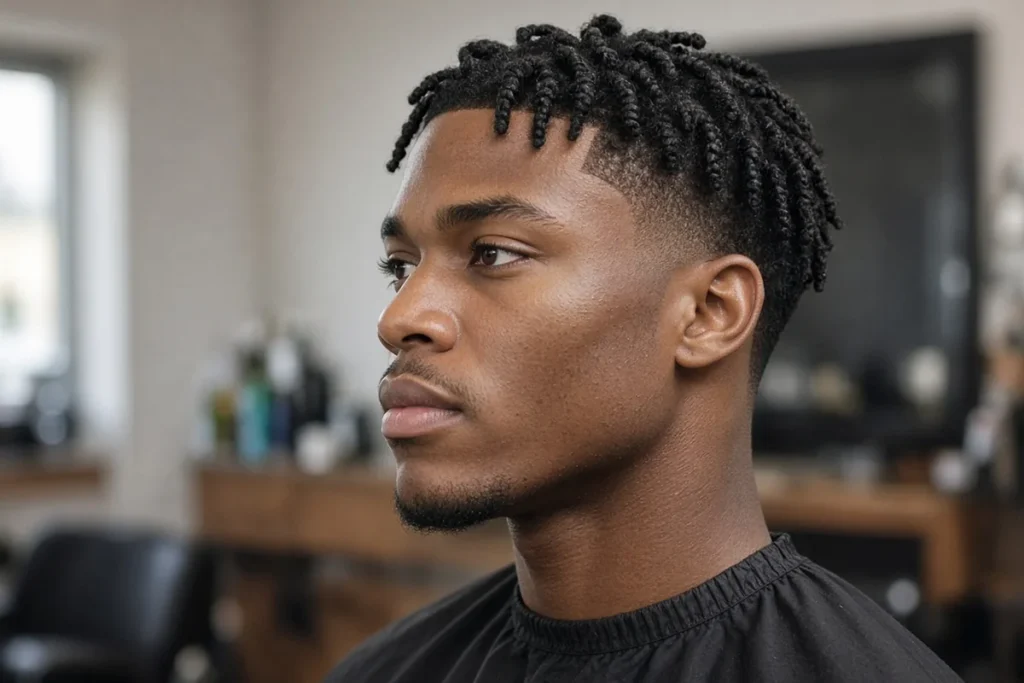

The honest drawback is the awkward phase. Starter locs can unravel when you wash them, and they go through a fuzzy, puffy stage while the hair underneath starts to mat. That’s normal. Wearing a durag or satin cap at night helps keep the twists intact while they settle.
High-top dreads
High-top dreads keep the locs on top and clip the sides and back short, often with a mid fade or a taper. The height on top gives a round face some length, and it’s one of the most popular dread styles for men who want locs but also want to look freshly cut.

Expect to see your barber more often than your loctician with this one. The fade grows out in two or three weeks, long before the locs need attention. If you like a really sharp contrast, ask for the sides taken down to the skin.
Freeform locs
Freeform locs form when you stop combing and largely let the hair knot on its own, splitting sections apart now and then so they don’t merge into one big mass. They come out uneven in size, and that’s the appeal.

This is the lowest-upkeep option of all, but it isn’t zero upkeep. Freeform locs still need washing, and they need separating at the roots, or neighbouring locs fuse together. They tend to suit coily hair best, because very curly hair forms single-strand knots that tangle into locs on their own. Straighter textures usually need crochet or backcombing to get there.
Locs with a fade or a dreadhawk
A fade is the easiest way to make short locs look intentional while they are still growing. A low or mid taper keeps the sides neat and lets the locs on top carry the shape. A dreadhawk takes it further, with the sides faded or shaved and the locs kept in a strip down the middle. Both need a barber visit every two to three weeks to stay crisp, which is far more often than the locs themselves need attention.
Medium-length dread styles
Once locs reach the jaw or shoulders, the range of dread styles for men opens up a lot, and the parting starts to matter as much as the locs themselves.
Microlocs
Microlocs are very small, thin locs, sometimes hundreds of them on one head. They hang and move almost like loose hair and can be parted, pulled back or worn down.
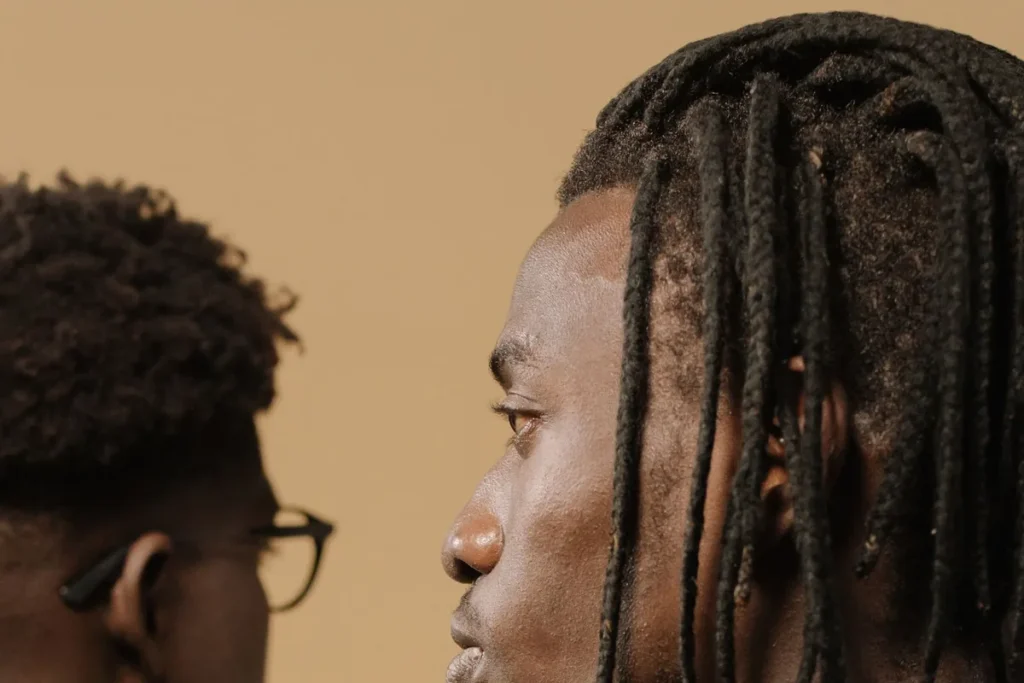
The trade-off is time and cost. Installing microlocs takes many hours, and the retightening appointments are long too, so most people pay a specialist for them. In my view they’re worth it if you want maximum versatility later, less so if you just want a low-fuss look.
Shoulder-length locs worn down
The simplest medium style is just letting locs hang. A clean middle or side part, neat roots and a crisp line-up at the edges make the difference between “grown out” and “styled.”

This is also the length where a lot of men start adding color to the ends or wrapping a few locs with thread or cuffs. Keep metal cuffs loose, and take them off now and then so they don’t wear a groove.
Barrel twists and wicks
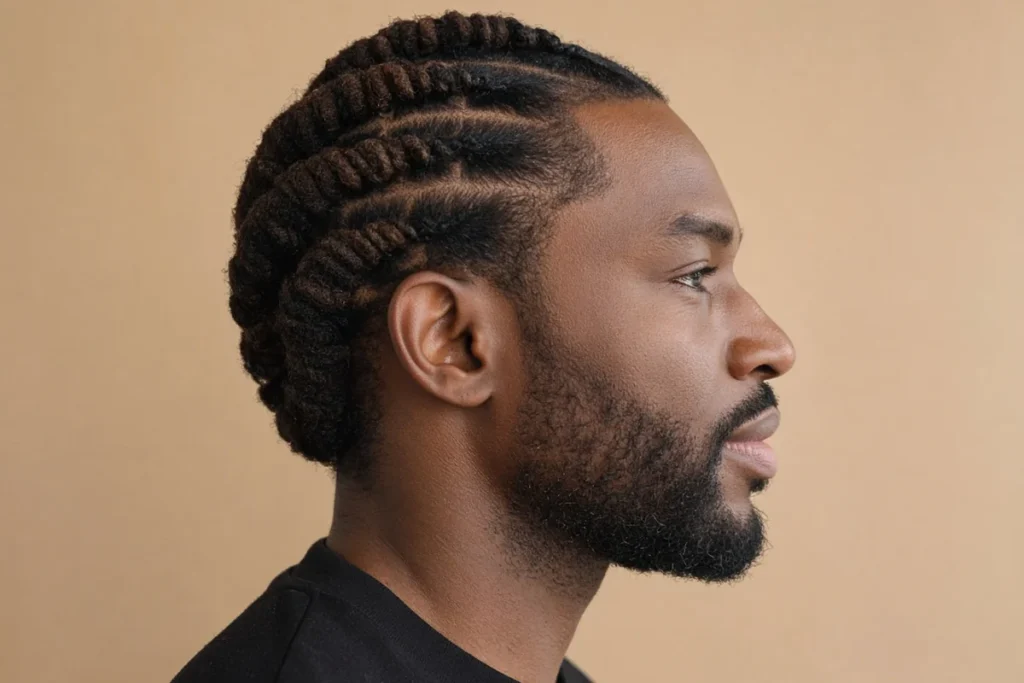
Barrel twists are a styling choice for medium and long locs. Two or more locs are twisted around each other into thick, rope-like sections, often running from front to back. They look structured, keep locs off your face for a week or two and come out easily. Wicks are the opposite end of the scale: a few very thick, usually freeform locs, sometimes started by letting larger sections matt together. They are bold and low maintenance but heavy, so watch for pulling at the roots as they grow.
Long and tied-up loc styles
Long locs get heavy, and the long dread styles for men are mostly ways of managing that weight. It’s the thing to plan around, because it pulls on the scalp all day.
Locs tied up in a high bun or half-up
Tying locs up on top keeps them off your face and neck, which matters at work, at the gym or in summer heat. A half-up version, with the top section gathered and the rest left down, keeps the length on show.

The catch is tension. The American Academy of Dermatology lists tight locs among the styles that can cause traction alopecia, hair loss from constant pulling, and notes that longer, heavier hair pulls more. Its advice is to choose thicker locs, keep them shorter if tension is a problem, and change the style if you feel pain, stinging or see bumps along the hairline. For tied-up locs, that means a soft tie, not a tight elastic, and a different position from day to day.
How locs are started
The starting method affects how your locs look for years, and it limits which dread styles for men you can wear later, so it’s worth choosing deliberately. If you can, get them started by someone who does it every day.
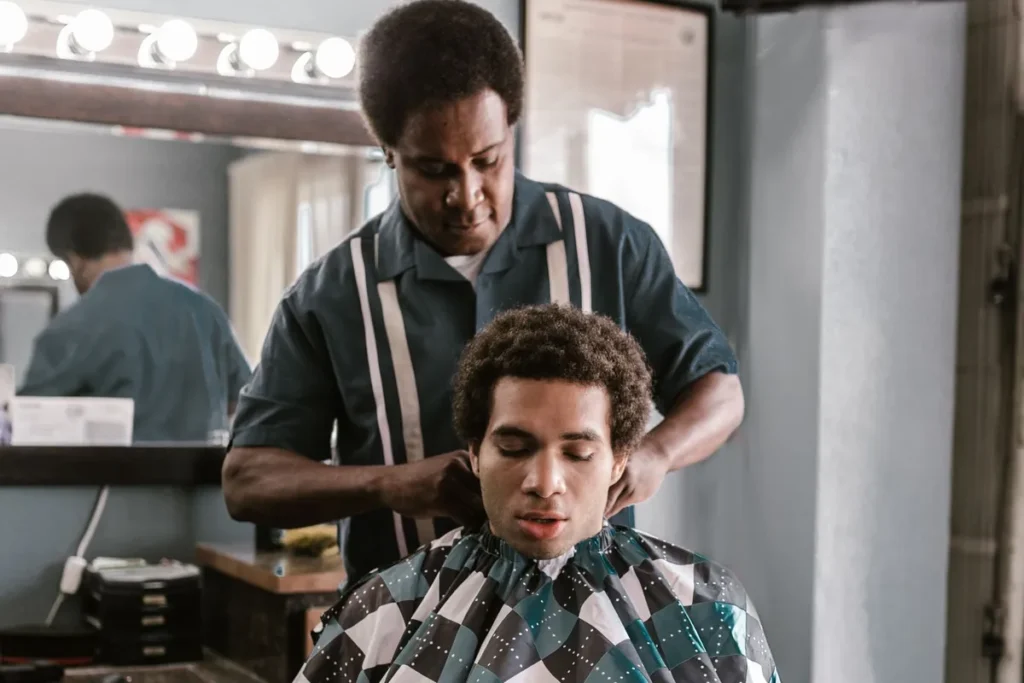
Comb coils twist small sections of hair around a comb into tight coils. They need only a short length of coily hair and give very neat, round, uniform locs.
Two-strand twists split each section in two and twist the halves around each other. They need a little more length than coils and tend to make fuller, slightly flatter locs. If you already wear twists, our braids for men guide covers how they’re installed and how tight is too tight.
Interlocking pulls the end of each loc back through its own root with a tool, a bit like a latch hook. It holds well from day one and doesn’t unravel when washed, which is why many people with looser textures choose it.
Crochet and backcombing are the usual routes for straight or wavy hair, which doesn’t knot easily on its own. The hair is teased toward the root and tightened with a fine crochet hook. Expect more fuzz and more maintenance than on coily hair.
Then there’s the wait. Locs typically move from the starter stage through a fuzzy budding stage to a looser “teen” stage before they mature, and that usually takes many months, often a year or more. Nobody can promise you a timeline because your texture decides most of it. If you’re working with 4b hair, our 4b hair guide explains how that coil pattern behaves.
Keeping locs healthy without thinning them
Most damage to locs comes from too much maintenance, not too little.
Retwisting or interlocking the new growth too often is the classic mistake. Every retwist puts tension on the root, and many locticians warn that doing it every week or two can thin the base of each loc over time. Stick to the 4 to 8 week range unless your loctician says otherwise, and accept some fuzz in between.

Wash your locs. The old idea that locs shouldn’t be washed is wrong. A clean scalp locks just as well, and residue-free shampoo rinses out of locs more easily than heavy creamy formulas. Squeeze the water out well and let them dry fully, since locs that stay damp can start to smell musty.
Go light on wax and heavy butters. They build up inside the loc where you can’t rinse them out. If your scalp gets itchy and flaky under your locs, our guide on how to treat dry scalp explains why oiling the scalp isn’t always the fix.
Finally, protect them at night. A satin or silk cap or pillowcase cuts down on friction and lint, which is especially noticeable on light-colored ends.
Wearing locs to work and school
In the US, CROWN Act laws in a growing number of states ban discrimination at work and school based on natural hairstyles, including locs, braids and twists. California passed the first one in 2019, and the CROWN Act website explains what the law covers. Laws differ by country and state, so check your own local rules if you’re worried about a dress code. Neatly kept locs suit any setting, and a tidy line-up does more for a professional look than cutting them off ever would.

For more cuts and styles to pair with your locs, browse our hairstyle guides.
FAQs
How long does your hair need to be to start locs?
It depends on your texture and the method. Coily hair can be started as comb coils at just a few inches, while two-strand twists need a little more. Straight hair usually needs more length again, because it has to be backcombed or crocheted into locs.
How often should I retwist my dreads?
Many locticians suggest every 4 to 8 weeks. Retwisting more often than that can put too much tension on the roots and thin them over time, so let a little new growth come in before you tidy it.
Can you get dreads with straight hair?
Yes, but they take more work. Straight hair doesn’t knot on its own, so it’s usually started by backcombing and crocheting, and it tends to need more maintenance to keep the locs tight.
Do dreads damage your hair?
Locs themselves don’t have to, but tension does. Tight retwists, heavy long locs and tight up-dos can cause traction alopecia at the hairline. Keep the roots and ties loose, and change your style if you feel pain or soreness.
Can you comb out dreads instead of cutting them?
Sometimes. Younger locs can often be soaked, conditioned and picked apart with a lot of patience, though you’ll lose some shed hair that was trapped inside. Older, mature locs are much harder to comb out, and many people decide to cut them.
Are dreads and locs the same thing?
They describe the same hair structure. Many people with locs prefer “locs” because “dreads” has a history of being used as an insult, so it is worth following the lead of the person you are talking to, and of your loctician.