
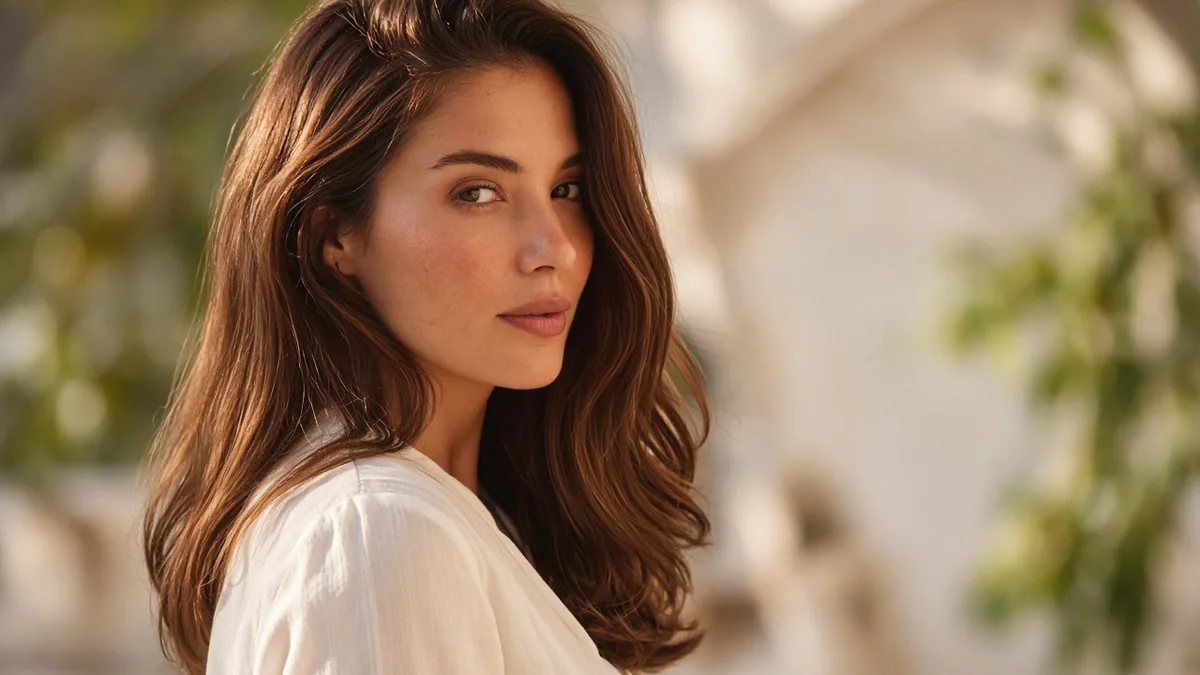
Chestnut brown hair is a medium brown with a balanced red-gold reflect. It looks clearly brown indoors and shows its warmth in daylight. On a professional color chart it usually sits between level 4 and level 6, with gold and red or copper tones. That number-and-tone pair matters more than the name. One brand’s “chestnut” can be another brand’s auburn, so the code on the box or in your colorist’s formula decides how warm and how dark your hair ends up.
Chestnut is also one of the more forgiving brunettes. It’s close enough to many people’s natural depth that it often needs little or no lightening, and its warmth flatters a wide range of skin tones. It also fades in a predictable direction, toward golden brown, which is easy to correct with a gloss.
What makes a brown “chestnut”
Every hair color has two parts: level, meaning how light or dark it is, and tone, meaning the color you see inside that depth. Chestnut pairs a medium level with warm tones, mostly gold plus some red or copper. Push the red further and you get auburn, mahogany or, darker and cooler still, cherry cola hair color. Push the gold further and it turns into caramel or golden brown.
Natural pigment explains why chestnut looks the way it does. Researchers measuring hair melanin found that black and brown hair is mostly eumelanin, the brown-black pigment, with a small, steady amount of pheomelanin, the red-yellow pigment. Red hair carries roughly equal amounts of both (Ito and Wakamatsu’s work, summarized in this open-access review). Chestnut reads as brown with that warm side turned up a little. It stays brown in shade and shows a red-gold shine when light hits it.
That’s the first practical tip: judge chestnut in daylight. Many inspiration photos are taken under warm salon bulbs, which add red. The same formula can look browner under office lighting and redder in the sun.

Light, medium and dark chestnut
Chestnut is a family, not one shade. The professional depth scale runs from black at the bottom to the lightest blonde at the top. In the Wella Professionals numbering system, the digit before the slash is depth and the digits after it are tones. Wella’s chart names 3 dark brown, 4 medium brown, 5 light brown and 6 dark blonde.
| Chestnut depth | Typical level | Looks like | Easiest starting point |
|---|---|---|---|
| Light chestnut | 6 (dark blonde on the chart, but reads as light brown once warm tones are added) | Bright, golden-red brown that flashes copper in sun | Natural light brown or dark blonde |
| Medium chestnut | 5 | The classic, balanced red-gold brown | Natural light to medium brown |
| Dark chestnut | 4 | Deep brown; the red mostly shows in sunlight | Natural medium to dark brown |
Don’t be put off if your colorist calls light chestnut a “6.” Chart names describe neutral shades. Add gold and red, and a level 6 looks like a warm light brown on the head. That’s our reading of how warm tones present, not a rule printed on any chart.

Chestnut vs. auburn, mahogany, copper brown and chocolate
These five shades get mixed up constantly, in salons and in shade names on boxes. The difference is mostly which tone leads.
| Shade | Leading tone | How it reads | Choose it if |
|---|---|---|---|
| Chestnut brown | Gold and red in balance | Brown first, warm shine second | You want warmth without being called a redhead |
| Auburn | Red to copper | Clearly red, with brown depth | You want people to see red |
| Mahogany | Red-violet | Cooler, berry-red brown | Gold tends to look brassy on you |
| Copper brown | Copper or orange | Bright, orange-leaning brown | You have warm skin and want visible glow |
| Chocolate brown | Neutral to slightly warm | Deep and glossy, little visible red | You want richness with almost no red |
If someone tells you your new color “looks red,” it has probably crossed from chestnut into auburn. A gold-leaning gloss usually pulls it back toward brown.

Who chestnut brown flatters
Chestnut’s warmth is built in, so what matters is how much red and gold your skin can carry. A quick check: in daylight, do gold or silver earrings look better on you, and do the veins on your inner wrist look greenish (warm) or bluish (cool)?
| Skin tone and undertone | Best depth | How to adjust the tone |
|---|---|---|
| Fair, cool (pink) | Light to medium | Lean gold and keep the red soft; strong red can make facial redness stand out |
| Fair to light, warm (peach) | Light to medium | Balanced red and gold |
| Medium or olive | Medium | Keep some red visible; too much gold can make olive skin look sallow |
| Tan, warm | Medium to dark | Add a touch more copper for glow |
| Deep, warm or neutral | Dark | Balanced red and gold; dark chestnut adds shine without obvious color |
| Deep, cool | Dark | Lean slightly toward mahogany so the gold doesn’t turn orange |
Eye color matters less than skin but changes the effect. Hazel, green and amber eyes pick up the gold in chestnut. Blue and gray eyes get more contrast from the red.
If your skin flushes easily or you have rosacea, a red-leaning chestnut can make that redness more obvious. A gold-leaning light chestnut is the gentler choice.

How to get chestnut brown from your starting color
Your starting point decides whether chestnut is a one-step color or a project. Two principles drive everything. Permanent color can lighten only *natural*, uncolored hair, and only by a limited amount: Wella’s professional color guide lists up to two or three levels of lift depending on the line. And the American Academy of Dermatology advises staying within three shades of your natural color, because going lighter than that needs higher-volume peroxide and causes more damage.

From natural light or medium brown
This is the easy route. A single permanent or demi-permanent chestnut, usually at your own level or one level lighter, deposits the warmth. Demi-permanent is gentler and fades more gracefully. Permanent lasts longer and covers more gray.
From black or very dark brown
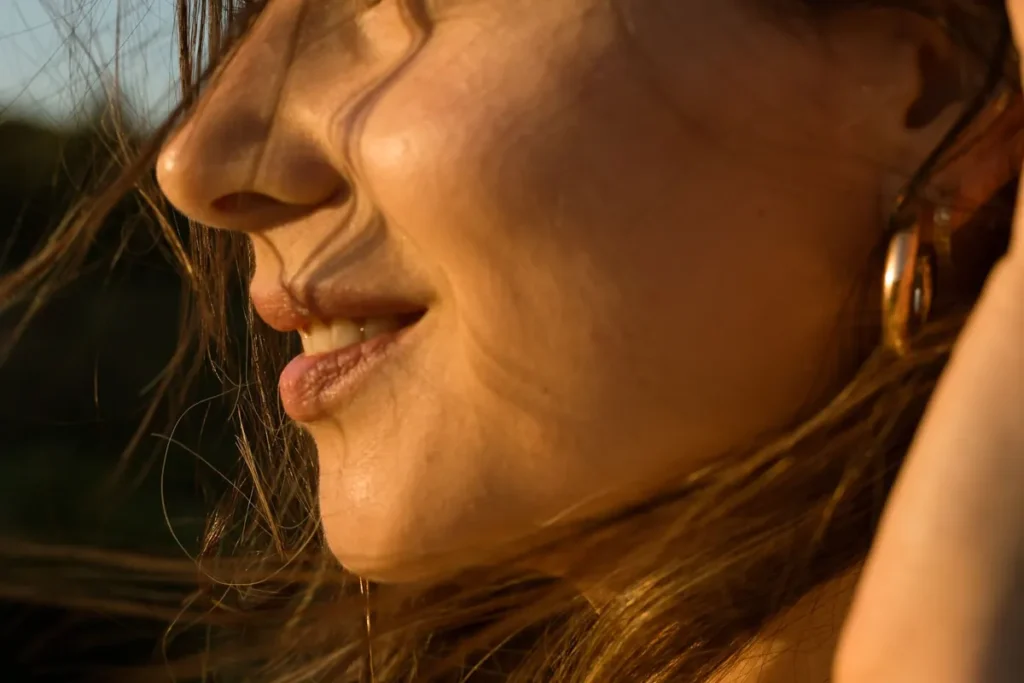
Natural black or darkest brown hair usually needs some lift before chestnut tones show. Otherwise you get dark brown with a faint red sheen. A colorist may use a higher-lift permanent shade on virgin hair. If your hair is already dyed black, color can’t lighten old color. That calls for a color remover or lightener first, often over more than one session.
From blonde or lightened hair
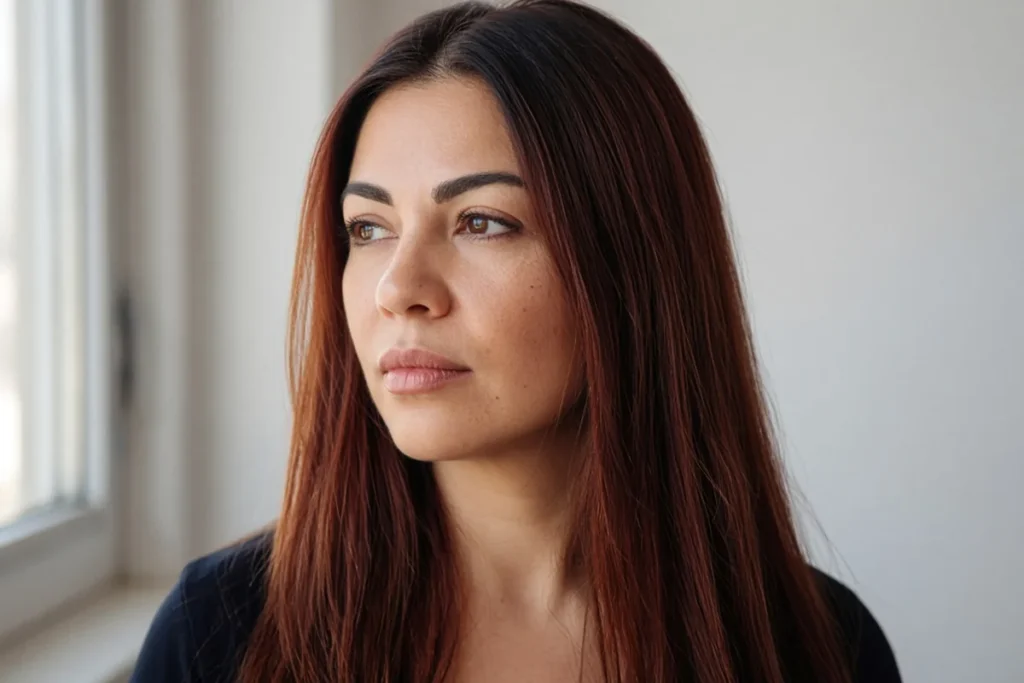
Putting chestnut straight onto blonde often turns it flat, muddy or greenish, because the warm pigments your natural brown would have had are missing. Colorists usually apply a red-gold filler or “pre-pigment” first, then the chestnut. If you color at home, expect box chestnut on bleached ends to look darker and cooler than the box shows.
Covering gray
Gray hair takes warm tones less evenly than pigmented hair. Colorists commonly mix a neutral shade into a warm formula so the gray covers fully instead of turning bright copper. Warm brown over a mostly gray head also shows a clear root line within weeks. If you want low upkeep, ask about lowlights or gray blending in chestnut tones.
Gloss first if you are unsure
If you are not sure how much red you can live with, start with a demi-permanent chestnut gloss or a brown color-depositing conditioner. Colorist Jafra Bryant told Byrdie that a gloss or tinted conditioner is a sensible way to test a soft copper-leaning shade before committing, and it washes out over a few weeks if you hate it.

Reading a chestnut hair dye box
Shade names aren’t standard, but numbers mostly are, with one big catch. In most professional systems the number before the slash or dot is the level, the first digit after it is the main tone, and the second is a supporting tone. The catch: the same tone digit can mean different things at different brands.
| Tone digit | Wella Professionals | L’Oréal Professionnel Majirel |
|---|---|---|
| 3 | Gold | Gold |
| 4 | Red | Copper |
| 5 | Mahogany (red-violet) | Mahogany |
| 6 | Violet | Red |
Sources: Wella numbering and the Majirel color chart.
In practice, chestnut formulas are a level 4, 5 or 6 with gold plus red or copper. For example, Majirel’s 6.34, which the chart also codes 6GC, is a level 6 gold-copper, squarely in light chestnut territory. Many brands sold in North America use letters instead of, or alongside, numbers. Wella’s guide pairs /3 with G for gold, /4 with R for red and /5 with RV for red-violet. Always check the shade chart on the side of the box, not just the photo on the front.
Two box-dye tips:
- Roots first, ends last. Older, more porous lengths absorb more dye and often go darker than the model on the box. Apply to the regrowth first, then pull the color through the lengths only for the last few minutes.
- Patch test every time. The FDA advises dabbing dye on your skin and waiting 48 hours before using it. The NHS notes that reactions can take up to 72 hours to show, and that many permanent dyes contain PPD, a common allergen.

Chestnut brown with highlights, balayage and honey tones
A single-process chestnut is rich but flat in one way: every strand is the same color. Adding brightness makes it look more expensive and grows out better.
- Chestnut with honey highlights. Fine, golden highlights one or two levels lighter than the base. This is the most natural-looking upgrade and suits warm and neutral skin.
- Chestnut balayage. A chestnut base with hand-painted caramel or honey through the mid-lengths and ends. Regrowth blends because the root stays close to your natural color.
- Face-framing brightness. Two lighter caramel pieces at the front lift the face without committing the whole head.
- Copper glaze. A copper gloss over chestnut for a few weeks of extra warmth, for anyone curious about auburn without the commitment.

Keeping chestnut brown rich
Chestnut fades in a predictable direction. Wella Professionals explains that red dye molecules are larger than those in browns and blondes, so they sit nearer the surface and wash out sooner. As the red fades, chestnut drifts toward a flatter golden brown, and on lightened hair, toward orange.

- Wait before the first wash. Wella suggests holding off for at least 48 hours after coloring.
- Wash two or three times a week with a color-safe, sulfate-free shampoo, and use conditioner after every wash, which the AAD recommends for color-treated hair.
- Keep water lukewarm. Wella warns that hot water lets red pigment escape.
- Refresh mid-cycle. A brown or copper color-depositing mask once a week, or a salon gloss around week five or six, brings back the shine.
- Skip purple and blue shampoos. Violet tones cancel yellow and blue tones cancel orange, as Wella’s toner guide explains. On chestnut, that warmth is the color you paid for. Save them for hair that has clearly gone brassy.
- Block sun and heat. The AAD notes sun makes colored hair weaker and more faded. Use a hat or a leave-in with UV protection, plus a heat protectant before hot tools.
What to tell your colorist
Give your colorist a level and a tone, not just the word “chestnut.” Something like:
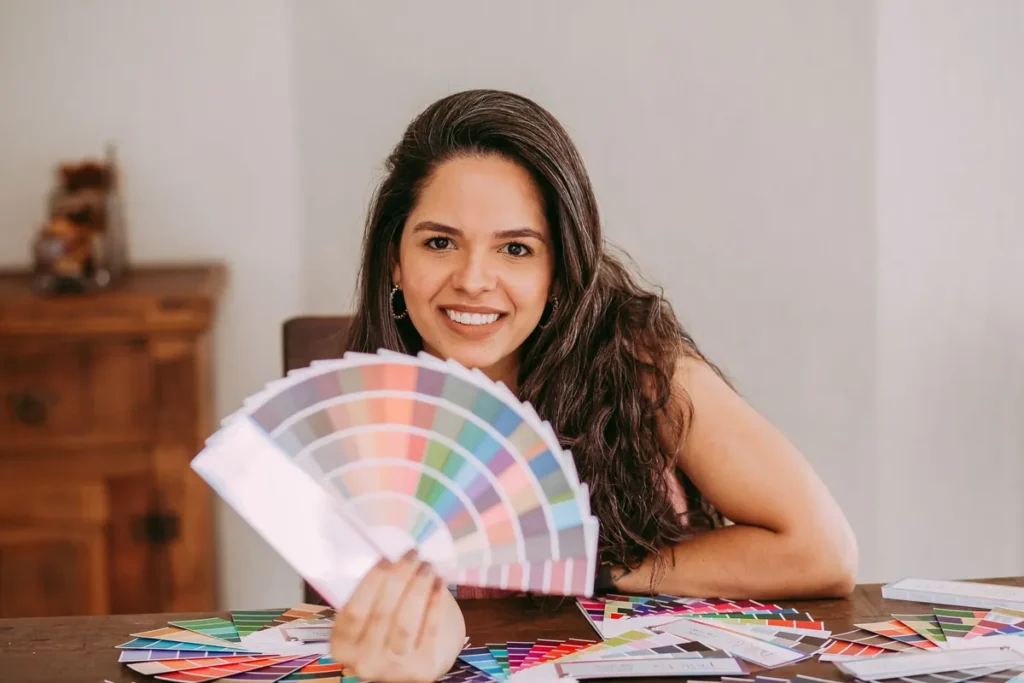
- “I’d like a level 5 chestnut with red and gold in roughly equal amounts. I want it to look brown indoors, with warmth mainly in sunlight.”
- Bring two photos: one you love and one that’s too red for you. The photo you reject tells your colorist as much as the one you like.
- Ask: “Does my hair need lift, a color remover or a filler? How many sessions is that?”
- Ask: “What will this look like at week six, and what should I use at home?”
Colorists can plan and quote more accurately when they know your color history, so mention any box dye, henna or keratin treatments, even from a year ago.
For more warm brunettes, see our hair color guides. If you like a bolder red-brown, calico hair puts copper next to your brown in patches, and crimped hair is a quick way to show off shine and dimension.
Chestnut brown hair FAQ
Is chestnut brown hair red or brown?
Brown. Chestnut is a brown with balanced red and gold tones. If red is the first thing people notice, the shade has moved into auburn.
Does chestnut brown cover gray?
It can, but warm shades alone often leave gray looking brighter or coppery. A colorist will usually blend in a neutral shade for full coverage. At home, look for a box labeled for gray coverage at your level.
Will chestnut brown hair dye turn orange?
On dark hair that’s been lightened, it can fade toward orange as the red washes out. A gloss or a color-depositing brown mask between appointments keeps it in check. Reserve blue shampoo for true brass.
How rare is natural chestnut hair?
We couldn’t find a reliable population figure for “chestnut” specifically, because studies sort hair by pigment measurements and broad color groups rather than shade names. Warm medium browns are common in many populations. True red hair is much rarer.
Does chestnut brown suit cool skin tones?
Yes, if you keep the red soft and lean slightly gold or slightly mahogany depending on your skin. Very red chestnut can make pink or flushed skin look redder, so a gold-leaning light chestnut is the safer starting point.
How long does chestnut brown hair dye last?
Permanent chestnut stays until it grows out, but the red-gold reflect softens over four to six weeks. Demi-permanent versions fade more evenly and usually last around 20 to 28 washes, depending on the product.